
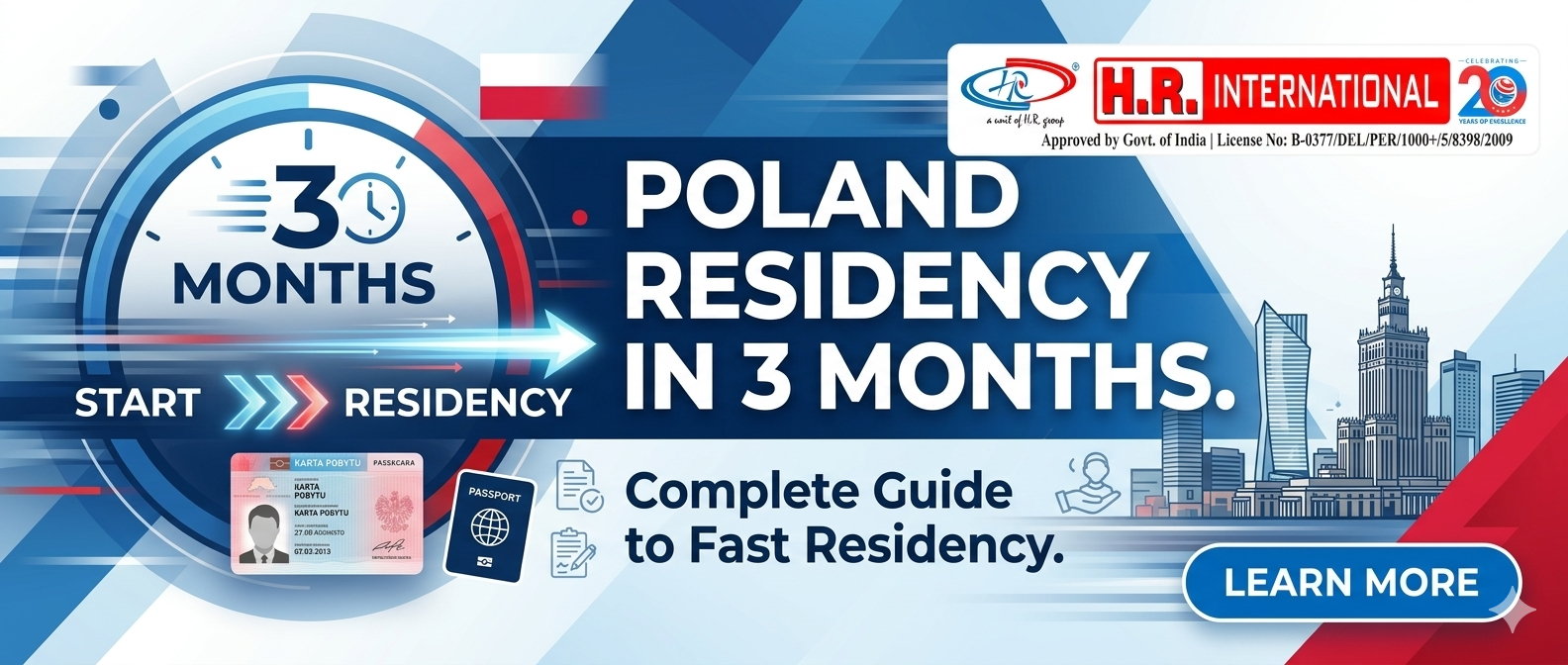
What Is Poland Residency in 3 Months and Why It Is Becoming Popular

The Poland Residency in 3 Months is quickly becoming one of the most talked-about immigration pathways for people who want to enter Europe without complicated requirements. Many traditional immigration programs require high education, strict language tests, heavy financial documentation, and long waiting periods. This program offers a much simpler route, allowing applicants to begin their journey toward living and working in Europe in a relatively short time frame.
Poland has become a powerful economic hub in Central Europe. Over the last decade, the country has experienced steady economic growth, attracting international investors, businesses, and skilled workers. According to data from the European Commission, Poland is among the fastest-growing economies in the European Union, which has increased demand for foreign workers and entrepreneurs. As a result, immigration pathways have gradually become more accessible for international applicants.
One of the most attractive aspects of this opportunity is its simplicity. Unlike many other European immigration programs, Poland Residency in 3 Months does not require minimum education, language tests, or financial proof. This opens the door for a much wider group of applicants, including entrepreneurs, workers, freelancers, and individuals looking for new opportunities abroad.
Another reason this program has gained popularity is its Visa D mobility advantage. With this visa, individuals can travel across several countries within the Schengen zone, giving them greater flexibility and exposure to European markets and opportunities. For many applicants, it is not just about moving to Poland—it is about gaining a gateway to Europe.
Companies like H.R. International play an important role in guiding applicants through the process. Immigration procedures can be confusing and time-consuming, especially for those unfamiliar with European legal systems. Professional consultants help streamline documentation, application procedures, and communication with authorities, making the process much smoother.
The combination of speed, accessibility, and mobility makes Poland residency an appealing option for many individuals who want to start a new chapter in Europe without going through complicated immigration barriers.
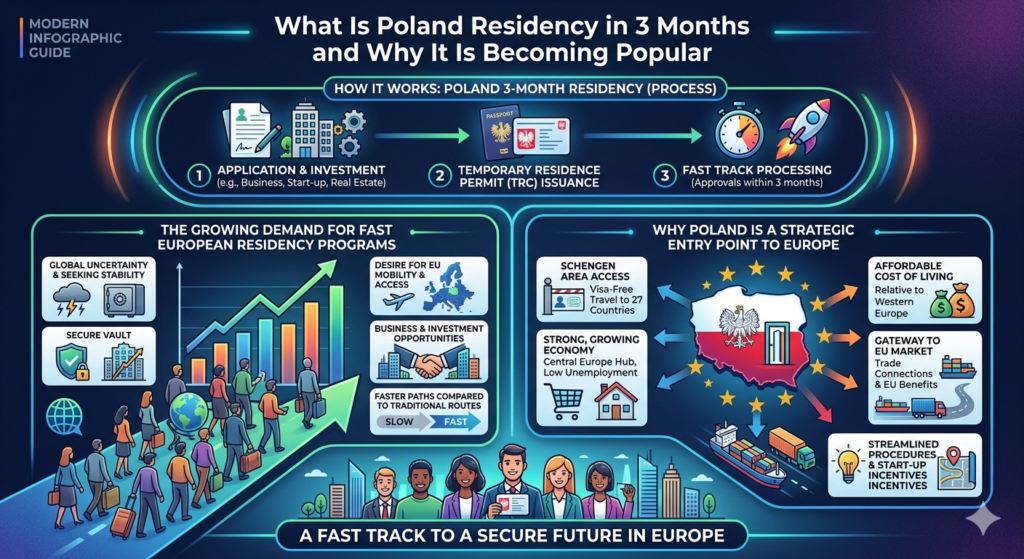
The Growing Demand for Fast European Residency Programs
The demand for fast immigration pathways has increased dramatically in recent years. People across the world are searching for better economic opportunities, higher quality education, and improved living standards. Europe remains one of the most desirable destinations because of its strong economies, social benefits, and stable political systems.
Traditional immigration systems, however, can often feel like navigating a maze. Applicants are required to show large bank balances, provide extensive academic credentials, pass language proficiency exams, and sometimes wait years for approval. These barriers make it difficult for many individuals who want to move abroad but cannot meet such strict criteria.
This is where programs like Poland Residency in 3 Months stand out. They offer a streamlined alternative that focuses on accessibility and speed. Instead of spending years preparing documentation, applicants can begin the process almost immediately with the help of immigration specialists.
Industry experts in migration studies have observed that flexible residency programs are becoming a global trend. Countries are competing to attract foreign talent, investors, and workers who can contribute to their economies. Poland, in particular, has recognized the importance of welcoming international residents to support its expanding labor market.
For many applicants, speed is a major deciding factor. Waiting several years for residency approval can delay career plans, business opportunities, and family relocation goals. A three-month processing timeline significantly reduces uncertainty and allows individuals to start planning their move much sooner.
Another factor driving demand is the increasing popularity of mobility within Europe. With a residency permit from an EU country like Poland, individuals gain access to travel opportunities across the Schengen area. This freedom of movement allows residents to explore job markets, business networks, and educational institutions across multiple countries.
Programs supported by experienced consultants such as H.R. International help applicants navigate this opportunity more confidently. From document preparation to application submission, professional guidance can make the difference between delays and a smooth approval process.
Why Poland Is a Strategic Entry Point to Europe
Poland has quietly transformed into one of the most strategic entry points for people seeking access to Europe. Located in the heart of Central Europe, the country shares borders with Germany, Czech Republic, Slovakia, Ukraine, and Lithuania. This geographic position makes it a natural bridge between Western and Eastern Europe.
From an economic perspective, Poland has built a reputation as a stable and rapidly growing country. Its GDP growth has consistently outperformed many European nations over the past decade. Large multinational companies such as Google, Microsoft, Amazon, and Intel have established operations in Poland, creating thousands of jobs and strengthening the economy.
Another major advantage is the cost of living. Compared to countries like Germany, France, or the Netherlands, Poland offers significantly lower living expenses. Housing, transportation, and daily necessities are generally more affordable, making it easier for newcomers to settle comfortably while exploring opportunities.
Poland also offers a strong education and healthcare system, which is an important factor for families planning long-term relocation. The country is home to several internationally recognized universities and medical institutions, contributing to its reputation as a safe and livable destination.
For individuals considering immigration, Poland’s residency pathway is particularly appealing because it can eventually lead to long-term residency after three years. This provides stability and opens doors to further opportunities within the European Union.
Mobility is another powerful advantage. Through the National Visa D, residents gain the ability to travel within the Schengen area for short stays. Imagine living in Poland while being able to explore cities like Paris, Rome, Vienna, or Berlin with relative ease. This level of accessibility makes the residency program even more attractive.
Organizations such as H.R. International help applicants understand these benefits and navigate the steps needed to secure residency quickly. With professional support, the process becomes clearer and more manageable.
For many individuals around the world, Poland Residency in 3 Months is not just an immigration program—it is a gateway to European opportunity.
Key Benefits of Poland Residency in 3 Months
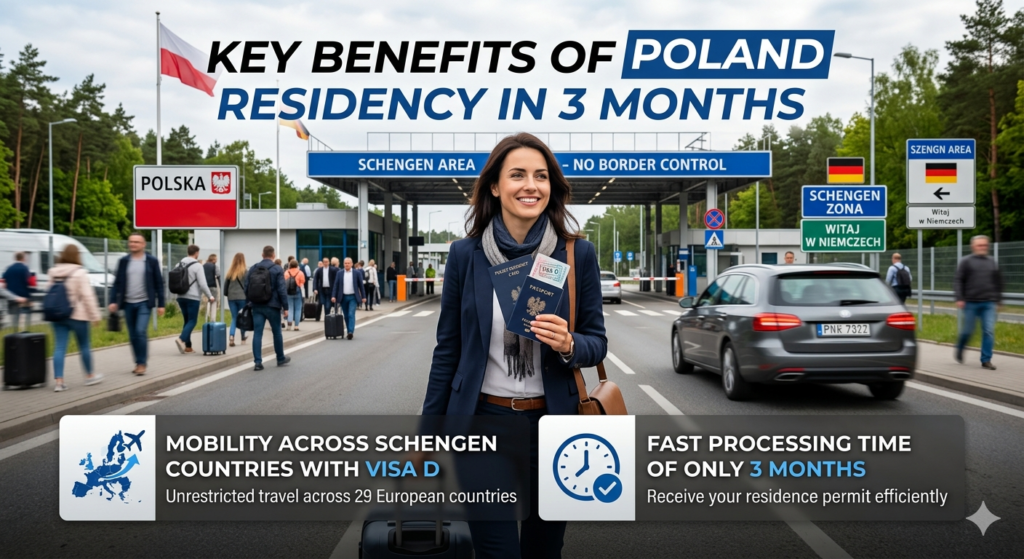
Poland Residency in 3 Months offers a set of benefits that make it stand out from many other European immigration pathways. While some programs require complex procedures and years of waiting, this option focuses on accessibility, speed, and opportunity. For individuals who want to enter Europe without dealing with endless paperwork or strict eligibility criteria, this residency pathway has become increasingly attractive.
One of the most significant advantages is the simplicity of the eligibility requirements. Many immigration programs across Europe require applicants to show high levels of education, professional certifications, or large financial investments. In contrast, this program removes many of those barriers, making it accessible to a broader range of applicants. Individuals from different professional backgrounds—whether workers, entrepreneurs, freelancers, or business owners—can explore this opportunity.
Another major benefit is the quick processing time. Immigration procedures often take several months or even years to complete, leaving applicants uncertain about their future plans. With this program, the process can be completed within approximately three months, allowing applicants to begin their European journey much sooner.
The program also offers flexibility and mobility. Living in Poland provides access to one of the most dynamic regions of Europe, where individuals can explore business, employment, and educational opportunities. Poland’s strong infrastructure, growing industries, and expanding labor market create a welcoming environment for newcomers.
Another aspect that attracts many applicants is the potential pathway toward long-term residency. After maintaining residency and fulfilling certain requirements, individuals may be able to transition into more permanent immigration status in Poland. This possibility adds long-term value to the initial residency program.
Professional guidance from immigration consultants like H.R. International further simplifies the process. Immigration laws, documentation requirements, and visa procedures can often feel overwhelming. Having experienced professionals assist with paperwork, submissions, and guidance can reduce delays and improve the overall experience for applicants.
In simple terms, Poland Residency in 3 Months is not just about moving to another country—it is about unlocking opportunities across Europe while avoiding complicated immigration barriers.
Mobility Across Schengen Countries with Visa D
One of the most attractive features of Poland Residency in 3 Months is the mobility advantage provided by the National Visa D. For many people dreaming of living in Europe, the ability to travel across multiple countries is just as important as residency itself. Visa D offers exactly that type of flexibility.
The Schengen Area includes 27 European countries, allowing individuals to travel freely between them without border controls for short stays. While Visa D is issued by Poland, it still allows travel within the Schengen region for limited periods, which means residents can explore a large portion of Europe without needing separate visas for every country.
Imagine living in Poland while having the ability to spend weekends in cities like Vienna, Prague, Berlin, or Budapest. These destinations are just a few hours away by train or flight. This level of accessibility turns Europe into an interconnected network of opportunities, whether for tourism, business meetings, networking events, or educational experiences.
For entrepreneurs and professionals, this mobility can be extremely valuable. Europe hosts countless international conferences, trade exhibitions, and professional gatherings. Being able to travel easily across the region allows residents to expand their professional networks and discover new business opportunities.
Students and young professionals also benefit from this mobility. Many people move to Europe not only to live in one country but to explore different cultures, languages, and work environments. Visa D makes that exploration far easier and more practical.
From a lifestyle perspective, the freedom to travel enhances the overall experience of living in Europe. Residents can explore historic cities, scenic landscapes, and diverse cultures without going through complicated visa procedures each time they cross a border.
Consultants such as H.R. International often highlight this mobility advantage because it significantly increases the value of the residency program. Instead of being limited to one country, residents gain access to a wider European environment filled with possibilities.
In essence, Visa D mobility transforms Poland residency into a gateway to the broader European experience.
Fast Processing Time of Only 3 Months
Speed is one of the biggest reasons people consider Poland Residency in 3 Months. In the world of immigration, waiting times can be frustratingly long. Some residency or visa programs require applicants to wait six months, one year, or even several years before receiving approval. Such delays can disrupt personal plans, career goals, and business opportunities.
The three-month timeline makes this program significantly more appealing. Instead of spending years navigating bureaucratic procedures, applicants can potentially receive their visa and prepare for relocation within a much shorter period. This quick turnaround allows individuals to act on opportunities when they arise.
There are several reasons why Poland’s immigration pathway can move relatively quickly. The country has developed efficient administrative systems to process visa applications and support foreign workers. Poland’s growing economy has created demand for international residents, which encourages authorities to streamline certain immigration procedures.
However, speed does not mean carelessness. Applicants must still provide proper documentation and follow the required legal procedures. Having the correct paperwork and submitting accurate information is essential to avoid delays or rejections.
This is where immigration consultants such as H.R. International become valuable. Experienced professionals understand the documentation requirements and can guide applicants through each stage of the process. Their expertise helps ensure that forms are completed correctly and submitted within the appropriate timelines.
Another factor that helps maintain the three-month processing timeline is proper preparation. Applicants who organize their documents early and follow professional guidance can significantly reduce the risk of delays.
For individuals who want to move quickly, start working abroad, or explore European opportunities without waiting years, the fast processing time of Poland Residency in 3 Months offers a practical solution.
No Minimum Education Requirement for Poland Residency
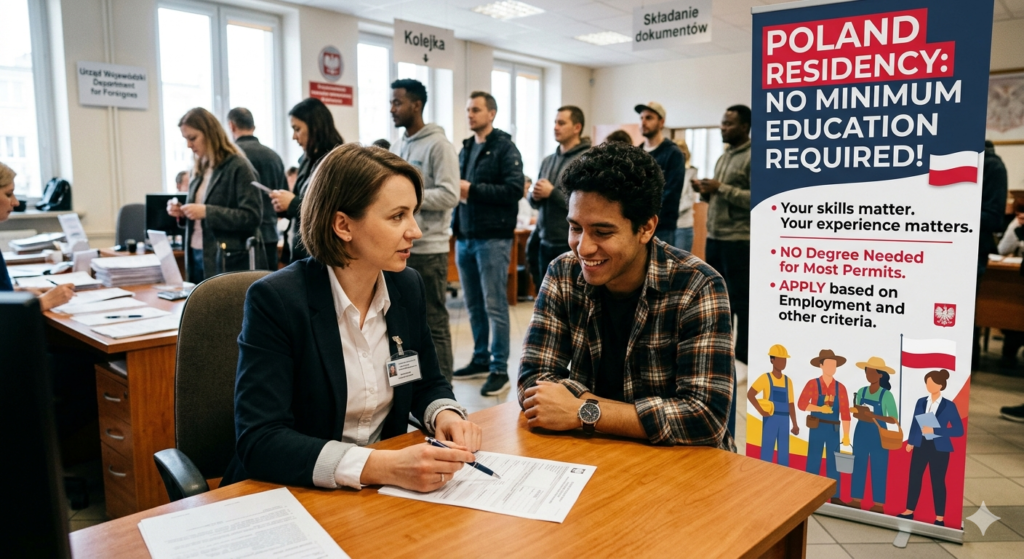
A unique feature of Poland Residency in 3 Months is the absence of a strict minimum education requirement. Many immigration programs around the world place heavy emphasis on academic qualifications. Applicants are often required to present university degrees, professional certifications, or specialized training credentials before they can even begin the application process.
This requirement can become a major barrier for many individuals. Not everyone has access to higher education, and even those who do may find it difficult to meet specific academic criteria required by immigration programs. As a result, countless capable individuals are excluded from opportunities simply because they lack certain educational documents.
The Poland residency pathway offers a different approach. By removing the strict academic requirement, the program becomes accessible to a broader range of applicants. People with diverse backgrounds—including skilled workers, entrepreneurs, freelancers, and individuals with practical experience—can consider applying.
Real-world experience often matters more than formal education. Many successful professionals build their careers through hands-on work, business activities, and personal initiative rather than traditional academic pathways. Recognizing this reality allows immigration programs to attract a wider and more diverse group of residents.
Another advantage of removing the education requirement is flexibility. Applicants do not need to spend months gathering transcripts, verifying degrees, or translating academic documents. This simplifies the preparation stage and contributes to the overall speed of the application process.
Of course, having educational qualifications can still be beneficial in terms of employment opportunities once someone arrives in Poland. The country has a strong job market in sectors such as IT, manufacturing, logistics, finance, and construction. Individuals with professional skills may find numerous opportunities in these industries.
Consultancy firms like H.R. International often assist applicants in understanding how their personal background fits within the residency pathway. Even without formal education credentials, applicants can still pursue opportunities and begin building their future in Europe.
Ultimately, the absence of a strict education requirement makes Poland Residency in 3 Months a more inclusive immigration option, opening doors for individuals who might otherwise be excluded from traditional European programs.
No Language Requirement for Poland Residency in 3 Months
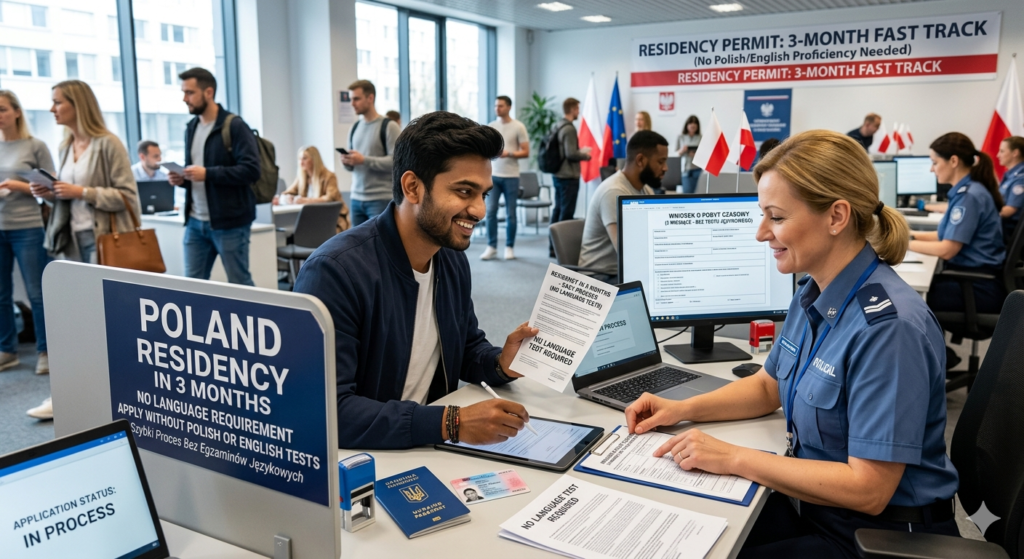
One of the most appealing aspects of Poland Residency in 3 Months is that applicants are not required to pass a language test before applying. In many immigration programs around the world, language proficiency becomes one of the biggest obstacles for potential applicants. Countries like Canada, Australia, and the United Kingdom often require applicants to pass English language tests such as IELTS or TOEFL, while other European countries may require proof of proficiency in their native language. Preparing for these tests can take months or even years, and many people find the process stressful and expensive.
This residency pathway removes that barrier completely. Applicants can apply without demonstrating proficiency in Polish or even English, making the process far more accessible to individuals from different educational and professional backgrounds. For people who may not have had the opportunity to study foreign languages extensively, this creates a valuable opportunity to start their European journey without delay.
Of course, while a language test is not required for the application itself, learning basic Polish or improving English skills can still be helpful after arriving in Poland. Communication plays an important role in everyday life, from interacting with colleagues and employers to managing daily activities like shopping, transportation, and healthcare. Fortunately, Poland has become increasingly international, and English is widely spoken in major cities such as Warsaw, Kraków, Wrocław, and Gdańsk.
Many newcomers gradually learn the language after settling in the country. Language schools, community programs, and online courses make it easier than ever to develop communication skills at a comfortable pace. Instead of facing a language barrier before arriving, residents can adapt naturally as they become more familiar with the culture and environment.
This flexible approach also benefits businesses and employers in Poland. Companies often prefer hiring motivated individuals who are willing to learn and grow rather than restricting their recruitment to applicants who already meet strict language criteria.
Immigration consultants like H.R. International often emphasize this advantage because it significantly reduces the stress associated with the application process. Applicants can focus on preparing the necessary documents and planning their relocation instead of worrying about language exams.
The absence of a language requirement makes Poland Residency in 3 Months one of the most accessible immigration pathways in Europe, allowing individuals from diverse backgrounds to pursue opportunities without unnecessary barriers.
How Applicants Can Apply Without Polish or English Tests
Applying for Poland Residency in 3 Months without a language test might sound unusual to people familiar with traditional immigration programs. However, the process is structured in a way that prioritizes legal documentation and eligibility rather than language proficiency.
The application focuses primarily on the documentation required for obtaining the National Visa D issued by Poland. This visa allows individuals to enter and stay in the country legally for a specific purpose such as work, business, or residency-related activities. Because the program is structured around residency documentation rather than language-based immigration systems, language testing becomes unnecessary at the initial stage.
Applicants typically begin by submitting their personal documentation, identification details, and application forms. Immigration specialists help review these documents to ensure accuracy and compliance with Polish immigration regulations. Once the paperwork is prepared, the application moves forward through the appropriate legal channels.
During the process, applicants may interact with immigration officers or embassy representatives. However, these interactions are usually straightforward and focused on verifying documents rather than evaluating language skills. Many embassies also provide assistance in English or other international languages, making communication easier for applicants.
Another reason language tests are not mandatory is that Poland understands the importance of attracting international residents who can contribute to the economy. By reducing bureaucratic barriers, the country encourages a wider range of people to explore opportunities within its borders.
For applicants who feel uncertain about the process, immigration consultants such as H.R. International provide step-by-step support. They assist with document preparation, appointment scheduling, and communication with the relevant authorities. This guidance helps applicants move through the process with greater confidence.
Once residents arrive in Poland, they can gradually integrate into society and improve their language skills naturally. Many people find that daily interaction with locals and exposure to the culture helps them learn faster than traditional classroom methods.
In this way, the no language requirement policy simplifies the application process while still allowing residents to adapt and grow after arriving in Poland.
No Financial Proof Required for Poland Residency
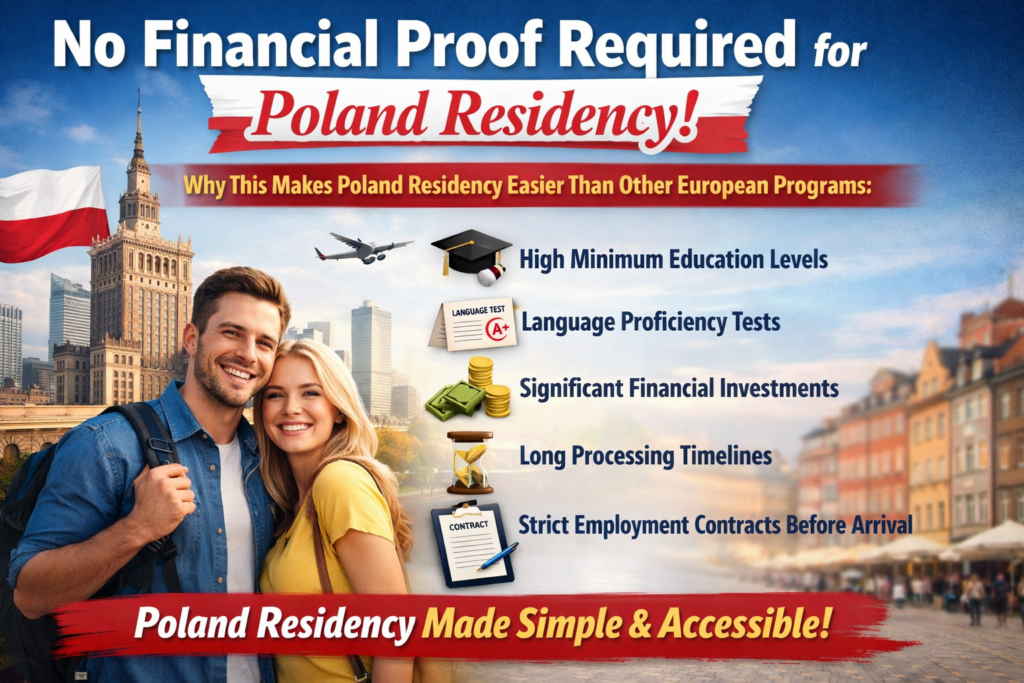
Financial requirements are often one of the most intimidating aspects of immigration programs. Many countries require applicants to show substantial bank balances, investment funds, or proof of stable income before granting residency or visas. These financial thresholds can sometimes reach tens of thousands of dollars, making them unattainable for many people.
The Poland Residency in 3 Months program offers a refreshing alternative by removing the strict requirement for large financial documentation. Applicants are not required to show significant bank balances or extensive financial statements during the application process. This makes the opportunity far more accessible for individuals who may have strong ambitions but limited financial resources.
For many people, this feature alone can be the deciding factor. Immigration should not always be limited to those with large amounts of money. By reducing financial barriers, the program allows individuals from different economic backgrounds to explore opportunities in Europe.
Poland itself is known for having a relatively affordable cost of living compared to Western European countries. While major cities like Warsaw and Kraków offer modern infrastructure and vibrant lifestyles, everyday expenses such as housing, transportation, and groceries are often significantly lower than in cities like London, Paris, or Amsterdam.
This affordability makes it easier for newcomers to establish themselves after arriving. Instead of worrying about high living costs immediately, residents can focus on building their careers, exploring job opportunities, or starting businesses.
Of course, basic financial planning is still important for anyone relocating to another country. Even if formal financial proof is not required, applicants should prepare for initial expenses such as accommodation, transportation, and daily living costs during their first few months.
Consultants like H.R. International often guide applicants through this preparation stage. Their experience helps individuals understand what to expect financially after arrival and how to plan accordingly.
By removing strict financial documentation requirements, Poland Residency in 3 Months creates a more inclusive immigration pathway, allowing individuals with ambition and determination to pursue opportunities in Europe without being restricted by financial barriers.
Why This Makes Poland Residency Easier Than Other European Programs
When comparing immigration options across Europe, it becomes clear why Poland Residency in 3 Months stands out as a simpler and more accessible pathway. Many European residency programs come with multiple layers of requirements that applicants must meet simultaneously.
For example, some countries require:
- High minimum education levels
- Language proficiency tests
- Significant financial investments
- Long processing timelines
- Strict employment contracts before arrival
Meeting all these conditions at once can be extremely challenging. Applicants often spend months gathering documents, preparing for exams, and arranging financial statements before they can even submit their applications.
Poland’s approach simplifies this process by eliminating several of these obstacles. The absence of strict requirements related to education, language, and financial proof dramatically reduces the complexity of the application. Instead of navigating a complicated system, applicants can focus on completing the essential documentation needed for their visa.
Another advantage is the relatively short processing timeline. While some residency programs in Europe may take a year or more to finalize, this program can move forward within approximately three months when the application is properly prepared.
Accessibility also plays a major role in the program’s popularity. By opening the door to a broader range of applicants, Poland attracts individuals who are motivated to work, build businesses, and contribute to the local economy.
Professional support further enhances the experience. Immigration consultants such as H.R. International help applicants avoid common mistakes that could slow down the process. Their expertise ensures that documents are prepared correctly and submitted on time.
When these factors are combined—no education requirement, no language test, no financial proof, and fast processing—the result is a residency pathway that is significantly easier than many alternatives available in Europe.
For individuals seeking a practical and realistic route to Europe, Poland Residency in 3 Months represents one of the most accessible immigration opportunities available today.
Step-by-Step Process to Get Poland Residency in 3 Months
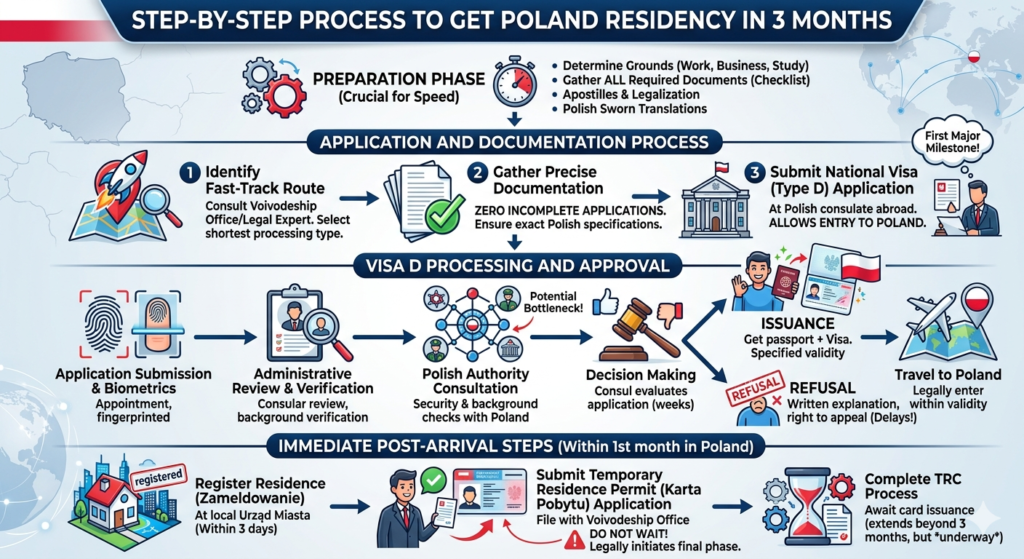
Understanding the step-by-step process for Poland Residency in 3 Months is essential for anyone considering this opportunity. Immigration procedures can sometimes feel overwhelming, especially for applicants who have never dealt with international visa systems before. However, when the process is broken down into clear stages, it becomes much easier to follow and manage.
The first step usually begins with initial consultation and eligibility review. During this phase, applicants discuss their background, goals, and documentation with immigration specialists. Consultants such as H.R. International evaluate whether the applicant meets the program’s requirements and explain how the process works. This stage is important because it ensures that the applicant understands the timeline, documents required, and potential outcomes before moving forward.
Once eligibility is confirmed, the documentation preparation stage begins. Applicants are asked to provide essential documents such as passports, identification records, photographs, and other paperwork required for the visa application. Accurate documentation is critical because any missing or incorrect information can delay the process. Immigration consultants typically review these documents carefully to ensure everything meets the required standards.
After preparing the documentation, the application submission stage follows. The necessary forms and supporting documents are submitted to the appropriate authorities or embassy responsible for processing the National Visa D. This stage officially initiates the residency process and begins the evaluation period.
During the waiting period, authorities review the application and verify the submitted documents. Applicants may occasionally be asked to attend an appointment or provide additional information if required. With proper preparation, this stage usually proceeds smoothly.
Once the application is approved, the applicant receives the Visa D authorization, which allows entry into Poland. From this point, individuals can begin planning their relocation, accommodation, and initial activities in the country.
The entire process—from preparation to visa approval—can often be completed within approximately three months, provided that the application is correctly prepared and submitted.
Working with experienced professionals like H.R. International can significantly simplify this journey. Their knowledge of immigration procedures helps applicants avoid mistakes and ensures that each stage of the process moves forward efficiently.
Ultimately, the structured process ensures that Poland Residency in 3 Months remains one of the most straightforward immigration pathways available for entering Europe.
Application and Documentation Process
The application and documentation process is the backbone of obtaining Poland Residency in 3 Months. Even though the program removes many traditional barriers such as education, language tests, and financial proof, proper documentation is still essential to ensure that the application is legally valid and processed without delays.
Applicants begin by gathering their basic personal documents. These typically include a valid passport, passport-sized photographs, identification records, and completed application forms. The passport must usually be valid for a certain period beyond the intended stay, ensuring that applicants can travel without issues during the visa process.
Another important aspect of the documentation process is accuracy and consistency. All details across documents must match perfectly. Even small discrepancies in names, dates, or identification numbers can create delays during verification. This is why many applicants choose to work with professional immigration consultants who carefully review each document before submission.
Once the documents are collected, they often need to be translated or formatted according to embassy requirements. Different countries may require specific formats or official translations for documents submitted during visa applications. Preparing these correctly helps avoid complications during the review stage.
Applicants may also need to fill out several official forms related to the National Visa D application. These forms typically request personal information, travel intentions, and background details. Although the forms are generally straightforward, they must be completed carefully to avoid errors.
Immigration consultants such as H.R. International provide valuable support during this stage by guiding applicants through the entire documentation process. They assist with form completion, document verification, and submission preparation. This professional oversight helps ensure that the application is both complete and compliant with immigration regulations.
Once everything is ready, the application package is submitted to the appropriate embassy or visa processing authority. At this point, the official review process begins.
By carefully preparing documentation and following the correct procedures, applicants can significantly increase their chances of a smooth and successful application for Poland Residency in 3 Months.
Visa D Processing and Approval
The Visa D processing and approval stage is one of the most important phases of obtaining Poland Residency in 3 Months. After the application and documentation have been submitted, the responsible authorities begin reviewing the case to determine whether the applicant meets the program’s requirements.
The National Visa D, often referred to as a long-stay visa, allows individuals to remain in Poland for an extended period while pursuing specific purposes such as employment, residency preparation, or other approved activities. This visa also provides mobility within the Schengen Area for short-term travel, which is one of the major advantages of the program.
During the processing stage, immigration officials verify the submitted documents and ensure that all information provided by the applicant is accurate. They may review identification records, confirm personal details, and ensure that the application aligns with Polish immigration regulations.
In some cases, applicants may be asked to attend a visa appointment or interview at the embassy or consulate. These meetings are usually straightforward and focus on verifying information rather than conducting complex evaluations. Applicants are typically asked basic questions about their plans in Poland and the purpose of their stay.
Processing times can vary depending on several factors, including application volume and embassy schedules. However, when the application is properly prepared and submitted, the overall timeline generally aligns with the three-month processing expectation.
Once the visa is approved, the applicant receives their Visa D authorization, which allows them to travel to Poland and begin their residency journey. This is often the most exciting moment for applicants, as it represents the successful completion of the immigration process.
After arriving in Poland, individuals can begin settling into their new environment, exploring job opportunities, and adapting to life in Europe.
Consultants like H.R. International continue to support clients even after visa approval by providing guidance on travel arrangements, accommodation options, and next steps after arrival.
The Visa D approval stage ultimately marks the transition from planning to reality, turning the goal of Poland Residency in 3 Months into a tangible opportunity to start a new chapter in Europe.
Converting Poland Residency into Long-Term Residency in 3 Years
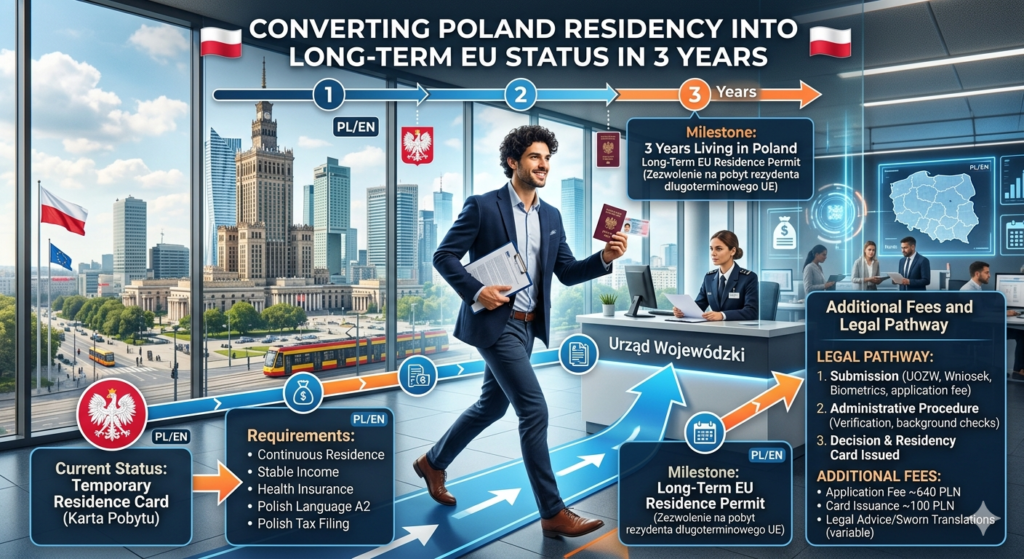
One of the most attractive long-term advantages of Poland Residency in 3 Months is the possibility of converting the initial residency status into a more stable long-term residency after three years. For many applicants, the initial visa is only the first step in a larger journey toward building a permanent life in Europe. Poland provides a clear legal pathway that allows residents to gradually transition from temporary status to a longer-term residency arrangement.
When individuals first arrive in Poland through the National Visa D, they receive the right to stay in the country for an extended period under specific conditions. During this time, residents can explore employment opportunities, start businesses, integrate into society, and build connections within the local community. This period becomes an important foundation for anyone planning to remain in Europe for the long run.
Maintaining legal residency during these three years is crucial. Residents must follow Polish immigration regulations, ensure their documentation remains valid, and comply with any requirements associated with their visa status. By maintaining proper legal standing, individuals position themselves for a smoother transition into long-term residency when the time comes.
The opportunity to convert residency status adds significant value to the program. Many immigration pathways offer temporary visas but provide limited options for long-term settlement. In contrast, Poland’s system allows residents to gradually establish themselves and eventually pursue more permanent status.
For families and professionals planning their future, this long-term pathway creates a sense of stability. Instead of constantly renewing short-term visas or worrying about relocation, residents can focus on building careers, pursuing education, or growing businesses in Poland.
Organizations like H.R. International often guide applicants through this long-term strategy from the beginning. Rather than focusing only on the initial visa, they help clients understand the entire journey—from arrival in Poland to potential long-term residency.
This forward-looking approach makes Poland Residency in 3 Months not just a quick entry program but a potential foundation for long-term life in Europe.
Additional Fees and Legal Pathway to Long-Term Status
While the possibility of converting residency into a longer-term status is appealing, applicants should understand that there may be additional fees and administrative procedures involved in the process. Immigration systems typically require residents to submit new applications, updated documentation, and relevant payments when transitioning from temporary to longer-term residency.
These fees vary depending on the specific residency category and administrative costs associated with processing the application. They generally cover government processing, legal documentation, and administrative services required to evaluate the request. Although these expenses exist, they are often considered reasonable compared to the costs associated with other European residency programs.
The legal pathway toward long-term residency typically involves demonstrating that the resident has maintained lawful presence in Poland during the previous years. This may include proof of address, valid residency documentation, and evidence that the individual has complied with immigration regulations.
Applicants may also need to show that they have integrated into the local environment to some degree. Integration can take many forms, such as participating in the workforce, maintaining stable living arrangements, or contributing to the local economy. These factors help demonstrate that the resident intends to build a legitimate life within the country.
Professional guidance can be extremely valuable during this stage. Immigration regulations may change over time, and each case may involve unique circumstances. Consultants like H.R. International assist residents by monitoring regulatory updates, preparing documentation, and ensuring that the application for long-term residency is submitted correctly.
Planning ahead is often the key to success. Individuals who maintain proper records, renew documents on time, and follow immigration guidelines during their initial residency period will generally find the transition to long-term status much smoother.
Ultimately, the possibility of converting Poland Residency in 3 Months into a longer-term residency after three years creates a clear pathway for individuals who wish to establish a stable and lasting presence in Europe.
Why Choose H.R. International for Poland Residency in 3 Months
Navigating international immigration processes can be complex, even when the program itself is relatively straightforward. This is why many applicants choose to work with experienced immigration consultants who can guide them through every stage of the journey. H.R. International has become a recognized name in this field, assisting individuals who wish to pursue Poland Residency in 3 Months.
One of the biggest advantages of working with a professional consultancy is expert guidance. Immigration procedures involve detailed paperwork, legal requirements, and strict timelines. Missing a document or submitting incorrect information can result in delays or even rejection of an application. Experienced consultants help ensure that every step is handled correctly from the start.
Another important benefit is time efficiency. Many applicants have full-time jobs, businesses, or family responsibilities that make it difficult to manage the entire visa process alone. By working with professionals, they can delegate much of the administrative work while focusing on preparing for their move to Europe.
Consultancies also provide valuable knowledge of immigration procedures and embassy requirements. Regulations may change periodically, and staying updated with these changes is essential for successful applications. Companies like H.R. International closely monitor these developments to ensure their clients receive accurate guidance.
In addition to technical support, professional consultants offer strategic advice. They help applicants understand the best approach for their situation, whether they plan to work, explore business opportunities, or eventually pursue long-term residency.
Trust and transparency are equally important. Reputable immigration firms aim to build long-term relationships with their clients by providing clear information about the process, timelines, and expectations. This transparency helps applicants feel confident about their decisions.
For individuals unfamiliar with European immigration systems, having a knowledgeable partner can make the entire experience significantly less stressful.
Choosing a professional service such as H.R. International allows applicants to move forward with greater confidence as they pursue Poland Residency in 3 Months.
Professional Immigration Support and Documentation Assistance
One of the most valuable services offered by immigration consultants is documentation assistance. Even when the requirements appear simple, organizing and submitting documents correctly can be challenging for applicants who are unfamiliar with embassy procedures.
Professionals help ensure that all paperwork is properly prepared, formatted, and submitted within the required timelines. This attention to detail reduces the risk of errors that could delay the application process.
Another important role of consultants is application management. Instead of applicants having to track every stage themselves, consultants monitor the progress of the application and provide updates whenever necessary. This proactive approach helps applicants stay informed throughout the process.
Consultants also assist with appointment scheduling and embassy communication. Visa appointments, document submissions, and interviews must often be coordinated carefully. Having an experienced team handle these arrangements can save applicants significant time and effort.
In many cases, applicants also receive guidance on post-arrival planning. This may include information about accommodation, transportation, local registration requirements, and other practical aspects of settling in Poland.
Support does not necessarily end once the visa is issued. Some consultancy firms continue assisting clients during their early months in the country, ensuring they understand the steps required to maintain their legal residency status.
For individuals who are navigating international relocation for the first time, this level of support can make a huge difference. Instead of feeling overwhelmed by paperwork and procedures, they can approach the process with confidence.
Through comprehensive support services, H.R. International helps simplify the journey toward Poland Residency in 3 Months, making the entire experience more organized and manageable.
Cost Structure and Timeline for Poland Residency Program
Understanding the cost structure and timeline is an important part of planning for Poland Residency in 3 Months. Every immigration process involves certain expenses, including government fees, documentation costs, and professional service charges when consultants are involved.
Government fees typically cover visa processing, administrative documentation, and embassy services. These fees are determined by Polish authorities and may vary depending on the specific visa category and processing requirements.
Applicants may also encounter documentation-related expenses, such as passport renewals, translations, notarizations, or official certifications. These costs are generally moderate but should still be considered during the planning stage.
If applicants choose to work with professional consultants like H.R. International, service fees may apply for assistance with documentation preparation, application management, and immigration guidance. Many applicants find these services valuable because they help avoid costly mistakes or delays.
The timeline for the entire process is one of the biggest advantages of the program. When documents are properly prepared and submitted without issues, the process can often be completed within approximately three months. This timeline includes document preparation, application submission, and visa processing.
However, processing times may vary slightly depending on embassy schedules, application volumes, and other administrative factors. Applicants should always allow some flexibility in their planning to accommodate these variables.
Preparing early and ensuring that all documents are accurate can significantly improve the chances of staying within the expected timeline.
Overall, the combination of relatively manageable costs and a short processing timeline makes this program an appealing option for individuals who want to enter Europe quickly without navigating extremely complex immigration systems.
Is Poland Residency in 3 Months the Right Opportunity for You?
For many individuals seeking new opportunities abroad, Poland Residency in 3 Months presents an attractive and accessible pathway into Europe. The program removes several of the barriers that often make immigration difficult, including strict education requirements, language proficiency tests, and heavy financial documentation.
The ability to obtain residency relatively quickly—often within a three-month timeframe—makes this option particularly appealing for people who want to act on opportunities without long waiting periods. Whether someone is exploring career prospects, business opportunities, or a fresh start in Europe, the program provides a practical entry point.
Poland itself offers a compelling environment for newcomers. With a strong and growing economy, affordable cost of living, and central location within Europe, the country has become an increasingly popular destination for international residents. The mobility advantage provided by Visa D further enhances the appeal, allowing residents to travel across the Schengen area and experience different cultures and markets throughout Europe.
Another important factor is the potential for long-term residency after three years. This pathway allows individuals to gradually build their lives in Poland while maintaining the possibility of securing a more permanent status in the future.
Working with experienced consultants such as H.R. International can make the journey significantly smoother. Their expertise in immigration procedures, documentation, and application management helps applicants navigate the process with greater confidence.
For individuals who want a simple, fast, and accessible route to Europe, Poland Residency in 3 Months may represent a valuable opportunity. With proper preparation and guidance, applicants can take the first step toward building a new chapter of their lives in one of Europe’s most dynamic countries.
FAQs
1. Can I really get Poland residency in 3 months?
Yes, the Poland Residency in 3 Months program is designed to provide a relatively fast immigration pathway. When all documents are properly prepared and submitted, the visa processing and approval timeline can often be completed within approximately three months.
2. Is there any minimum education requirement for this program?
No. One of the key advantages of this residency pathway is that there is no strict minimum education requirement, making it accessible to individuals from different educational and professional backgrounds.
3. Do I need to pass an English or Polish language test?
No language test is required for applying. Applicants can pursue Poland Residency in 3 Months without IELTS or Polish language certification, although learning the language later can help with daily life and employment.
4. Can I travel to other European countries with Visa D?
Yes. The National Visa D issued by Poland allows short-term travel within the Schengen Area, giving residents the opportunity to visit multiple European countries.
5. Can I convert this residency into long-term residency?
Yes. After maintaining legal residency and meeting certain requirements, individuals may be able to convert their status into long-term residency in Poland after approximately three years, often involving additional administrative procedures and fees.
Leave a Reply