


Hungary has become one of Europe’s most attractive destinations for people seeking long-term stability, affordability, and a high quality of life. Whether you want to build a career, start a business, or settle with your family in the heart of Europe, securing a Permanent Residency Permit in Hungary—often known as the Permanent Residence Card—can open the door to endless opportunities. This card not only gives you long-term security but also grants you many of the benefits enjoyed by Hungarian citizens, making it a highly desirable legal status.
For many foreigners, especially those coming from non-EU countries, the dream of living in Europe feels complex or out of reach. However, Hungary offers one of the more structured, clear, and attainable pathways to permanent residence—provided you understand the rules, requirements, and application steps. This detailed guide will walk you through everything you need to know, from eligibility and documentation to the application process, costs, benefits, and even the steps toward eventual citizenship.
If you’re planning to live, work, or invest in Hungary long-term, this article will serve as your complete roadmap. Every step is explained in detail, ensuring that you can prepare confidently and avoid common mistakes that often delay or complicate the application.
Understanding the Permanent Residence Card in Hungary
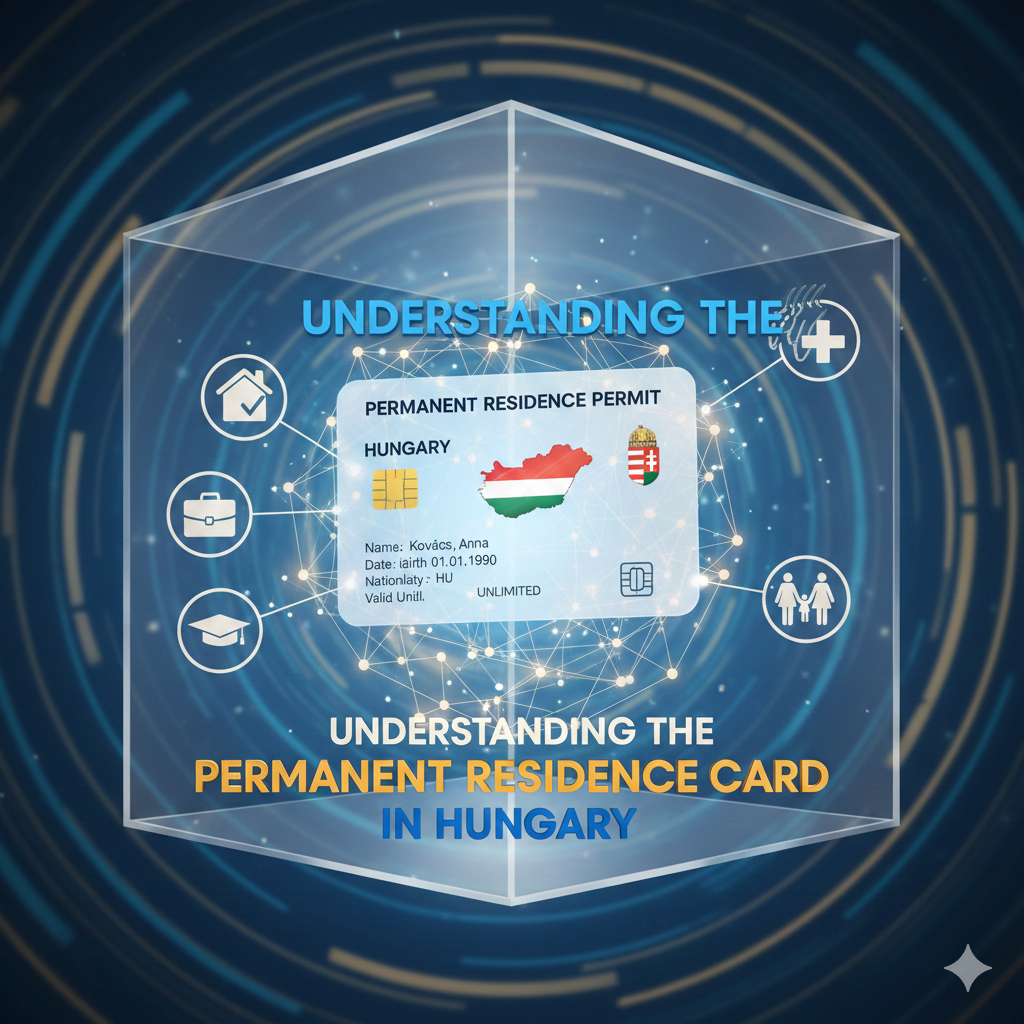
The Permanent Residence Card in Hungary is one of the most valuable residence statuses that a foreign national can obtain. Unlike short-term or temporary residence permits, which must be renewed regularly and come with certain limitations, the permanent residence card offers long-term stability, broad rights, and a sense of security that makes living in Hungary far more convenient. Think of it as the golden key that opens the door to almost everything a Hungarian citizen can enjoy—minus the right to vote in national elections or hold public office.
At its core, the permanent residence card allows a foreigner to live in Hungary indefinitely, provided they continue meeting basic requirements such as having a stable living situation, maintaining a clean legal background, and not leaving the country for extremely long periods without valid reason. Many people describe the card as a kind of “bridge” between being a temporary resident and eventually becoming eligible for Hungarian citizenship.
One major point that makes the Permanent Residency Permit in Hungary attractive is that it simplifies life dramatically. With this card, you don’t have to worry about renewing your permit every year or proving immediate employment. It also comes with freedom in choosing work—meaning you can switch jobs, start your own business, or even work multiple positions without applying for separate work permits. For entrepreneurs, this flexibility is often a game-changer, because Hungary has become a growing hub for digital nomads, IT professionals, and small business owners thanks to its affordable living costs and strategic European location.
This card is available to both EU and non-EU citizens, though the eligibility criteria can differ. Generally, the applicant must show that they have lived legally in Hungary for a certain number of years—typically three to five, depending on the type of permit they previously held and their personal circumstances. Family members of Hungarian citizens or permanent residents can often apply sooner, making the process even smoother for those who come to Hungary for family reunification. Whether you are a worker, investor, student, or entrepreneur, the permanent residence card can transform your long-term plans into reality.
Advantages of Obtaining a Permanent Residency Permit in Hungary
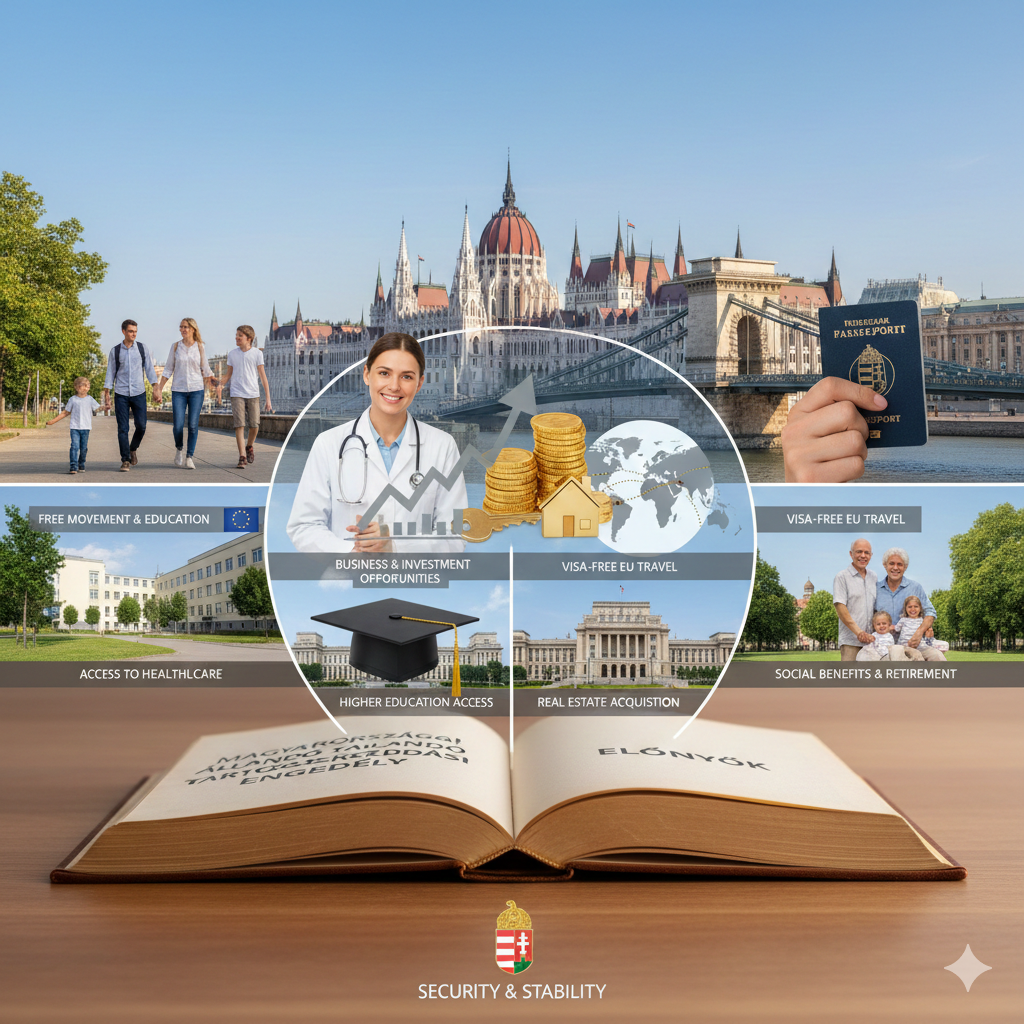
Securing a Permanent Residency Permit in Hungary comes with a long list of advantages that make it one of the most desirable residence statuses in Europe. Many people choose Hungary because of its affordable lifestyle, central location, and peaceful environment—but gaining permanent residence takes things to an entirely different level. The real benefit is stability. Once you have your permanent residence card in hand, you no longer need to stress over frequent renewals, changing residence rules, or depending on an employer to keep your legal status active. It gives you the freedom to plan your life for the long term, without feeling tied down by bureaucracy or temporary permits.
One of the biggest perks is unrestricted access to the Hungarian labor market. As a permanent resident, you are free to work for any employer, switch jobs whenever you want, or even run your own company without applying for separate work permits. This level of flexibility is ideal for anyone looking to build a secure career path or explore multiple business opportunities. Additionally, Hungary’s rapidly growing sectors—like tech, engineering, tourism, and logistics—offer plenty of job potential for skilled professionals.
Another major advantage is the freedom to travel within the Schengen Zone. While a permanent residence card isn’t the same as a passport, it still allows visa-free travel to other Schengen countries for short stays, making Europe more accessible and enjoyable. For people who love weekend getaways or need to travel for work, this benefit alone is a huge motivation to pursue permanent residence.
Family benefits also play a significant role. Permanent residency in Hungary allows you to bring your spouse, children, or even dependent parents to Hungary more easily. It also gives your children access to the Hungarian education system, which is known for its high-quality public schools and affordable university programs. Healthcare access is another strong benefit—permanent residents can join the national health insurance system, ensuring affordable medical care whenever needed.
Overall, the advantages of the Permanent Residence Card in Hungary go far beyond the right to stay. It gives you peace of mind, more economic opportunities, and a stronger foundation for a future in Europe—whether you plan to live, work, study, invest, or even take the path toward citizenship.
Key Requirements for the Hungarian Permanent Residence Card
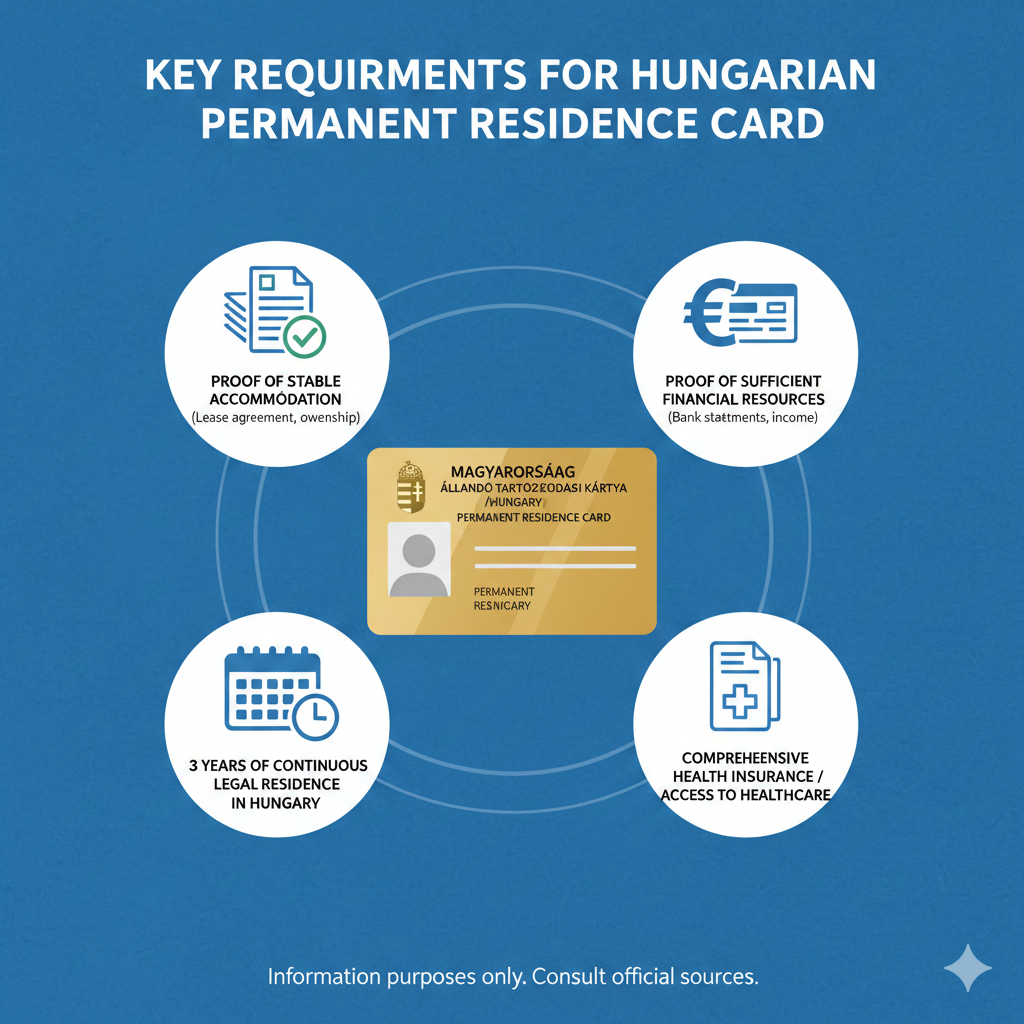
Applying for a Permanent Residency Permit in Hungary may sound complex, but once you understand the key requirements, the process becomes far more manageable. Hungary emphasizes stability, integration, and lawful residence, so most requirements are designed to verify that you’ve genuinely settled in the country and are capable of supporting yourself without issues. If you meet the criteria and prepare your documents carefully, your chances of approval increase significantly.
The first and most important requirement is the period of legal residence in Hungary. In most cases, non-EU citizens must live in Hungary continuously for at least three to five years before they become eligible for permanent residence. This residence must be lawful, meaning your temporary permits must have been valid and renewed on time. Additionally, Hungary expects applicants to spend most of the year physically present in the country. Short trips abroad are fine, but long absences can affect eligibility. This ensures that only people with real ties to Hungary receive permanent residency.
Financial stability is another major requirement. Applicants must prove they have a stable income or financial resources sufficient to support themselves without relying on state aid. This can include employment income, business earnings, savings, pensions, or any other legally verifiable source of funds. The goal here is simple: Hungary wants to ensure that permanent residents can live comfortably and independently.
Accommodation is equally important. You must show proof of a stable place to live in Hungary, whether it’s a rental contract, property ownership document, or an official accommodation agreement. The address you register must match the accommodation document you provide, and authorities sometimes verify this during the evaluation process.
Health insurance is another essential requirement. Every applicant must demonstrate that they have full health coverage in Hungary. This can be through private insurance or enrollment in the national health insurance system. Since permanent residents use the public healthcare system, ensuring coverage is a mandatory step.
Lastly, a clean criminal record is crucial. Hungary requires proof that you have no criminal background that threatens public safety or national security. This usually involves submitting a police clearance certificate from your home country as well as confirmation from Hungarian authorities.
Meeting these core requirements creates a strong foundation for your application and increases the likelihood of obtaining a Permanent Residence Card in Hungary without unnecessary delays.
Types of Permanent Residency Permits in Hungary
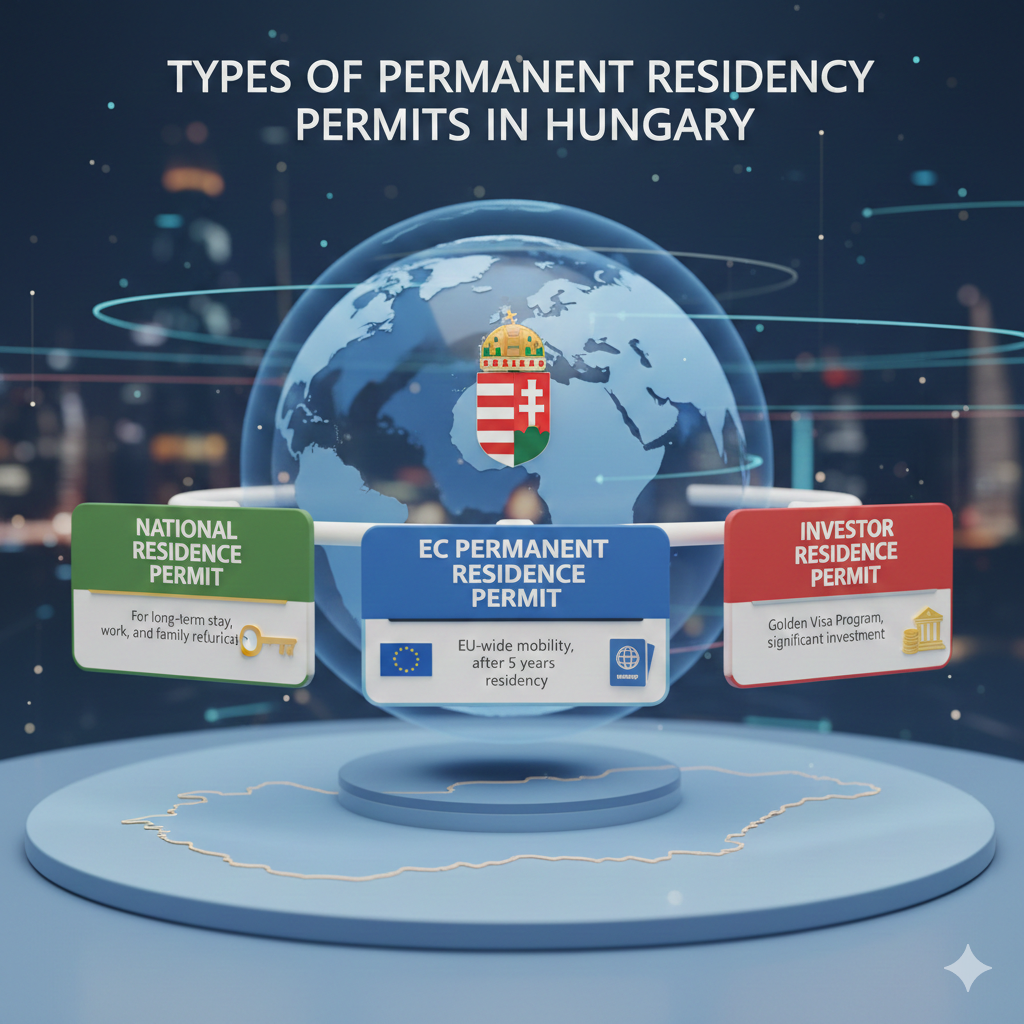
When exploring the possibility of long-term residence, it’s essential to understand the types of Permanent Residency Permits in Hungary, because the country offers different categories based on your background, nationality, and the length of your stay. Each type comes with its own conditions, benefits, and timelines, and choosing the right one can make your entire immigration journey smoother and more predictable. Although the idea of “permanent residence” sounds straightforward, Hungary divides this status into two main forms: the National Permanent Residence Permit and the EC Permanent Residence Permit. Understanding these two options is crucial before starting your application.
The National Permanent Residence Permit (NPRP) is the most common type for non-EU citizens. It is available to individuals who have lived legally and continuously in Hungary for at least three years, provided they meet all the residency, financial, and personal requirements. This type of permit is ideal for workers, entrepreneurs, students transitioning to employment, or families who wish to settle permanently in Hungary. It allows you to live and work in Hungary indefinitely, and it simplifies everything from employment to education and healthcare access. One key point about this permit is that it is granted specifically for residence in Hungary, meaning it does not give long-term resident rights in other EU countries. However, you can still travel within the Schengen Zone for short trips.
The EC Permanent Residence Permit (often called EU Long-Term Residence Permit) is more advanced. It is designed for residents who have lived in Hungary for at least five years legally and continuously. This permit gives broader rights, including the ability to move to and live in other EU countries under certain conditions. For many people, this is the ultimate goal because it provides a much stronger level of mobility within Europe. The EC permit also comes with shorter renewal processes and enhanced access to public services.
Both types of permanent residence cards come with long-term stability, work freedom, and family rights. The key difference lies in mobility and eligibility timeframes. While the National Permanent Residence Permit is easier to obtain sooner, the EC Permanent Residence Permit offers wider benefits if you’re planning a long-term European lifestyle. Understanding these distinctions helps you choose the right path and prevents unnecessary delays during your application.
Permanent Residency Permit in Hungary for Non-EU Citizens
For non-EU citizens, obtaining a Permanent Residency Permit in Hungary is one of the most meaningful steps toward long-term stability in Europe. While the process requires careful preparation, it is far more achievable than many people expect—especially compared to other EU countries with stricter and more complicated immigration systems. Hungary offers a clear path for non-EU nationals who have already built their life in the country through work, study, business, or family ties, and this has made it an increasingly attractive destination for international residents.
To qualify, non-EU citizens must typically live in Hungary continuously for at least three years with a valid temporary residence permit. These temporary permits could be related to employment, entrepreneurship, research, or family reunification. What matters most is that your stay has been legal, uninterrupted, and supported by official documentation. Hungary carefully reviews your residency history to ensure you have genuinely integrated into the country and have made it your long-term home. Short holidays abroad or business trips are perfectly acceptable, but long absences may affect your eligibility, so maintaining consistency in Hungary is important.
Financial stability plays a major role. Non-EU applicants must prove that they earn enough income to support themselves without relying on state assistance. This can come from employment, business activity, savings, passive income, or any legally verifiable financial resource. The idea is simple: Hungary wants permanent residents who contribute to the economy and can maintain a stable life without financial hardship. You will also need proof of accommodation, whether rented or owned, as well as full health insurance coverage that ensures you won’t face medical challenges without proper support.
The Permanent Residence Card for non-EU residents brings major advantages once approved. You gain unlimited access to the labor market, meaning no more work permits or employer sponsorship. You can change jobs freely, start a new business in Hungary, or run multiple income streams without restrictions. The card also allows free movement within the Schengen Zone for short stays, which opens the door to easy travel, weekend getaways, and networking opportunities.
Family reunification becomes easier as well. Once you hold permanent residency, your spouse, children, and dependent relatives can also apply for residence rights in Hungary, making it a family-friendly option for long-term settlement.
Although the process requires attention to detail, meeting the requirements ensures a smooth path forward. For many non-EU nationals, obtaining permanent residency in Hungary is more than just a legal status—it’s the beginning of a stable, inclusive, and opportunity-filled life in the heart of Europe.
Permanent Residency Permit in Hungary for EU Citizens
For EU citizens, obtaining a Permanent Residency Permit in Hungary is significantly easier compared to the process non-EU nationals face. Thanks to freedom of movement within the European Union, EU citizens already have the right to live, work, and study in Hungary without needing a visa or work permit. However, after spending a certain amount of time in the country, many choose to apply for permanent residence because it offers long-term security, simplified administrative processes, and deeper integration into Hungarian life.
EU citizens can typically apply for the Permanent Residence Card in Hungary after residing in the country legally and continuously for five years. This five-year period is easier to maintain because EU residents do not need temporary permits—only a registration certificate and a local address card. As long as they live in Hungary, pay taxes, work, study, or support themselves financially, they can accumulate the required years without dealing with yearly renewals or employer sponsorship.
One of the biggest advantages for EU citizens is the lighter documentation requirement. While non-EU residents must submit extensive paperwork, EU citizens only need to demonstrate their consistent presence in Hungary, proof of stable financial means, accommodation, and health insurance. These documents are straightforward and often already part of everyday life—like employment contracts, bank statements, university enrollment papers, or proof of pension payments.
The benefits of the Permanent Residency Permit in Hungary for EU citizens are substantial. It allows them to stay in the country indefinitely without needing to prove ongoing eligibility, gives them better access to public services, and makes life significantly easier when dealing with administrative offices. It also offers extra protection—once you hold permanent residence, even long periods of unemployment do not affect your legal status in the country.
Another reason EU citizens choose permanent residence is family security. Once granted, family members (including non-EU spouses or children) can enjoy smoother residency processes. It also serves as a stepping stone for those who eventually want to apply for Hungarian citizenship, as the years spent holding a permanent residence permit often count toward the citizenship timeline.
In short, the process is smoother, the requirements are lighter, and the long-term benefits are substantial. For EU citizens planning to make Hungary their home, obtaining a permanent residence card is not just a document—it’s the start of a stable, secure, and deeply rooted life in one of Europe’s most welcoming countries.
Step-by-Step Process to Apply for a Permanent Residence Card in Hungary
Applying for a Permanent Residence Card in Hungary may feel intimidating at first, especially if you’re not familiar with local procedures or Hungarian administrative culture. However, once you break the process into clear, manageable steps, it becomes surprisingly straightforward. The key to success is following each step carefully, gathering all required documents, and submitting everything in the correct form. Whether you are a non-EU resident who has lived in Hungary for years or an EU citizen wanting long-term security, this step-by-step guide will help you navigate the process with confidence.
The first step is to check your eligibility. Before you do anything else, make sure you meet the minimum residency requirement—usually three years for non-EU citizens and five years for EU citizens. During this period, your stay must have been legal and continuous. This means you should have valid temporary permits, address cards, and proof that you were physically residing in Hungary. Verify that you meet financial, accommodation, and health insurance requirements as well. Once you confirm that everything aligns with Hungary’s criteria, you can move on to the next step.
The second step is to collect all necessary documents. This is often the most time-consuming part, but also the most important. You will need identification documents, previous residence permits, proof of income, tax records, accommodation contracts, health insurance papers, and clean criminal record certificates. Make sure every document is up to date, translated if required, and consistent with your registered address. Many applications get delayed simply because of missing or outdated paperwork, so double-checking is crucial.
Next comes submitting your application, which must be done through the National Directorate-General for Aliens Policing (Immigration Office). Depending on your situation, you may apply online through their official portal or in person at the regional office. When submitting, ensure all documents are uploaded or handed over clearly, without missing pages or unclear scans. After submission, you will receive confirmation and a case number that allows you to track the application.
The fourth step is the processing phase, during which the immigration authority reviews your documents, verifies your residency history, and may request additional information. This stage can take several weeks or even months. It’s important to monitor your email and respond quickly to any requests for clarification.
Finally, once approved, you will be notified to collect your Permanent Residence Card. The card is usually delivered by post or can be picked up from the immigration office depending on your location. Once you receive it, you officially gain long-term residence rights in Hungary—opening the door to long-term security, work freedom, and easier travel in Europe.
Required Documents for a Permanent Residency Permit in Hungary
When applying for a Permanent Residency Permit in Hungary, one of the most important steps is preparing the correct set of documents. This part of the process can feel overwhelming, especially if you’re not familiar with Hungarian administrative rules, but once you understand what’s required and why, everything becomes much easier to manage. The key is organization. If you prepare everything clearly and correctly, your chances of approval increase dramatically and your application will move through the system more smoothly.
The first essential document is a valid passport, which must remain valid for the duration of the application period. It acts as your primary form of identification, and the immigration authority will use it to verify your nationality, identity, and previous travel history. Along with your passport, you must submit copies of your previous residence permits issued in Hungary. These help prove that your residence has been continuous and lawful, which is one of the most important criteria for permanent residency.
Next, you must provide proof of legal residence. This usually includes your registered address card (lakcímkártya), tenancy contract, or proof of property ownership. The immigration office often cross-checks this information, so it’s crucial that your registered address matches the documents you submit. Consistency is extremely important—any mismatch can delay the application.
Financial documentation is equally important. Applicants must show they have stable and sufficient income to support themselves without relying on public assistance. This can be demonstrated through employment contracts, monthly salary slips, tax records, business income documents, pension statements, or bank account history. If you own a business, you may need to include company registration papers, profit declarations, or accounting statements.
Another essential requirement is health insurance. You must prove that you have full health coverage in Hungary, either through private insurance or through enrollment in the national health insurance system (TAJ). If you are employed, your employer typically handles your health insurance automatically, but you may still need to provide proof of your TAJ registration.
You will also need a clean criminal record certificate from your home country as well as confirmation from Hungarian authorities that you do not have a criminal history within Hungary. This requirement ensures that applicants pose no risk to public safety or national security.
Finally, include a completed application form, passport-size photos, and any additional documents requested based on your personal situation (such as marriage certificates, birth certificates, or documents proving family relationships).
By preparing all documents carefully and ensuring consistency, you create a strong application file that significantly increases your chances of receiving a Permanent Residence Card in Hungary without unnecessary delays.
Processing Time for Permanent Residence Card in Hungary
Understanding the processing time for a Permanent Residence Card in Hungary is crucial for planning your life, work, or family arrangements. While the exact timeline can vary depending on your situation, the immigration office’s workload, and the completeness of your documents, having a general idea of what to expect helps reduce stress and ensures you’re prepared for each stage of the journey. Unlike short-term permits, permanent residence applications undergo a more thorough review because the decision has long-term implications for both the applicant and the country.
On average, the processing time for a Permanent Residency Permit in Hungary ranges from 70 to 90 days, though in some cases, it can extend up to six months. This broad range is due to several factors. For example, if your documents are perfectly organized and you’ve lived in Hungary legally for many years without any gaps, your application might move through the system faster. However, if the immigration office requires additional clarification, missing pages, or documents, your file may be delayed until everything is submitted correctly.
Another factor that affects processing time is the time of year. Certain periods—especially the summer months and the end of the year—are much busier. Many residents apply for renewals or new permits during these times, which increases the workload for immigration officers. If you want to avoid longer waits, submitting your application during quieter months can be beneficial.
Background checks also contribute to the timeline. The immigration office must verify your residence history, criminal record, employment or financial information, and whether your stay in Hungary has been continuous. This process can take longer for applicants who have lived in multiple countries or who have changing employment histories.
You can track your application through the official portal if you applied online, and it’s a good idea to check your email frequently. The authorities may request additional documents, and responding quickly can prevent further delays.
Overall, while the processing time may require patience, the outcome is worth the wait. Once approved, you gain long-term security, full access to the job market, and the freedom to build your future in Hungary without worrying about annual permit renewals. Being prepared, organized, and responsive can significantly help you move through the process with fewer delays.
Cost of Applying for Permanent Residency Permit in Hungary
When preparing to apply for a Permanent Residency Permit in Hungary, understanding the full cost involved is just as important as gathering the right documents. While Hungary is known for having relatively affordable administrative fees compared to many Western European countries, the total cost can still vary depending on your nationality, the type of permit you’re applying for, and whether you are submitting the application in person or online. Knowing the cost in advance helps you plan financially and ensures there are no surprises later.
The government filing fee for a Permanent Residence Card in Hungary typically ranges between €100 and €150, depending on the specific category of the permit and whether you apply for a National Permanent Residence Permit or an EC Permanent Residence Permit. These fees may be paid either online through the government portal or at the immigration office using approved payment methods. For many applicants, this is the core cost, but it’s not the only one to consider.
You may also need to account for document-related expenses. These include fees for obtaining official translations of your foreign documents, as Hungary requires certain certificates—like birth certificates, marriage certificates, or police clearance records—to be translated into Hungarian by a certified translator. Translation fees can vary widely, but it’s wise to budget at least €10–€20 per page depending on complexity. Some documents may require authentication or apostilles, especially if they come from outside the EU, which adds to the overall cost.
Another expense is related to health insurance, as you must prove you have valid coverage in Hungary. If you are already employed, your employer likely covers your national insurance contributions. However, if you are self-employed, a student, or applying independently, you may need to pay for private health insurance until you join the national health system. Private insurance premiums can range from €30 to €80 per month depending on your coverage.
You should also include the cost of passport-size photos, printing documents, and occasional administrative fees such as notarization. While these seem minor, they add up over time—especially if you are preparing documents for family members as well.
Overall, the total cost of applying for a Permanent Residency Permit in Hungary usually falls between €150 and €350, depending on your situation and the complexity of your paperwork. Compared to many EU countries where permanent residence can cost upwards of €600–€1,000, Hungary remains a budget-friendly option. Proper financial planning ensures your application goes smoothly without last-minute delays.
Common Mistakes When Applying for Hungarian Permanent Residence
Applying for a Permanent Residency Permit in Hungary is a big step, and while the process is clear and structured, many applicants still make simple mistakes that lead to delays—or worse, rejection. The good news is that most of these errors are completely avoidable once you know what to look out for. Understanding these common pitfalls helps you prepare a stronger application and reduces stress during the evaluation process.
One of the most frequent mistakes is submitting incomplete or inconsistent documents. Immigration officers carefully compare everything you provide, from your address card to your financial statements. If even one detail doesn’t match—such as an outdated rental contract, mismatching addresses, or missing pages from bank statements—it may trigger additional document requests and slow down the process. In some cases, inconsistencies can even raise doubts about your residency history. To avoid this, double-check every document and make sure all information aligns perfectly.
Another major mistake is not proving continuous residency correctly. Many applicants underestimate how important it is to show they have lived in Hungary without long absences. While short trips abroad are fine, lengthy stays outside the country can break your residency continuity. Failing to keep track of these absences—or not having documents like entry and exit stamps when requested—can negatively affect your eligibility. A simple way to avoid this is to maintain clear travel records and ensure your registered address remains up to date.
A third mistake is insufficient proof of financial stability. Hungary requires permanent residents to demonstrate that they can support themselves independently. Some applicants rely solely on one or two bank statements, which is rarely enough. Immigration officers typically want to see long-term financial patterns, such as several months of bank history, employment contracts, tax records, or business documents. Providing too little financial evidence creates uncertainty about your ability to maintain your lifestyle in Hungary.
Another common issue is missing health insurance coverage. Some applicants assume that because they lived in Hungary for years, their insurance is automatically valid. But during the application process, you must clearly demonstrate active health insurance coverage. If you changed jobs or switched from employer-supported insurance to private coverage, make sure your updated paperwork reflects it correctly.
The final major mistake is waiting too long to respond to immigration office requests. If the authorities ask for additional documents, they usually provide a specific deadline. Ignoring these messages or responding late can delay your application or even cause automatic rejection. Staying alert and checking your email regularly is essential.
Avoiding these common mistakes makes the application smoother, faster, and significantly more likely to succeed.
How to Renew a Permanent Residence Card in Hungary
Renewing a Permanent Residence Card in Hungary is much simpler than applying for it the first time, but it still requires proper preparation to avoid delays or complications. Even though the word “permanent” suggests something that never needs updating, the physical card itself has an expiration date—typically every 5 or 10 years, depending on the type of card issued. The renewal process ensures that your information, documents, and personal situation remain current and compliant with Hungarian regulations. Understanding how to renew your card step-by-step will help you maintain your legal status smoothly and continue enjoying all the benefits of long-term residency.
The first thing to know is when to start the renewal process. Ideally, you should begin preparing your renewal application at least 60 days before your card expires. While you can apply earlier, waiting until the last minute is risky because missing the deadline may complicate your legal stay. The immigration office usually allows renewals even if your card is close to expiration, but submitting early gives you a comfortable buffer in case additional documents are needed.
The renewal process requires fewer documents than the initial application, but accuracy is still essential. You must provide a valid passport, your current permanent residence card, a registered address card, and proof of ongoing health insurance. Although you generally don’t need to re-prove your entire financial history, you may still be asked to show evidence of stable income, especially if your employment status changed since your last application. A simple bank statement, employment confirmation, or business document is usually enough.
You must also submit a fresh passport-style photo, and ensure that your address is correctly registered in the national system. If you moved to a new apartment and forgot to update your address card, the renewal process could slow down or be suspended until everything is corrected. Many applicants overlook this detail, so double-checking your address registration is crucial.
The renewal can be submitted online through the immigration portal or in person at the local immigration office. Submitting online is convenient and allows you to upload documents from home, but some applicants prefer in-person submission to receive immediate confirmation that all documents are accepted.
Once your renewal application is submitted, the processing time typically ranges from 30 to 60 days. During this period, your legal status remains valid, even if your physical card expires—what matters is that the renewal application was filed on time.
After approval, your new Permanent Residence Card in Hungary will be either mailed to your registered address or made available for pickup. Renewing your card ensures uninterrupted legal status, continued access to services, and long-term peace of mind.
How to Maintain Your Permanent Residency Status in Hungary
Once you receive your Permanent Residency Permit in Hungary, it’s easy to feel relaxed—and you should. However, maintaining your permanent residency status comes with certain responsibilities that you must not ignore. While the requirements are not difficult, many people lose their permanent residence simply because they were unaware of the rules. Understanding how to protect your status ensures that you can continue living, working, and building your future in Hungary without unnecessary complications.
One of the most important rules for maintaining your permanent residency is ensuring that you do not leave Hungary for long periods without valid justification. Generally, permanent residents must not be absent from Hungary for more than two consecutive years. Longer absences may result in losing your permanent residency rights. This rule exists because Hungary wants residents who are genuinely connected to the country, not individuals who hold the status for convenience while living elsewhere. If you need to be outside Hungary for work, illness, or family reasons, make sure you keep detailed documentation to justify your absence if needed.
Another essential factor is maintaining legal compliance. This includes paying your taxes on time, renewing your health insurance, and following all local regulations. If you work in Hungary, your employer often manages your tax and health insurance contributions automatically. But if you run a business or work independently, it’s your responsibility to ensure everything is paid and documented. The immigration authority may perform random checks, and failing to meet legal obligations can jeopardize your permanent residence.
Maintaining consistent financial stability is also important. While you don’t have to prove your income every year, you must not become dependent on state assistance. If you lose your job, start a new business, or change career paths, make sure there is a continuous record of financial support. Hungary wants permanent residents who can support themselves comfortably and contribute to the economy.
Your registered address must always be up to date. This is one of the most commonly overlooked responsibilities. If you move to a new apartment or house, you must update your address card within a reasonable time. Immigration officers often send important letters to your registered address, and failing to update it could cause communication issues or legal complications. Updating your address takes only a few minutes but is crucial for maintaining your status.
Finally, it’s important to renew your permanent residence card before it expires. While your residency status is long-term, the physical card has an expiration date. As long as you renew it on time, you’ll remain a permanent resident without interruption.
By following these simple but essential rules, you can maintain your Permanent Residence Card in Hungary without stress and enjoy the freedom and stability it offers for many years.
Pathway from Permanent Residency to Hungarian Citizenship
Once you have secured your Permanent Residency Permit in Hungary, the next natural step many people consider is obtaining Hungarian citizenship. While permanent residency gives you long-term security, full work freedom, and access to essential services, citizenship opens an entirely new world of opportunities, including the ability to hold a Hungarian passport—one of the strongest passports in Europe. Understanding the pathway from permanent residency to citizenship is important because the process takes time and commitment, but it is absolutely achievable for those who genuinely want to build their life in Hungary.
In most cases, foreigners become eligible for Hungarian citizenship through naturalization after eight years of continuous residence in the country. Your years as a permanent resident count toward this requirement. This means that after several years of living legally in Hungary, working, studying, or raising a family, you can officially begin the journey toward citizenship. Your residence must be stable, uninterrupted, and properly documented. Long absences from Hungary may delay eligibility, so keeping consistent ties to the country is essential.
One of the central requirements for citizenship is demonstrating basic knowledge of the Hungarian language. While this may feel intimidating—Hungarian is famously challenging—only a basic conversational level is required, typically assessed during an official interview. You don’t need to be fluent, but you must be able to communicate comfortably about everyday topics. Many long-term residents achieve this through classes, language apps, or simple immersion in daily life.
Applicants must also show integration into Hungarian society. This can include proof of employment, stable income, participation in community activities, or even just a consistent record of living peacefully and responsibly in the country. The authorities want to ensure that citizenship applicants genuinely consider Hungary their home—not just a place to hold a passport.
Hungary also requires applicants to have a clean criminal record and to demonstrate respect for the country’s laws. This is standard for most countries and typically involves submitting police clearance certificates from both Hungary and your home country.
One unique feature of the Hungarian citizenship process is the focus on loyalty to Hungary. During the application, you will be asked to take an oath pledging allegiance to the Hungarian state. It’s a meaningful moment for many people because it symbolizes a real connection with the country that has become their home.
It’s important to note that Hungary allows dual citizenship, which means you don’t have to give up your original nationality unless your home country requires it. This is a major advantage, as you can enjoy the benefits of two national identities at once.
Overall, the pathway from permanent residency to Hungarian citizenship is structured, fair, and deeply rewarding. With commitment, consistency, and a genuine connection to the country, you can successfully transition from temporary resident to permanent resident—and ultimately to a proud Hungarian citizen.
Living in Hungary as a Permanent Resident
Living in Hungary as a holder of a Permanent Residence Card offers a unique blend of security, comfort, and opportunity. Once you gain permanent residency, your daily life becomes much easier because you are no longer navigating the tight timelines and restrictions that come with temporary permits. Instead, you can fully enjoy the country, plan for the long term, and immerse yourself in the rich Hungarian culture without worrying about annual renewals or employer sponsorships.
One of the first things people notice after obtaining permanent residency is the affordable cost of living. Compared to many Western European countries, Hungary offers excellent value, especially in areas like housing, transportation, groceries, and entertainment. Cities like Budapest, Debrecen, and Szeged provide a high quality of life without the overwhelming price tag. Rent, utilities, and everyday expenses remain manageable, making it easier to save money and build financial stability. Permanent residents also have the freedom to work for any employer or run a business, giving them flexibility to increase their income and pursue professional growth.
Healthcare is another major benefit. As a permanent resident, you gain access to Hungary’s national healthcare system, which offers comprehensive medical services at significantly lower costs compared to many countries. Whether you need general checkups, specialist visits, or emergency care, the system provides reliable support. Many residents choose to supplement public healthcare with private clinics for faster service and additional comfort, and the combination works well for most people.
Education is also a strong point of living in Hungary. Permanent residents can enroll their children in public schools, which offer high-quality education at no cost. Hungary is home to respected universities, making it a great place for young adults pursuing higher education. Permanent residents often benefit from lower tuition fees, making long-term academic planning more accessible.
Culturally, Hungary is vibrant, diverse, and welcoming. The country is known for its beautiful architecture, relaxing thermal baths, traditional festivals, and rich history. Permanent residents can freely participate in local community life, festivals, and cultural events without feeling like outsiders. Whether you’re strolling along the Danube River, exploring historical towns, or enjoying Hungarian cuisine, the lifestyle feels warm and grounded.
Public transportation is efficient and affordable, especially in Budapest. With metro lines, trams, buses, and regional trains, moving around the country is incredibly easy. Permanent residents also enjoy freedom of movement within the Schengen Zone, allowing short trips across Europe without the hassle of visas.
Overall, living in Hungary as a permanent resident offers a balanced lifestyle filled with stability, cultural richness, and financial freedom. It’s a place where you can build a career, raise a family, or simply enjoy a peaceful and meaningful life in the heart of Europe.
Conclusion
Obtaining a Permanent Residency in Hungary is more than just securing a legal status—it’s an opportunity to build a stable, rewarding, and fulfilling life in the heart of Europe. Whether you’re coming from within the EU or from a non-EU country, Hungary provides one of the most approachable and structured pathways toward long-term residence. Its affordable lifestyle, strong cultural identity, comprehensive public services, and thriving opportunities make it an ideal destination for workers, entrepreneurs, students, and families alike.
The permanent residence card gives you the freedom to work without restrictions, access the national healthcare system, benefit from high-quality education, and travel freely within the Schengen Zone. More importantly, it allows you to create a home without the constant worry of annual renewals or changing visa rules. The stability it offers is unmatched for those committed to long-term settlement.
However, the journey requires good preparation. Meeting the legal residence requirements, maintaining financial stability, gathering accurate documents, and avoiding simple application mistakes are essential steps to ensuring approval. Once your card is granted, maintaining your status is straightforward—stay legally compliant, keep your address updated, renew your card on time, and remain connected to the country.
Over time, your permanent residence can even become the stepping stone toward Hungarian citizenship, opening the door to one of Europe’s strongest passports. Whether your goal is a long-term home, new opportunities, or a future for your family, Hungary offers the structure, support, and stability you need.
A permanent residency card is not just a document—it’s a long-term investment in your future. With proper guidance, patience, and consistency, you can enjoy everything Hungary has to offer and create a meaningful life in a country rich with culture, opportunity, and hospitality.
FAQs
1. How long does it take to get a Permanent Residence Card in Hungary?
Most applications take between 70 and 90 days, but depending on the complexity of your case, it may take up to six months. Submitting complete documents and responding quickly to requests can speed up the process.
2. Can I apply for a Permanent Residency Permit in Hungary without living there for years?
No. Hungary requires a minimum legal residence period—usually three years for non-EU citizens and five years for EU citizens. Some exceptions exist for family reunification, Hungarian spouses, or refugees.
3. Does a Permanent Residence Card allow me to work freely in Hungary?
Yes. Permanent residents have full access to the labor market, meaning no additional work permits or employer sponsorships are required.
4. Can permanent residents travel freely in Europe?
Yes, but with limitations. A Hungarian Permanent Residence Card allows short-term travel within the Schengen Zone, typically up to 90 days within any 180-day period. It does not grant the right to live in other EU countries unless you hold the EC Long-Term Residence Permit.
5. Can permanent residency lead to Hungarian citizenship?
Absolutely. After living in Hungary for eight years (including permanent residence time), you can apply for citizenship through naturalization, provided you meet the language and integration requirements.

Leave a Reply