
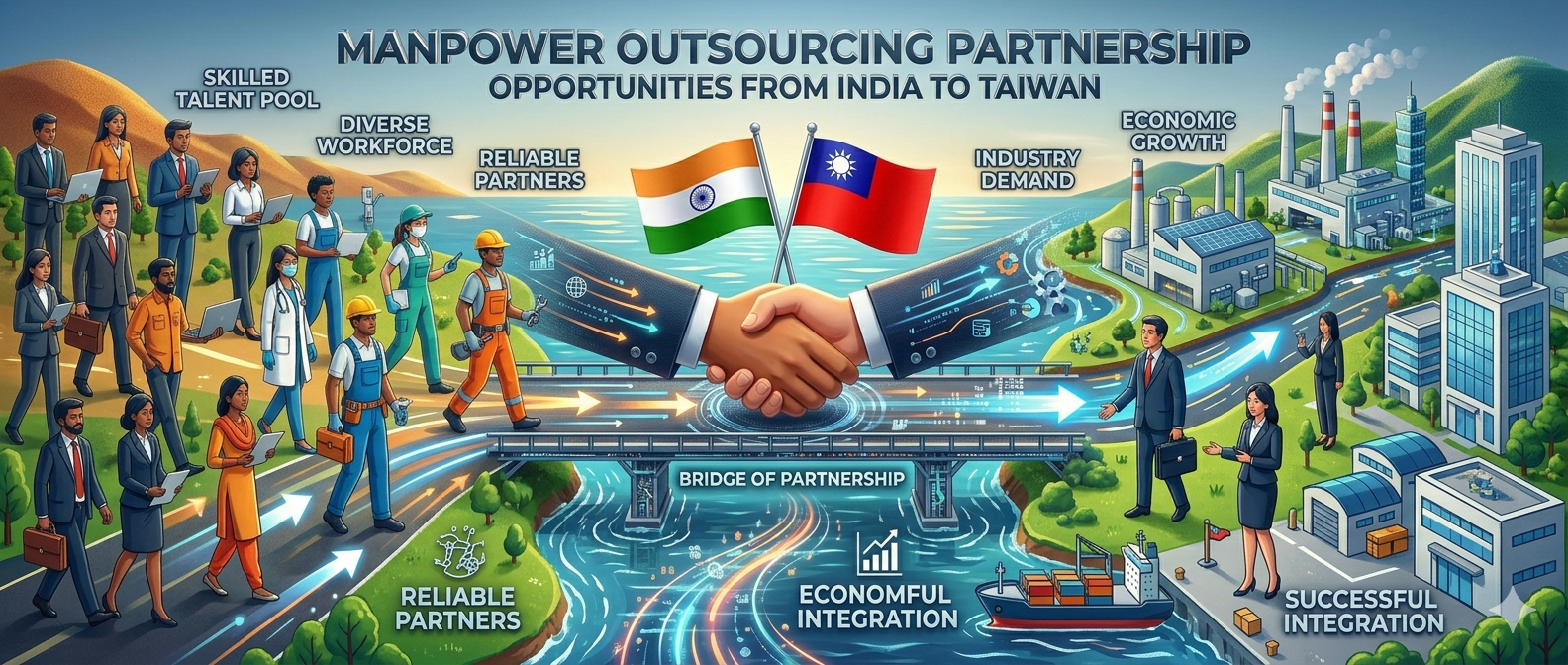

Taiwan is rapidly emerging as one of Asia’s most attractive destinations for international workforce deployment. While the island nation has built a reputation as a global manufacturing powerhouse and semiconductor leader, it is simultaneously confronting a demographic challenge that threatens long-term industrial growth. An aging population, declining birth rates, and expanding industrial investments have created an urgent demand for foreign workers across numerous sectors. Recent labor surveys indicate that Taiwan had approximately 276,000 job vacancies, with manufacturing accounting for nearly 92,000 positions, highlighting the growing need for overseas talent solutions.
For Indian recruitment companies, HR consultants, manpower exporters, and workforce management providers, this changing landscape presents a significant business opportunity. Manpower Outsourcing Taiwan has become more than a recruitment service; it is evolving into a strategic partnership model connecting Taiwanese employers with India’s vast pool of skilled, semi-skilled, and technically trained professionals.
India possesses one of the world’s youngest labor populations, producing millions of graduates, technicians, engineers, healthcare workers, hospitality professionals, and manufacturing specialists every year. Taiwan, on the other hand, offers a stable economy, technologically advanced workplaces, competitive compensation packages, and increasing openness toward international talent acquisition. The convergence of these factors is creating a promising pathway for India to Taiwan Recruitment Services, allowing both nations to address critical economic needs while fostering stronger bilateral cooperation.
The Rising Demand for Manpower Outsourcing Taiwan
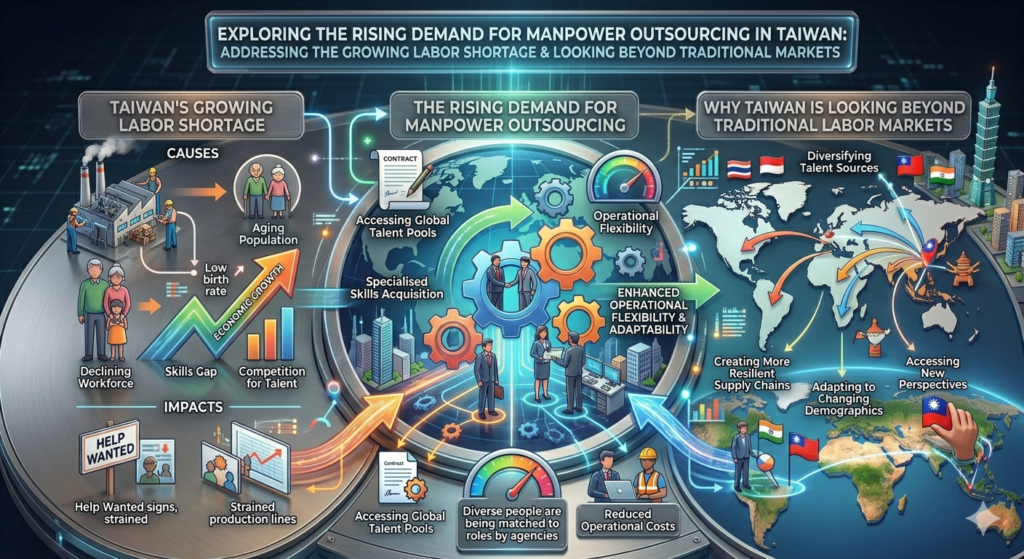
Taiwan’s labor market is experiencing a structural transformation unlike anything seen in previous decades. Businesses that once relied heavily on local labor are now actively exploring overseas talent pipelines to maintain production targets and support business expansion. The pressure is especially visible in manufacturing, electronics, food processing, logistics, construction, healthcare, and hospitality sectors.
Industry reports indicate that Taiwan’s declining birthrate continues to shrink the domestic labor pool, making it increasingly difficult for employers to fill operational positions. Manufacturing remains the most affected segment, accounting for approximately one-third of all vacancies in the country. The government has also taken steps to ease regulations surrounding foreign worker recruitment in several service industries, reflecting a broader shift toward international workforce integration.
For recruitment agencies in India, this situation resembles a bridge waiting to be built. Taiwanese companies possess infrastructure, technology, and investment capital but require reliable human resources. India has an abundant talent base seeking overseas opportunities. A well-structured outsourcing partnership effectively connects these two complementary markets.
The emergence of Manpower Outsourcing Taiwan services is helping employers reduce recruitment timelines, improve workforce stability, and minimize operational disruptions. Outsourcing firms can manage candidate sourcing, documentation, visa processing, skills verification, onboarding, accommodation coordination, and post-arrival support, allowing employers to focus on core business functions.
Taiwan’s Growing Labor Shortage
Taiwan’s workforce shortage is not a temporary issue caused by economic fluctuations. It is primarily driven by long-term demographic trends. Birth rates have declined significantly over the years, while life expectancy continues to rise, resulting in a steadily aging population. This imbalance means fewer young workers are entering the labor market at a time when industries are expanding rapidly.
Semiconductor manufacturing illustrates this challenge particularly well. Reports indicate that Taiwan’s semiconductor industry alone faced a shortage of approximately 34,000 professionals and technical workers in 2025, especially in production, environmental safety, research, development, and equipment maintenance roles.
Beyond semiconductors, traditional industries such as metal fabrication, food processing, machinery manufacturing, plastics production, and electronics assembly are also struggling to secure sufficient labor. Employers increasingly recognize that sustainable growth may depend on developing international recruitment channels capable of delivering a consistent supply of qualified workers.
Why Taiwan is Looking Beyond Traditional Labor Markets
Historically, Taiwan sourced migrant labor from Southeast Asian countries. While these markets continue to play an important role, Taiwanese employers are beginning to diversify their talent acquisition strategies. Several factors contribute to this shift.
First, competition among Asian economies for migrant workers is intensifying. Countries across the region are experiencing labor shortages and are competing for the same workforce segments.
Second, Indian workers offer several advantages that align well with Taiwan’s industrial ambitions. India produces a large number of engineering graduates, diploma holders, CNC operators, welders, electricians, machine technicians, IT professionals, nurses, and hospitality specialists each year. English proficiency among Indian candidates also enhances workplace communication, particularly within multinational manufacturing environments.
Third, Indian manpower agencies possess extensive experience managing overseas deployment programs for countries across the Middle East, Europe, and Asia. This expertise can be leveraged to support Taiwan’s growing recruitment requirements efficiently.
Understanding India to Taiwan Recruitment Services
The recruitment ecosystem connecting India and Taiwan is gradually evolving into a sophisticated talent supply chain. Modern recruitment firms are moving beyond traditional placement models and adopting end-to-end workforce solutions designed to meet employer expectations while safeguarding worker welfare.
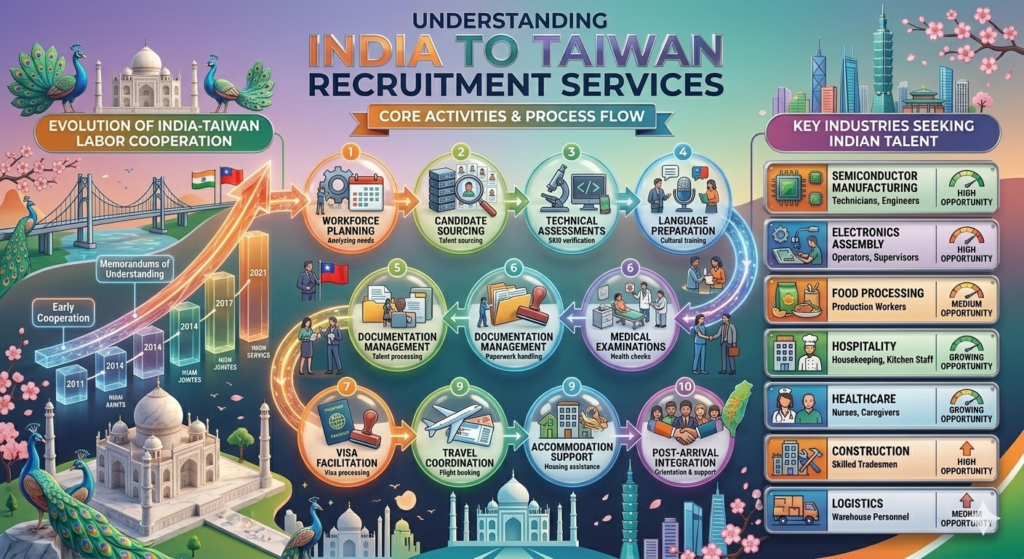
At its core, India to Taiwan Recruitment Services encompass several interconnected activities:
- Workforce planning
- Candidate sourcing
- Technical assessments
- Language preparation
- Documentation management
- Medical examinations
- Visa facilitation
- Travel coordination
- Accommodation support
- Post-arrival integration
Employers increasingly prefer partners capable of delivering complete workforce packages rather than isolated recruitment functions. Such partnerships improve hiring efficiency and reduce risks associated with international talent mobility.
Evolution of India-Taiwan Labor Cooperation
Economic cooperation between India and Taiwan has expanded steadily over recent years. Bilateral trade relations, educational exchanges, and industrial investments have contributed to stronger engagement between the two economies.
Taiwan’s high-tech sector continues to attract global attention due to its dominance in semiconductor manufacturing and electronics production. At the same time, Indian policymakers and workforce development institutions are actively promoting international employment opportunities for skilled professionals.
This evolving relationship creates fertile ground for an India Taiwan HR Partnership that extends beyond simple labor deployment. Collaborative training programs, vocational certification initiatives, and industry-specific skill development projects may become increasingly common in the coming years.
Recruitment agencies that position themselves early within this ecosystem are likely to benefit from first-mover advantages as demand continues to rise.
Key Industries Seeking Indian Talent
Several industries stand out as promising targets for manpower outsourcing initiatives.
| Industry | Talent Requirements | Opportunity Level |
| Semiconductor Manufacturing | Technicians, Engineers | High |
| Electronics Assembly | Operators, Supervisors | High |
| Food Processing | Production Workers | Medium |
| Hospitality | Housekeeping, Kitchen Staff | Growing |
| Healthcare | Nurses, Caregivers | Growing |
| Construction | Skilled Tradesmen | High |
| Logistics | Warehouse Personnel | Medium |
The semiconductor industry deserves special attention because its rapid expansion is generating significant demand for technical expertise. Job openings in semiconductor-related occupations have increased substantially over recent years as investments in advanced manufacturing facilities continue.
How Taiwan Workforce Solutions Are Transforming Businesses
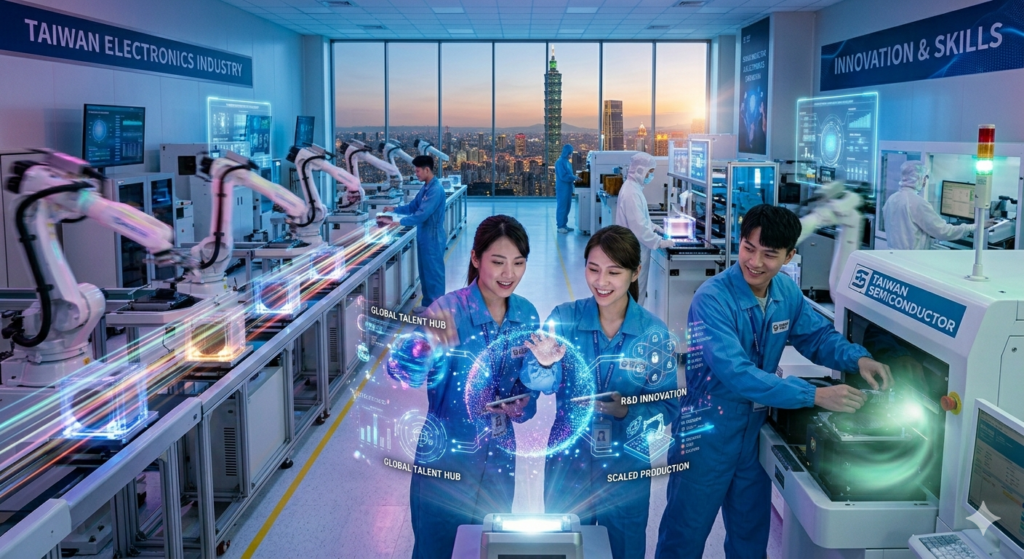
Businesses operating in highly competitive sectors understand that labor shortages directly impact profitability. Delayed production schedules, increased overtime expenses, employee burnout, and declining service quality can all stem from insufficient staffing.
This is where Taiwan Workforce Solutions are making a measurable difference. Rather than treating recruitment as a one-time event, employers are embracing workforce management strategies designed to ensure long-term operational continuity.
Advanced workforce solutions often include predictive hiring models that anticipate staffing needs months in advance. Recruitment partners can maintain talent databases, conduct continuous candidate assessments, and establish reserve pools of qualified workers ready for deployment when vacancies arise.
For employers experiencing seasonal demand spikes, workforce outsourcing offers flexibility that traditional hiring methods cannot easily provide. Businesses can scale operations quickly without committing to permanent employment structures.
Another significant advantage lies in compliance management. International recruitment involves navigating immigration regulations, labor laws, employment contracts, insurance requirements, and workplace safety standards. Experienced outsourcing providers simplify these processes, reducing administrative burdens and minimizing legal risks.
Companies increasingly view manpower partners as strategic advisors rather than transactional vendors. They seek organizations capable of understanding industry-specific challenges, recommending tailored staffing models, and supporting business expansion initiatives.
Semiconductor and Electronics Expansion
Taiwan’s remarkable success in semiconductors has fueled substantial investments across related industries. Rising global demand for artificial intelligence applications, cloud infrastructure, automotive electronics, and advanced computing technologies continues to drive expansion within Taiwan’s manufacturing ecosystem. Reports suggest that semiconductor talent shortages remain significant as companies compete aggressively for skilled workers.
Indian professionals trained in electronics, automation, mechatronics, industrial maintenance, and quality assurance can play an increasingly valuable role in supporting this growth trajectory.
For recruitment agencies, this represents more than a placement opportunity. It is a chance to build sustainable international staffing channels capable of supplying highly specialized talent to some of the world’s most technologically advanced companies.
Why Companies Prefer to Hire Indian Workers for Taiwan
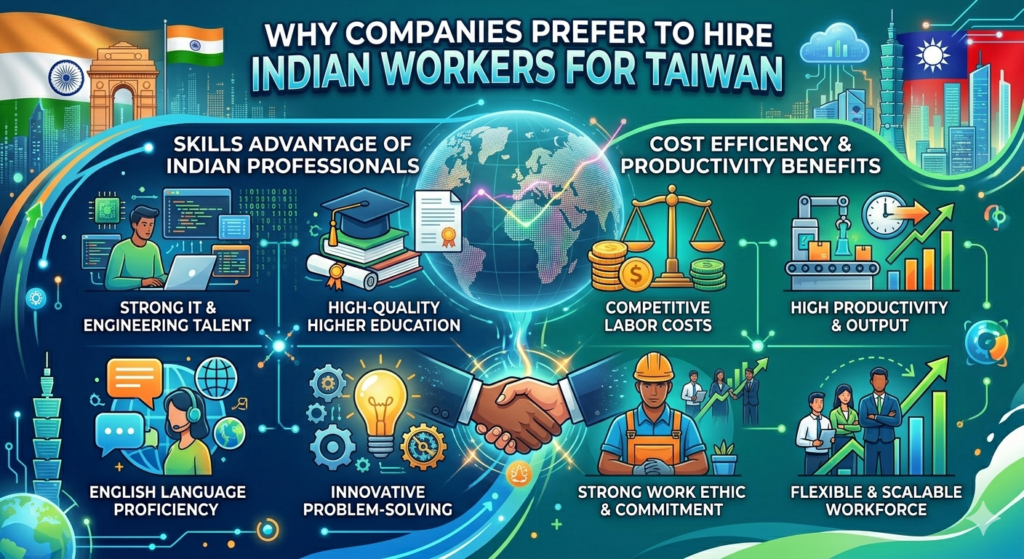
Businesses across Taiwan are increasingly recognizing the value proposition that Indian professionals bring to the workplace. The decision to Hire Indian Workers for Taiwan is not solely driven by labor shortages. It is becoming a strategic initiative aimed at improving operational performance, strengthening workforce diversity, and enhancing long-term business competitiveness.
India produces one of the largest skilled labor pools in the world. Every year, millions of young professionals graduate from technical institutes, engineering colleges, vocational training centers, nursing schools, and industrial apprenticeship programs. These workers are accustomed to operating in dynamic environments, adapting to new technologies, and delivering productivity under challenging conditions.
Taiwanese employers particularly appreciate the strong technical foundation that many Indian workers possess. Manufacturing companies value CNC operators, welders, electricians, mechanical technicians, quality inspectors, and machine maintenance specialists because they require minimal additional training before becoming productive contributors. In sectors such as healthcare and hospitality, Indian professionals have also demonstrated exceptional adaptability and service-oriented attitudes.
From an employer’s perspective, recruiting Indian talent offers another important advantage—retention. Workers who relocate internationally often seek long-term career opportunities, leading to lower turnover rates compared to local employees who may frequently change jobs within a competitive labor market.
Recruitment agencies that specialize in overseas placements are therefore uniquely positioned to support Taiwanese companies by developing customized workforce pipelines tailored to specific industries and operational requirements.
Skills Advantage of Indian Professionals
Indian professionals have built a global reputation for technical expertise, problem-solving capabilities, and continuous learning. Whether working in software development centers in Europe, hospitals in the Gulf region, or manufacturing plants in East Asia, Indian employees consistently demonstrate their ability to perform effectively in multicultural environments.
Vocational institutions across India are increasingly aligning their curricula with international industry standards. Programs focused on industrial automation, robotics, electronics assembly, precision engineering, and semiconductor manufacturing are producing candidates who can integrate smoothly into Taiwan’s advanced industrial ecosystem.
Language capabilities further enhance their employability. English proficiency enables easier communication with multinational management teams and facilitates knowledge transfer within technologically sophisticated workplaces.
Cost Efficiency and Productivity Benefits
Employers constantly seek ways to optimize labor costs without compromising productivity. International workforce partnerships can provide an effective solution.
Recruiting through established outsourcing providers reduces advertising expenses, shortens hiring timelines, minimizes vacancy-related production losses, and improves workforce predictability. Companies can also scale staffing levels according to business cycles, allowing greater operational flexibility.
For businesses expanding rapidly, outsourcing resembles having an experienced navigator guiding a ship through unfamiliar waters. Instead of struggling with complex recruitment procedures independently, employers gain access to specialized expertise that simplifies workforce acquisition and management.
Building a Successful Taiwan Staffing Partnership
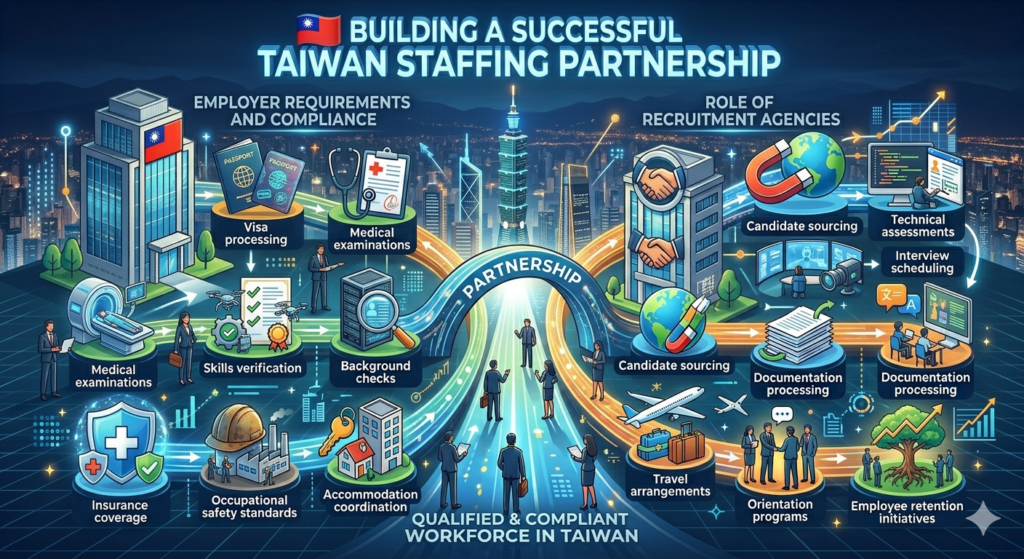
A successful Taiwan Staffing Partnership extends far beyond signing recruitment contracts. It involves establishing a collaborative relationship built on trust, transparency, compliance, and long-term workforce planning.
Taiwanese companies increasingly prefer strategic staffing partners capable of understanding their business objectives. These employers expect agencies to supply candidates who not only possess technical competencies but also align with organizational culture and operational expectations.
An effective staffing partnership begins with detailed workforce analysis. Recruitment specialists work closely with employers to determine job requirements, production targets, shift schedules, language expectations, and accommodation arrangements. This level of preparation reduces mismatches and enhances employee satisfaction.
Another critical component is compliance management. International hiring involves immigration regulations, labor permits, health certifications, insurance obligations, taxation considerations, and contractual documentation. Experienced staffing partners ensure that every stage adheres to applicable legal frameworks.
Businesses that invest in strong staffing relationships often experience significant improvements in workforce stability. Employees receive better onboarding support, access to grievance mechanisms, and assistance with cultural adaptation, contributing to higher retention rates.
Employer Requirements and Compliance
Compliance has become a defining characteristic of reputable international manpower partnerships. Employers seek agencies capable of maintaining transparent recruitment practices and safeguarding worker rights.
Several factors require careful management:
- Employment contracts
- Visa processing
- Medical examinations
- Skills verification
- Background checks
- Insurance coverage
- Occupational safety standards
- Accommodation coordination
Companies that prioritize ethical recruitment practices tend to strengthen their employer brand and attract higher-quality candidates over time.
Role of Recruitment Agencies
Modern recruitment agencies function as comprehensive workforce management consultants rather than simple placement providers.
Their responsibilities frequently include:
- Candidate sourcing
- Technical assessments
- Interview scheduling
- Language preparation
- Documentation processing
- Travel arrangements
- Orientation programs
- Employee retention initiatives
For Taiwanese employers unfamiliar with Indian labor markets, recruitment agencies act as valuable intermediaries capable of bridging cultural, regulatory, and logistical gaps.
The Future of Overseas Manpower Supply India
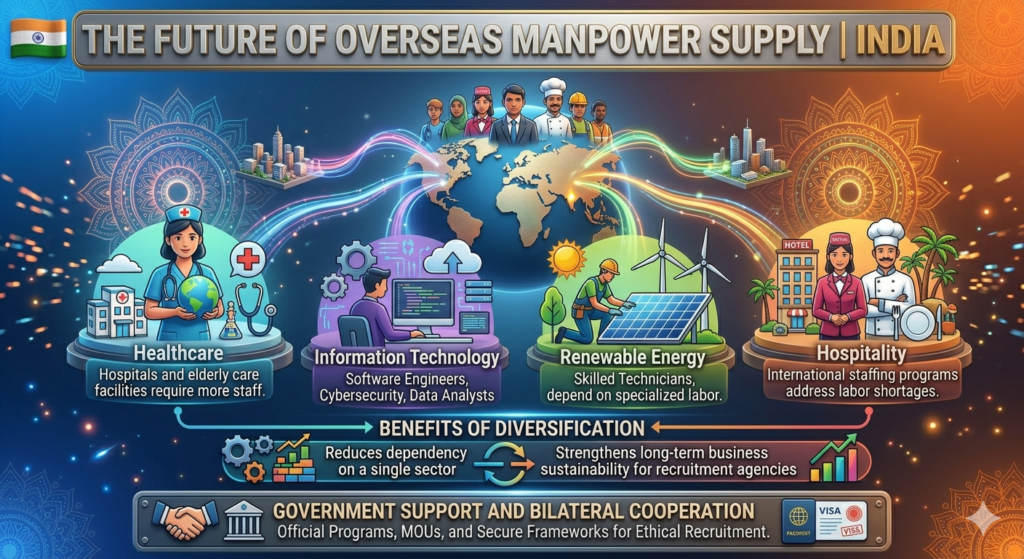
India has gradually emerged as one of the world’s leading suppliers of international talent. Millions of Indian professionals contribute to industries across the Middle East, Europe, Southeast Asia, Australia, and North America.
The expansion of Overseas Manpower Supply India toward Taiwan represents a logical progression within this broader trend.
Several factors support optimistic growth projections.
First, India’s demographic profile remains highly favorable. The country continues to maintain a substantial working-age population, creating a sustainable talent pipeline for overseas deployment programs.
Second, skill development initiatives implemented by government agencies, private training institutions, and industrial associations are improving workforce readiness for international assignments.
Third, Taiwan’s expanding industrial base is likely to generate persistent labor demand over the coming decade.
The intersection of these developments creates opportunities for manpower exporters, HR consultants, vocational institutions, and staffing companies willing to invest in specialized Taiwan-focused recruitment capabilities.
Emerging Sectors for Indian Workers
Although manufacturing currently dominates labor demand, other industries are beginning to explore international recruitment options.
Potential growth sectors include:
Healthcare
Hospitals and elderly care facilities increasingly require nurses, caregivers, and support staff.
Information Technology
Information technology companies may seek software engineers, cybersecurity specialists, and data analysts.
Renewable Energy
Solar and wind energy projects often depend on skilled technicians and maintenance personnel.
Hospitality
Hotels, restaurants, and tourism businesses periodically experience labor shortages that can be addressed through international staffing programs.
Diversification across multiple industries reduces dependency on a single sector and strengthens long-term business sustainability for recruitment agencies.
Government Support and Bilateral Cooperation
Government-level collaboration can significantly accelerate workforce mobility.
Memorandums of understanding, vocational exchange programs, skills recognition frameworks, and labor mobility agreements help streamline recruitment procedures and improve transparency.
Policy initiatives supporting labor migration often encourage investments in training infrastructure and language development programs, enabling candidates to prepare effectively for overseas employment opportunities.
Strengthened cooperation between Indian and Taiwanese institutions could eventually create structured pathways that simplify deployment processes while ensuring worker protection.
Opportunities in Taiwan Employment Outsourcing
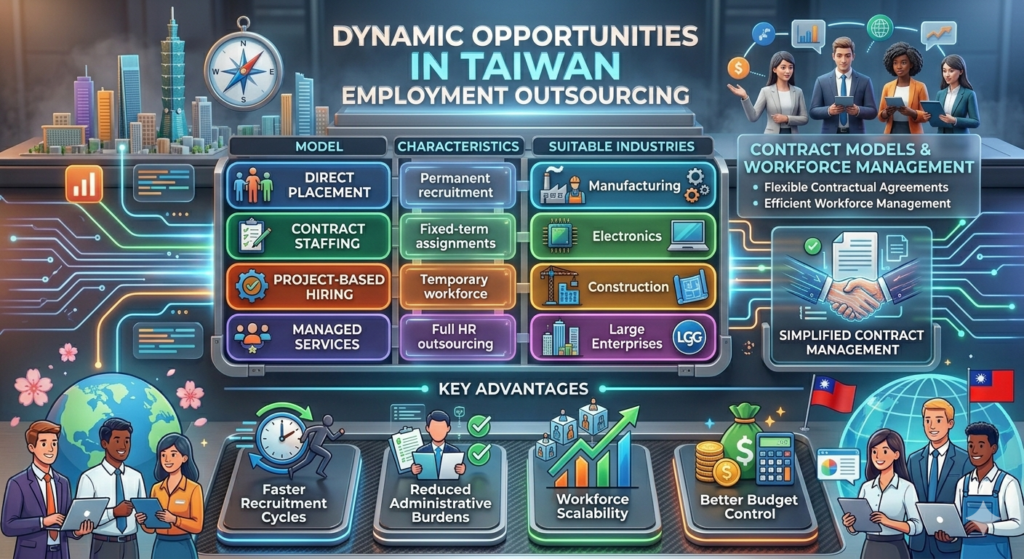
The concept of Taiwan Employment Outsourcing is evolving rapidly as companies seek more flexible approaches to workforce management.
Traditional hiring models involve lengthy recruitment cycles, permanent employment commitments, and substantial administrative responsibilities. Outsourcing offers an alternative model capable of delivering agility and cost control.
Employment outsourcing providers typically manage numerous functions simultaneously, including payroll administration, attendance monitoring, benefits coordination, contract renewals, and employee engagement initiatives.
For rapidly expanding businesses, outsourcing resembles adding an external engine to an already moving train. Companies can accelerate growth without diverting internal resources toward labor-intensive HR operations.
Several outsourcing models are commonly used:
| Model | Characteristics | Suitable Industries |
| Direct Placement | Permanent recruitment | Manufacturing |
| Contract Staffing | Fixed-term assignments | Electronics |
| Project-Based Hiring | Temporary workforce | Construction |
| Managed Services | Full HR outsourcing | Large Enterprises |
Organizations selecting outsourcing solutions often prioritize scalability, compliance assurance, and workforce continuity.
Contract Models and Workforce Management
Contract staffing arrangements provide employers with substantial operational flexibility.
Advantages include:
- Faster recruitment cycles
- Reduced administrative burdens
- Workforce scalability
- Better budget control
- Simplified contract management
Effective workforce management also emphasizes employee engagement. Orientation sessions, language assistance, cultural awareness training, and regular performance evaluations help outsourced employees integrate successfully into Taiwanese workplaces.
Businesses that view outsourced workers as valuable contributors rather than temporary labor resources generally achieve stronger productivity outcomes and higher employee satisfaction levels.
Leveraging Indian Talent for Taiwan Companies
The growing availability of Indian Talent for Taiwan Companies offers organizations an opportunity to strengthen competitiveness within global markets.
Today’s workforce is increasingly knowledge-driven. Companies require employees capable of adapting quickly, learning continuously, and collaborating effectively across cultural boundaries.
Indian professionals often excel in these areas.
Engineers contribute analytical thinking.
Technicians support operational efficiency.
Healthcare professionals enhance patient care.
Hospitality specialists improve customer experiences.
Their ability to work in diverse environments enables Taiwanese employers to build more resilient organizations capable of responding to evolving business challenges.
Language Training and Cultural Integration
Technical skills alone are insufficient for successful international workforce deployment.
Language preparation and cultural orientation significantly influence long-term employee retention.
Training programs may cover:
- Basic Mandarin communication
- Workplace etiquette
- Safety procedures
- Taiwanese cultural norms
- Team collaboration techniques
Employees who understand local customs generally adapt more quickly and develop stronger workplace relationships.
Organizations investing in cultural integration programs frequently experience lower turnover rates, improved morale, and enhanced productivity.
Choosing a Reliable Taiwan Recruitment Agency India
Selecting the right recruitment partner is one of the most important decisions for employers planning international workforce expansion. A professional Taiwan Recruitment Agency India serves as a strategic bridge connecting Taiwanese businesses with India’s vast and diverse talent ecosystem. Rather than functioning solely as a placement company, an experienced recruitment agency acts as an advisor, workforce planner, compliance manager, and employee support partner throughout the hiring journey.
Taiwanese companies should carefully evaluate agencies based on their overseas deployment experience, licensing credentials, candidate screening methodologies, industry specialization, and post-placement support capabilities. A strong recruitment partner understands the nuances of both Indian labor markets and Taiwanese employment regulations, ensuring that hiring processes remain efficient, transparent, and legally compliant.
Indian recruitment firms that specialize in Taiwan placements can also establish dedicated talent pools tailored to specific industries such as semiconductors, electronics manufacturing, hospitality, healthcare, logistics, and heavy engineering. By maintaining databases of pre-screened candidates, agencies significantly reduce recruitment lead times and improve workforce readiness.
Technology is further transforming recruitment practices. Digital interviews, AI-driven assessments, online documentation systems, and remote onboarding tools allow agencies to streamline operations while improving candidate experiences. Agencies embracing these innovations are likely to emerge as preferred partners for Taiwanese employers seeking scalable and sustainable international hiring solutions.
Expanding Skilled Workforce Export to Taiwan
The concept of Skilled Workforce Export to Taiwan extends beyond traditional labor migration. It represents an opportunity for India to position itself as a long-term provider of highly trained professionals capable of supporting Taiwan’s ambitious industrial growth agenda.
India’s vocational education landscape has undergone substantial improvements in recent years. Government initiatives, private training academies, and sector-specific skill development programs have increased the availability of workers trained in advanced manufacturing technologies, industrial automation, precision machining, welding, electrical maintenance, and healthcare services.
Taiwan’s industrial ecosystem aligns remarkably well with India’s talent strengths. Manufacturing facilities require technically competent workers capable of operating sophisticated machinery, maintaining production efficiency, and adhering to stringent quality standards. Indian workers often possess practical experience gained through apprenticeships, industrial placements, and export-oriented industries, making them highly attractive candidates.
Building a robust export model requires investment in language preparation, industry certifications, cultural orientation, and international employability training. Institutions that collaborate with Taiwanese employers to design customized curricula may gain a competitive advantage in preparing candidates for overseas assignments.
The export of skilled manpower should not be viewed as a one-sided labor movement. Instead, it can foster knowledge exchange, professional development, and stronger economic cooperation between both countries. Returning professionals often bring back valuable international experience that contributes to domestic workforce enhancement.
Advanced Taiwan Hiring Solutions for Employers
The increasing complexity of workforce planning has encouraged businesses to adopt more sophisticated Taiwan Hiring Solutions designed to improve recruitment efficiency and support long-term organizational growth.
Modern hiring solutions integrate several components into a seamless process. These include workforce forecasting, talent mapping, skills assessment, compliance management, onboarding programs, and employee retention initiatives. Employers no longer seek recruitment vendors that simply provide resumes; they expect comprehensive workforce partners capable of solving business challenges.
Predictive analytics is becoming an important tool within talent acquisition strategies. By analyzing production schedules, employee turnover patterns, seasonal fluctuations, and expansion plans, recruitment providers can anticipate future staffing requirements and proactively build candidate pipelines.
Digital recruitment platforms have also transformed employer experiences. Companies can now access candidate profiles, interview records, certification documents, and deployment status updates through centralized systems. Such transparency strengthens trust between employers and outsourcing providers.
A successful hiring strategy should emphasize quality over quantity. While filling vacancies quickly remains important, businesses increasingly recognize the value of selecting candidates who align with organizational culture, demonstrate adaptability, and possess long-term career aspirations.
Strengthening the India Taiwan HR Partnership
An effective India Taiwan HR Partnership has the potential to reshape labor mobility within Asia. Partnerships between recruitment agencies, vocational institutes, employers, industry associations, and government organizations can create sustainable frameworks that benefit all stakeholders involved.
Human resource collaboration should extend beyond candidate deployment. Training initiatives, internship programs, exchange opportunities, skills recognition mechanisms, and research projects can contribute to stronger bilateral engagement.
Taiwan’s advanced manufacturing capabilities provide Indian workers with exposure to world-class production environments and emerging technologies. Conversely, Indian professionals bring technical expertise, operational flexibility, and diverse perspectives that enrich Taiwanese workplaces.
Industry leaders increasingly emphasize the importance of ethical recruitment practices within international partnerships. Transparency regarding employment conditions, wages, accommodation arrangements, insurance coverage, and grievance mechanisms builds confidence among candidates while enhancing employer reputations.
Long-term HR partnerships also support workforce continuity. Instead of approaching recruitment as a transactional process, organizations can establish recurring hiring programs that ensure a steady supply of qualified professionals as business needs evolve.
The future may witness the establishment of dedicated India-Taiwan workforce corridors, enabling smoother talent mobility and facilitating deeper economic cooperation.
Benefits of Contract Staffing Taiwan
Many Taiwanese organizations are embracing Contract Staffing Taiwan models to address workforce shortages while maintaining operational flexibility. Contract staffing enables companies to respond quickly to changing market conditions without assuming the obligations associated with permanent employment structures.
One of the most significant advantages of contract staffing is scalability. Businesses experiencing seasonal production peaks or undertaking short-term projects can increase workforce capacity rapidly and efficiently. Once demand stabilizes, staffing levels can be adjusted accordingly.
Contract staffing providers typically manage payroll administration, benefits coordination, attendance monitoring, compliance reporting, and contract renewals. This reduces administrative workloads for internal HR departments, allowing them to focus on strategic initiatives such as leadership development and employee engagement.
Another important benefit involves access to specialized talent. Recruitment agencies often maintain networks of experienced professionals available for immediate deployment, enabling employers to fill critical vacancies with minimal delays.
Companies operating in manufacturing, logistics, hospitality, healthcare, and construction sectors frequently find contract staffing particularly beneficial due to fluctuating labor requirements.
As businesses continue navigating economic uncertainties and technological disruptions, contract staffing is expected to remain an integral component of workforce planning strategies.
Strategies for Bulk Hiring for Taiwan Employers
Large-scale recruitment initiatives require meticulous planning, efficient execution, and close coordination among stakeholders. Bulk Hiring for Taiwan Employers is becoming increasingly relevant as industries expand production capacities and compete for skilled talent.
Successful bulk hiring campaigns typically begin with comprehensive workforce forecasting. Employers must identify staffing requirements based on production targets, project timelines, shift structures, and operational objectives.
Recruitment agencies can support these initiatives by implementing standardized screening procedures, conducting technical assessments, organizing group interviews, and coordinating documentation processes. Technology platforms capable of handling high candidate volumes significantly improve efficiency.
Several best practices contribute to successful bulk recruitment outcomes:
- Establish clear job descriptions.
- Develop realistic deployment schedules.
- Provide pre-departure orientation sessions.
- Offer language training programs.
- Ensure transparent communication regarding employment terms.
- Maintain post-arrival support mechanisms.
Retention strategies are equally important. Workers who receive adequate onboarding assistance, accommodation support, and opportunities for professional growth are more likely to remain committed to their employers.
Bulk hiring should not merely focus on filling positions quickly. Sustainable workforce management emphasizes quality placements that contribute to productivity, employee satisfaction, and organizational stability.
Conclusion
Partnership opportunities within the Manpower Outsourcing Taiwan sector are expanding rapidly as Taiwan addresses demographic challenges and industrial growth demands. The convergence of Taiwan’s labor shortages and India’s abundant talent supply creates a compelling business case for manpower exporters, recruitment agencies, vocational institutions, and workforce consultants.
The growing demand for India to Taiwan Recruitment Services, innovative Taiwan Workforce Solutions, and comprehensive Taiwan Hiring Solutions reflects a broader transformation in international labor mobility. Companies seeking to Hire Indian Workers for Taiwan increasingly recognize the value of strategic staffing partnerships that deliver not only skilled professionals but also compliance expertise, cultural integration support, and long-term workforce planning.
An effective India Taiwan HR Partnership has the potential to generate mutual economic benefits, strengthen bilateral cooperation, and open new pathways for skilled workforce mobility. Organizations that invest early in ethical recruitment practices, advanced staffing technologies, and specialized training programs will be well-positioned to capitalize on these emerging opportunities.
As industries continue evolving, manpower outsourcing is no longer simply about filling vacancies. It is becoming a powerful mechanism for building resilient businesses, supporting global competitiveness, and connecting talent with opportunity across borders.
Frequently Asked Questions
1. Why is Taiwan interested in hiring Indian workers?
Taiwan faces significant labor shortages due to an aging population and declining birth rates. Indian workers offer strong technical skills, English proficiency, adaptability, and experience in global industries.
2. Which industries in Taiwan have the highest demand for Indian manpower?
Semiconductor manufacturing, electronics, healthcare, construction, logistics, hospitality, and food processing currently offer the most promising opportunities.
3. What services do India to Taiwan recruitment agencies provide?
These agencies typically handle candidate sourcing, screening, documentation, medical examinations, visa processing, language preparation, travel arrangements, and post-arrival support.
4. Is contract staffing popular among Taiwanese employers?
Yes. Contract staffing provides flexibility, reduces administrative burdens, supports workforce scalability, and allows businesses to manage fluctuating labor demands efficiently.
5. How can Indian recruitment companies establish partnerships with Taiwanese employers?
Recruitment companies can build partnerships by specializing in Taiwan-focused talent pools, ensuring regulatory compliance, investing in language training, leveraging technology-driven recruitment systems, and maintaining transparent communication with employers.
Leave a Reply