
Introduction to Healthcare Recruitment Agency in Germany


Germany’s healthcare system is often described as one of the strongest in the world, but even the most robust systems need people to keep them running. Behind every hospital ward, elderly care facility, rehabilitation center, and outpatient clinic, there’s a growing need for skilled professionals who can deliver consistent, high-quality care. This is exactly where a healthcare recruitment agency in Germany becomes a crucial link in the chain.
Over the past decade, Germany has faced a widening gap between the demand for healthcare services and the available workforce. An aging population, longer life expectancy, and increased prevalence of chronic conditions have all contributed to this imbalance. At the same time, many healthcare professionals are retiring faster than new ones can be trained. Recruitment agencies specializing in healthcare have stepped in to bridge this gap, acting as matchmakers between healthcare institutions and qualified professionals.
A healthcare recruitment agency in Germany doesn’t just fill vacancies. It navigates complex regulations, supports credential recognition, and helps both employers and candidates adapt to a highly structured healthcare environment. Think of it as a guide through a dense forest—without it, both employers and professionals can easily get lost in paperwork, compliance requirements, and logistical challenges.
In this article, we’ll explore the role, importance, and future of healthcare recruitment agencies in Germany. We’ll break down how they work, why they matter, and how they impact patient care and the broader healthcare system. Whether you’re an employer seeking reliable staff or a healthcare professional considering a career in Germany, this guide will give you a clear, practical understanding of the landscape.
Understanding the German Healthcare System

Germany operates a universal healthcare system that combines public and private elements, making it both comprehensive and highly regulated. To understand the importance of a healthcare recruitment agency in Germany, it helps to first understand how the system itself functions.
Structure of Healthcare Services
The German healthcare system is primarily funded through statutory health insurance, with private insurance covering a smaller portion of the population. Hospitals, clinics, and care facilities are operated by a mix of public authorities, non-profit organizations, and private entities. This diversity creates a wide range of employment opportunities but also demands a steady supply of qualified professionals across multiple disciplines.
Healthcare services are delivered through:
- Public and private hospitals
- Outpatient clinics and medical practices
- Rehabilitation centers
- Elderly care homes and nursing facilities
- Home care and community-based services
Each of these settings requires specialized staff who meet strict educational and licensing standards.
Demand for Skilled Healthcare Professionals
Germany’s demand for healthcare workers has grown steadily. Nurses, doctors, caregivers, and allied health professionals are in particularly short supply. Rural areas and smaller towns often struggle the most, as professionals tend to prefer urban centers with larger hospitals and more career opportunities.
Workforce Shortages and Aging Population
One of the biggest drivers of recruitment is Germany’s aging population. As more people require long-term and specialized care, the pressure on healthcare facilities increases. At the same time, a significant portion of the healthcare workforce is approaching retirement age. This double challenge has made healthcare recruitment agencies in Germany not just helpful, but essential for maintaining system stability.
What Is a Healthcare Recruitment Agency in Germany?
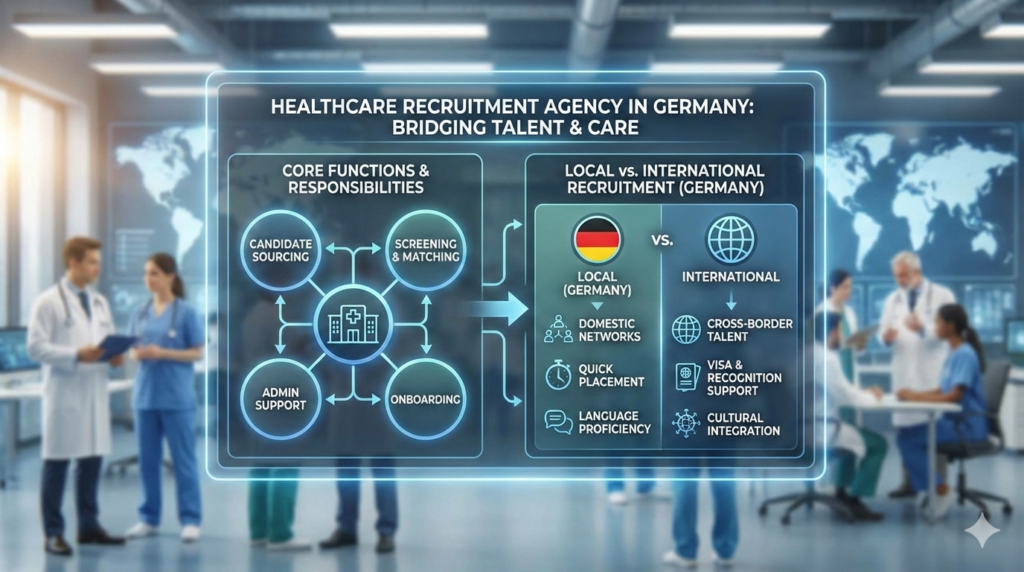
A healthcare recruitment agency in Germany is a specialized intermediary that connects healthcare employers with qualified professionals. Unlike general staffing agencies, these organizations focus exclusively on the healthcare sector and understand its unique demands.
Core Functions and Responsibilities
The primary responsibilities of a healthcare recruitment agency in Germany include:
- Identifying staffing needs for healthcare institutions
- Sourcing qualified candidates locally and internationally
- Screening and verifying professional credentials
- Assisting with licensing and recognition processes
- Supporting relocation, language training, and onboarding
Their role extends beyond recruitment into long-term workforce planning and retention support.
Difference Between Local and International Recruitment
Some agencies focus solely on domestic recruitment, while others specialize in international placements. International healthcare recruitment agencies in Germany play a particularly important role, as they help bring in professionals from abroad to address shortages. This involves navigating immigration laws, recognition of foreign qualifications, and cultural integration—tasks that can be overwhelming without expert guidance.
Why Healthcare Recruitment Agencies Are Essential in Germany
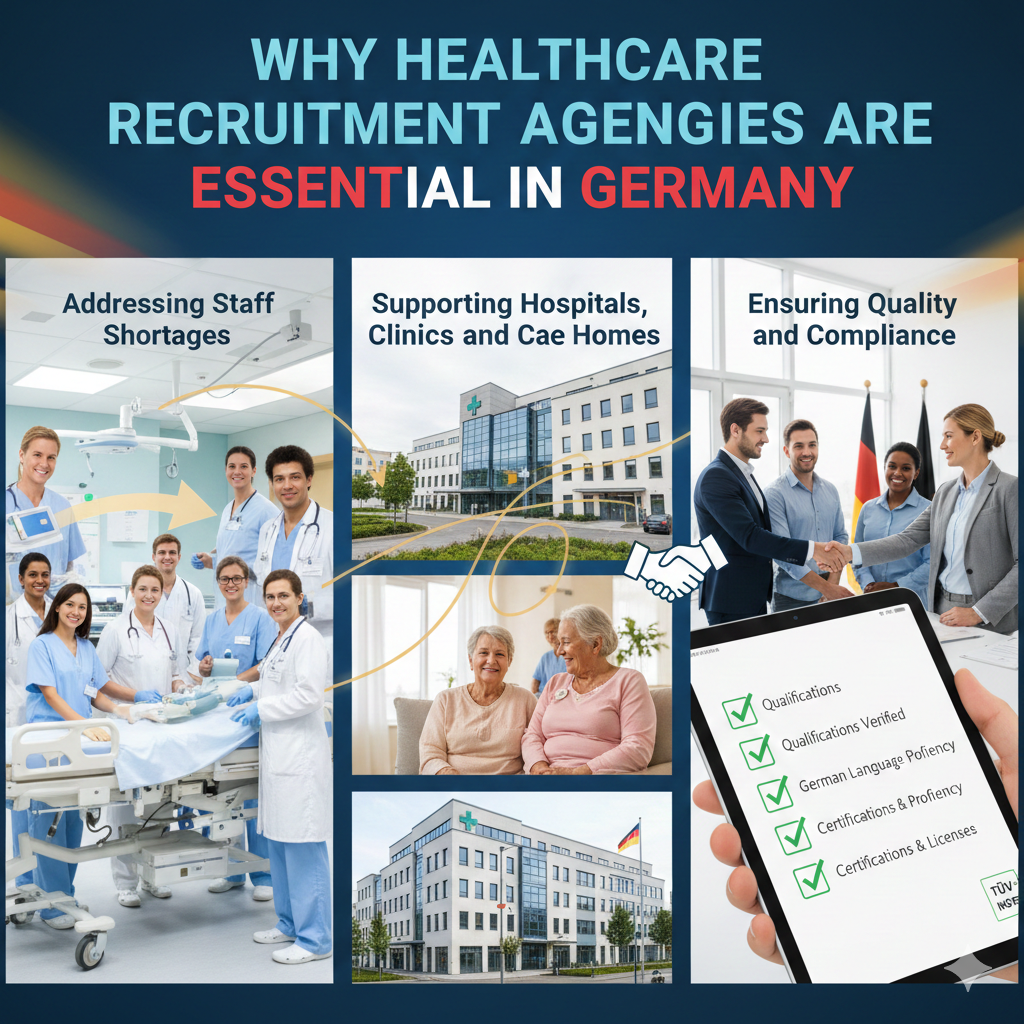
Healthcare recruitment agencies in Germany have become a backbone of the healthcare labor market. Without them, many facilities would struggle to maintain safe staffing levels.
Addressing Staff Shortages
One of the most obvious reasons these agencies are essential is their ability to respond quickly to staffing shortages. Hospitals and care homes cannot afford prolonged vacancies, as understaffing directly affects patient safety and staff morale.
Supporting Hospitals, Clinics, and Care Homes
Recruitment agencies act as long-term partners rather than one-time service providers. They help organizations plan ahead, anticipate future needs, and build a stable workforce that can adapt to changing demands.
Ensuring Quality and Compliance
Germany’s healthcare sector is heavily regulated, and compliance is non-negotiable. A healthcare recruitment agency in Germany ensures that all candidates meet legal, professional, and ethical standards, protecting both employers and patients.
Types of Healthcare Roles Recruited in Germany
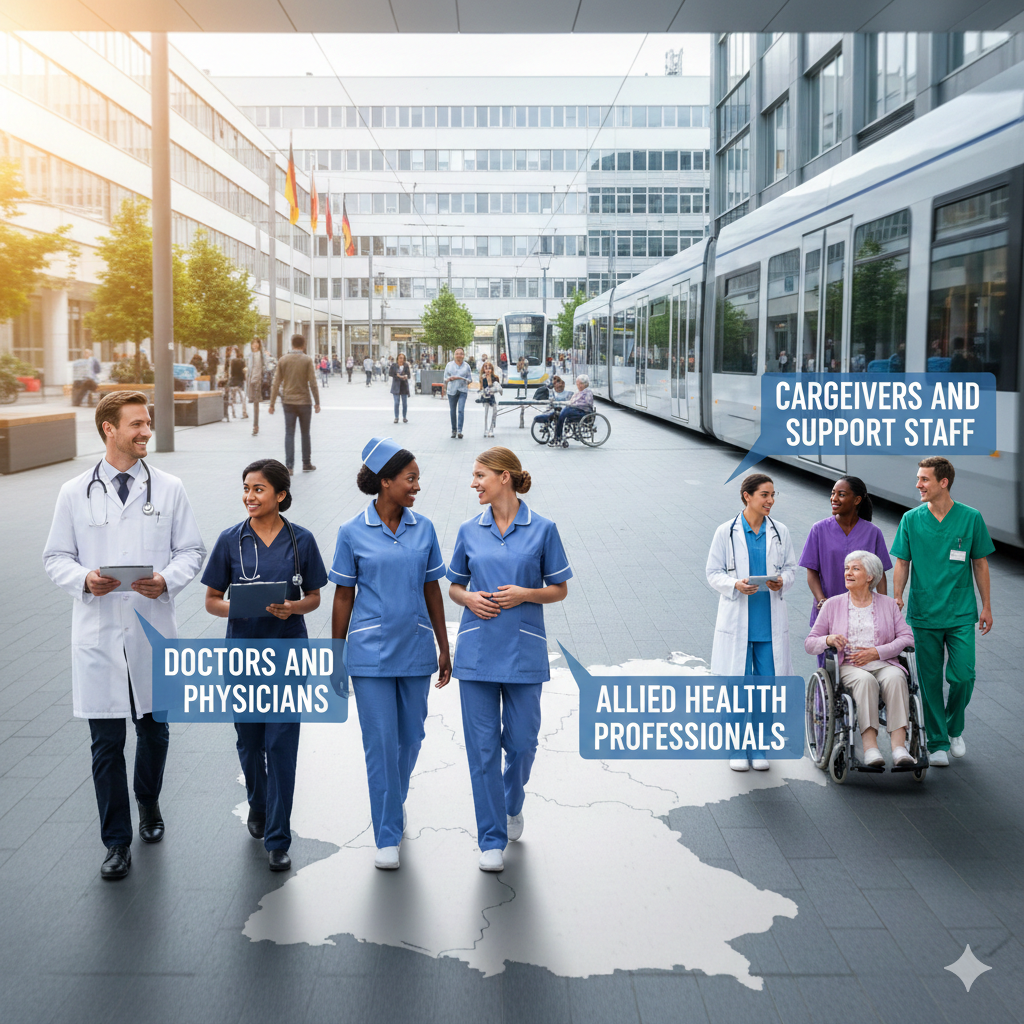
Healthcare recruitment agencies in Germany work across a wide range of roles, reflecting the diversity of the healthcare system.
Doctors and Physicians
Physicians are among the most sought-after professionals, particularly in specialties such as internal medicine, geriatrics, anesthesiology, and general practice. Recruitment agencies help match doctors with hospitals and clinics that align with their expertise and career goals.
Nurses and Midwives
Nurses form the backbone of patient care, and their shortage is one of the most pressing issues in Germany. Recruitment agencies often focus heavily on nursing roles, offering support with language training and professional recognition.
Allied Health Professionals
This category includes physiotherapists, radiographers, laboratory technicians, and other specialists who play a vital role in diagnosis and rehabilitation.
Caregivers and Support Staff
With the growing elderly population, caregivers and nursing assistants are in high demand. Recruitment agencies help ensure these roles are filled by trained individuals who understand the standards of care expected in Germany.
How a Healthcare Recruitment Agency in Germany Works
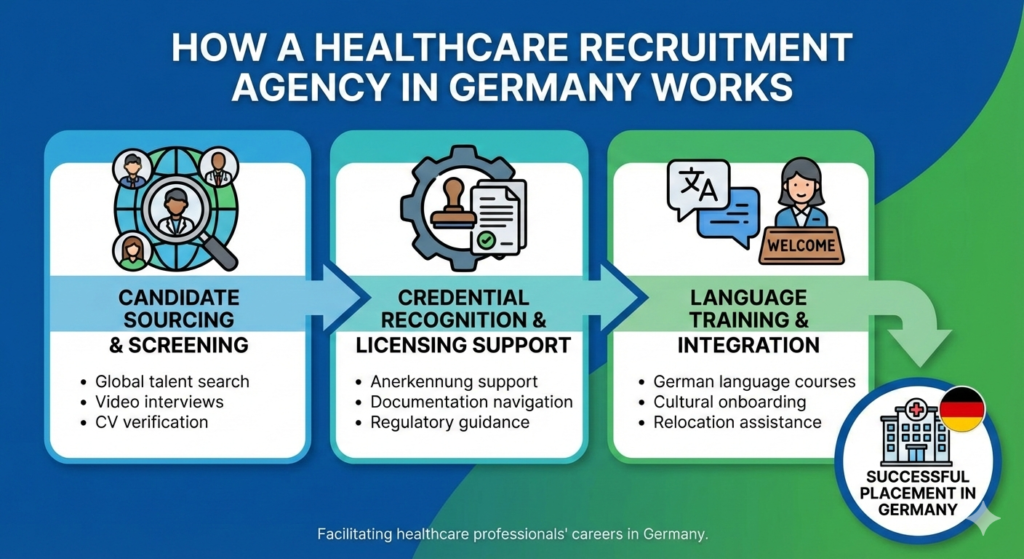
The process followed by a healthcare recruitment agency in Germany is structured, thorough, and designed to minimize risk for all parties involved.
Candidate Sourcing and Screening
Agencies use a combination of databases, professional networks, and digital platforms to source candidates. Each candidate undergoes rigorous screening, including qualification verification, background checks, and interviews.
Credential Recognition and Licensing Support
Germany requires healthcare professionals to have their qualifications officially recognized. Recruitment agencies guide candidates through this often complex process, helping them understand requirements and timelines.
Language Training and Integration
Language proficiency is critical in healthcare. Many agencies provide or coordinate German language training, ensuring candidates can communicate effectively with patients and colleagues.
Recruitment Process for International Healthcare Professionals

International recruitment is a major focus area for many healthcare recruitment agencies in Germany.
Eligibility and Qualification Requirements
Candidates must meet specific educational and professional standards. Agencies help assess eligibility early in the process to avoid delays later on.
Visa and Work Permit Guidance
Immigration procedures can be daunting. Recruitment agencies assist with visa applications, work permits, and compliance with German immigration laws.
Cultural and Workplace Integration
Beyond paperwork, successful integration requires cultural understanding. Agencies often provide orientation programs that help international professionals adapt to German workplace culture.
Benefits of Using a Healthcare Recruitment Agency in Germany
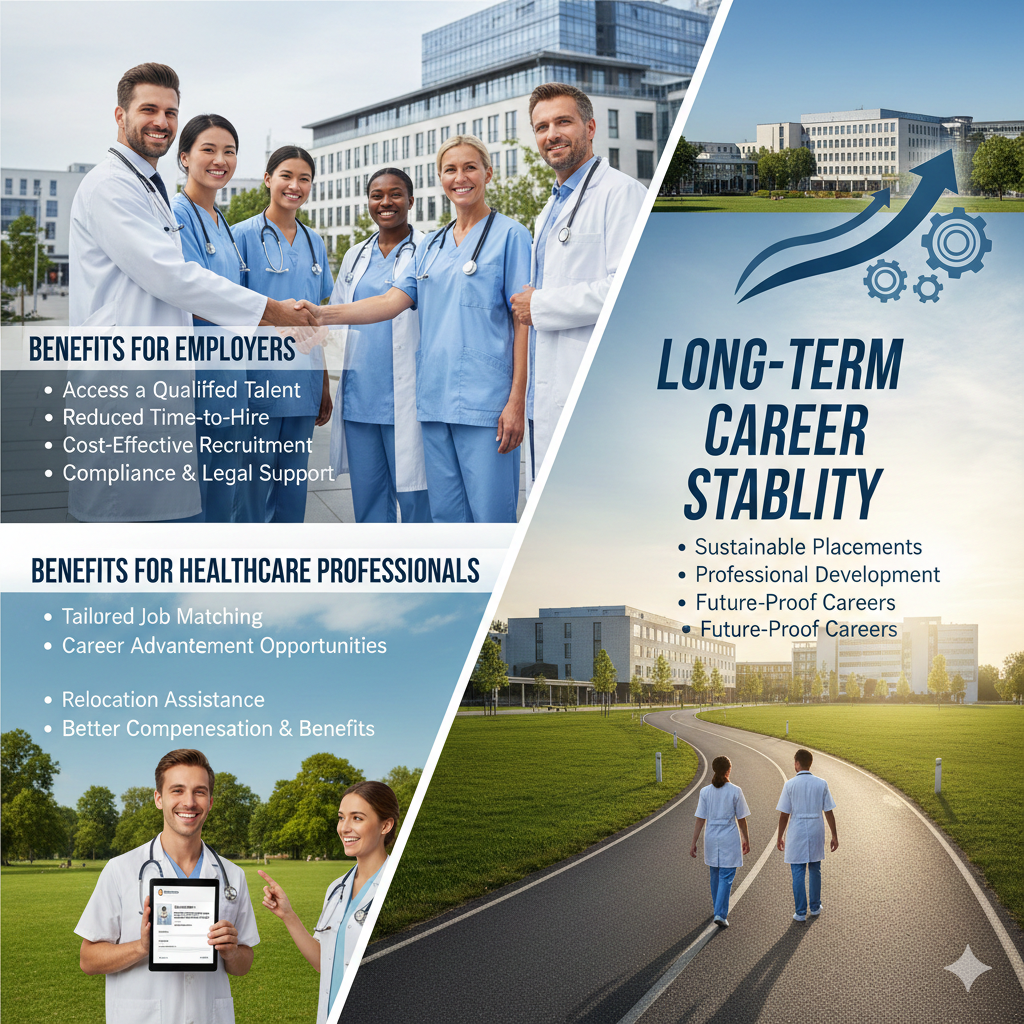
The advantages of working with a healthcare recruitment agency in Germany extend to both employers and professionals.
Benefits for Employers
Employers save time, reduce administrative burden, and gain access to a wider talent pool. Recruitment agencies also help reduce turnover by ensuring better matches.
Benefits for Healthcare Professionals
Professionals receive guidance, support, and access to opportunities they might not find on their own.
Long-Term Career Stability
By focusing on proper placement and integration, recruitment agencies help professionals build sustainable, long-term careers in Germany.
Challenges in Healthcare Recruitment in Germany
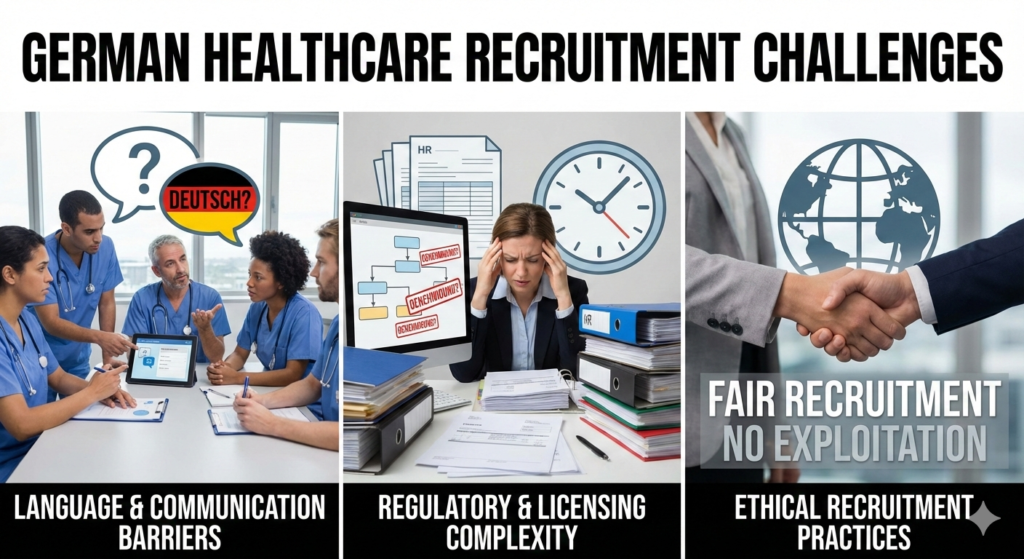
Even with strong demand and structured systems, healthcare recruitment is far from simple. A healthcare recruitment agency in Germany operates in a landscape filled with regulatory, linguistic, and ethical challenges that require experience, patience, and precision. Understanding these challenges helps explain why professional recruitment support is so valuable.
Language and Communication Barriers
Language is often the first and biggest hurdle. German is the primary language of healthcare delivery, and patient safety depends heavily on clear communication. Medical terminology, documentation, and patient interaction all require a high level of fluency. Many international healthcare professionals may have clinical expertise but struggle initially with language confidence.
Recruitment agencies help mitigate this challenge by:
- Assessing language levels early
- Coordinating structured language training
- Preparing candidates for medical and workplace communication
Without this support, miscommunication could lead to stress, errors, or reduced quality of care.
Regulatory and Licensing Complexity
Germany has strict rules governing who can work in healthcare. Degrees, certifications, and professional experience must be officially recognized. This process can take months and involves multiple authorities. For employers, navigating this alone can be time-consuming and risky.
Ethical Recruitment Practices
Ethical concerns are another challenge. International recruitment must avoid exploitation, misleading promises, or unfair working conditions. A responsible healthcare recruitment agency in Germany follows transparent processes, ensures informed consent, and respects both German regulations and international ethical standards. Ethical recruitment builds trust and leads to better long-term outcomes for everyone involved.
Role of Technology in Healthcare Recruitment Agencies

Technology has transformed how a healthcare recruitment agency in Germany operates. What once relied heavily on paperwork and manual screening is now supported by smart, efficient digital tools.
Digital Platforms and AI Screening
Modern recruitment agencies use digital platforms to manage candidate databases, applications, and communication. AI-powered screening tools help identify suitable candidates faster by matching qualifications, experience, and preferences with employer requirements.
This doesn’t replace human judgment—it enhances it. Recruiters can focus more on personal interviews, motivation, and cultural fit rather than administrative tasks.
Data-Driven Talent Matching
Data analytics allows recruitment agencies to predict staffing needs, identify trends, and improve placement success rates. For example, analyzing turnover data can help agencies recommend candidates who are more likely to stay long-term.
Remote Interviews and Onboarding
Video interviews and virtual onboarding have become standard, especially for international recruitment. This reduces costs, speeds up hiring, and allows candidates to begin integration before arriving in Germany.
Legal and Ethical Standards for Healthcare Recruitment in Germany
Compliance is non-negotiable in the German healthcare system. A healthcare recruitment agency in Germany must operate within a strict legal and ethical framework.
Compliance With German Labor Laws
German labor laws protect workers’ rights, working hours, wages, and conditions. Recruitment agencies ensure employment contracts comply with these laws and that candidates understand their rights and responsibilities.
Ethical International Recruitment
International recruitment must align with global ethical standards, including fair treatment, transparency, and respect for source countries. Agencies must avoid practices that drain healthcare resources from vulnerable regions.
Patient Safety and Professional Standards
Ultimately, the goal of recruitment is safe, high-quality patient care. Ensuring that every recruited professional meets German professional standards protects patients and strengthens trust in the healthcare system.
Future Trends for Healthcare Recruitment Agency in Germany

The role of a healthcare recruitment agency in Germany is evolving as demographic, technological, and social factors reshape the healthcare landscape.
Increasing International Recruitment
As domestic training alone cannot meet demand, international recruitment will continue to grow. Agencies will expand their global networks and refine integration programs to ensure long-term success.
Focus on Rural and Underserved Areas
Rural regions face the most severe staff shortages. Recruitment agencies are expected to play a key role in attracting professionals to these areas by highlighting benefits such as lower living costs, community impact, and work-life balance.
Upskilling and Continuous Education
Future recruitment will go beyond hiring. Agencies will increasingly support continuous education, helping professionals upskill and adapt to new technologies, treatments, and care models.
How to Choose the Right Healthcare Recruitment Agency in Germany
Selecting the right healthcare recruitment agency in Germany can make a significant difference for both employers and candidates.
Key Criteria for Employers
Employers should look for agencies with:
- Proven healthcare specialization
- Strong understanding of German regulations
- Transparent processes and timelines
- Long-term partnership mindset
Key Criteria for Candidates
Healthcare professionals should consider:
- Clear communication and honest expectations
- Support with licensing, language, and relocation
- Ethical practices and fair contracts
Transparency and Support Services
Transparency builds trust. The best recruitment agencies provide clear information, realistic timelines, and ongoing support even after placement.
Impact of Healthcare Recruitment Agencies on Patient Care

At the heart of healthcare recruitment lies patient care. A healthcare recruitment agency in Germany indirectly but powerfully influences patient outcomes.
Improved Staffing Levels
Adequate staffing reduces waiting times, improves care continuity, and enhances patient satisfaction. Recruitment agencies help ensure the right professionals are in the right place at the right time.
Reduced Burnout Among Healthcare Workers
When facilities are properly staffed, existing workers experience less stress and burnout. This leads to better teamwork, morale, and retention.
Better Patient Outcomes
Well-staffed, well-trained teams deliver safer, more effective care. Recruitment agencies contribute to this by maintaining high standards in candidate selection and placement.
Economic and Social Impact of Healthcare Recruitment in Germany
The influence of healthcare recruitment extends beyond hospitals and clinics into the broader economy and society.
Contribution to the Healthcare Economy
Healthcare is a major economic sector in Germany. Recruitment agencies support its stability by ensuring continuous workforce supply, reducing costly staffing gaps, and enabling growth.
Social Integration of International Professionals
International healthcare professionals contribute culturally and socially to German communities. Recruitment agencies often support integration through language courses and cultural orientation.
Long-Term Sustainability
By addressing workforce shortages responsibly, healthcare recruitment agencies help ensure the long-term sustainability of Germany’s healthcare system.
Conclusion
A healthcare recruitment agency in Germany plays a vital role in keeping one of the world’s most respected healthcare systems running smoothly. From addressing staff shortages to ensuring compliance, supporting international professionals, and improving patient care, these agencies act as essential connectors in a complex ecosystem.
As Germany’s population continues to age and healthcare needs grow, the importance of professional, ethical, and well-structured recruitment will only increase. Whether supporting hospitals, care homes, or individual professionals, healthcare recruitment agencies are not just filling jobs—they are shaping the future of healthcare in Germany.
Frequently Asked Questions
1. Why is a healthcare recruitment agency in Germany important?
It helps address staff shortages, ensures compliance with regulations, and supports both employers and healthcare professionals through complex recruitment processes.
2. Do healthcare recruitment agencies in Germany recruit internationally?
Yes, many agencies specialize in international recruitment to meet workforce demand and support qualification recognition and integration.
3. What roles are commonly filled through healthcare recruitment agencies?
Doctors, nurses, allied health professionals, caregivers, and support staff are commonly recruited.
4. How do recruitment agencies support language requirements?
They assess language levels, provide or coordinate training, and prepare candidates for medical communication.
5. How do healthcare recruitment agencies impact patient care?
By ensuring adequate staffing and qualified professionals, they improve care quality, safety, and patient outcomes.
Leave a Reply