
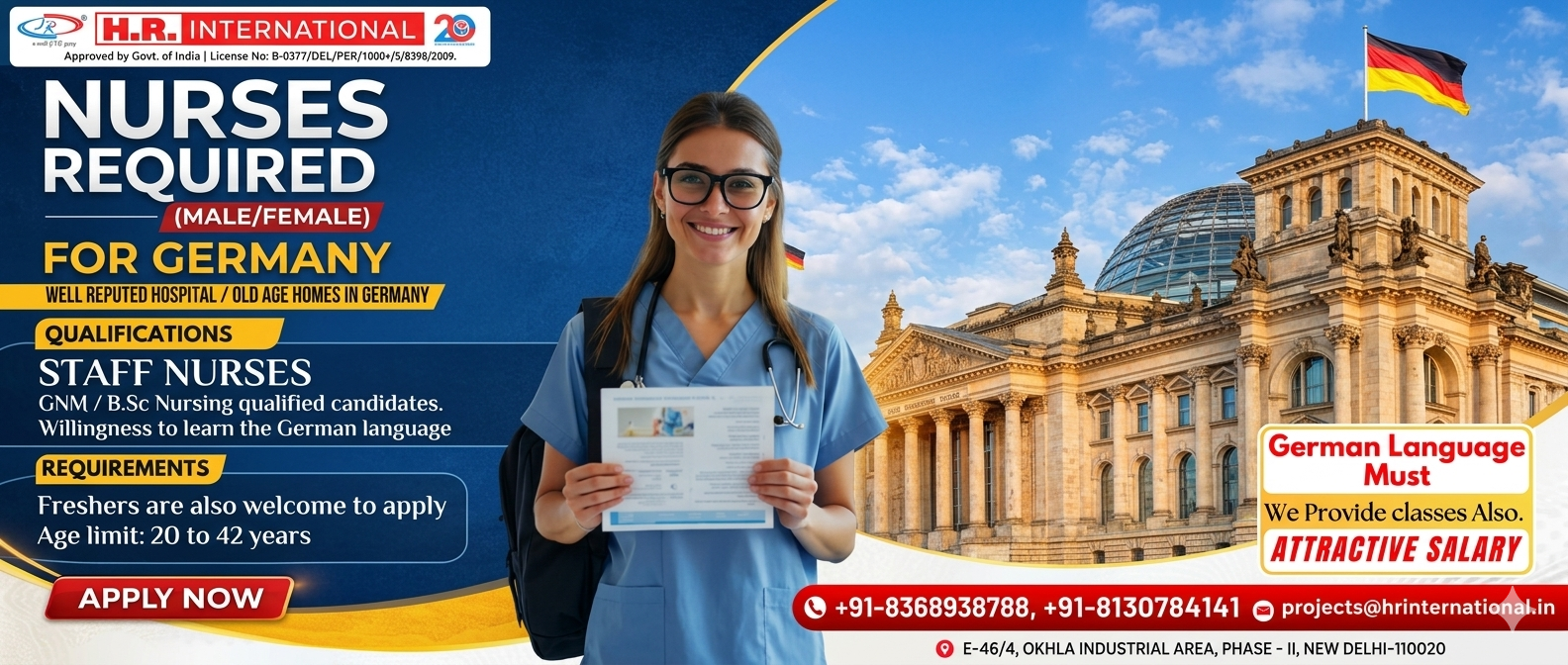
Staff Nurse Vacancy Germany Hospitals – Overview of Opportunities

Germany has rapidly become one of the most attractive destinations for healthcare professionals across the globe. If you’ve ever searched for nurse jobs Germany apply now you’ve probably noticed just how many openings are available. The demand is not just high—it’s urgent, consistent, and growing every single year. Hospitals, rehabilitation centers, and old age homes are actively looking for skilled and compassionate nurses who can fill critical gaps in their healthcare system.
What makes Germany stand out is not just the number of jobs, but the structure and stability of the healthcare industry. Unlike many countries where hiring fluctuates, Germany’s aging population ensures a steady and increasing need for nurses. This translates into job security, competitive salaries, and long-term career prospects. Whether you’re a fresher or an experienced professional, there’s a place for you.
Many reputed hospitals and elder care institutions are collaborating with international recruitment agencies to bring in talent from countries like India. These institutions offer structured onboarding, language training, and even assistance with relocation. That means you’re not just getting a job—you’re stepping into a well-supported career path.
If you’re serious about building a future abroad, exploring staff nurse vacancy Germany hospitals could be one of the smartest decisions you make. The opportunities are real, accessible, and designed to help you grow both professionally and personally.

Why Germany Needs International Nurses
Let’s be honest—why would a developed country like Germany look outside for nurses? The answer lies in demographics. Germany has one of the oldest populations in Europe. According to recent data, over 22% of its population is aged 65 and above. That number is expected to rise significantly in the coming years, creating a massive demand for healthcare services.
Now imagine this: more elderly people means more chronic illnesses, more hospital visits, and more long-term care needs. But here’s the catch—Germany doesn’t have enough local nurses to meet this demand. That’s where international professionals come in.
The government has even introduced policies to make it easier for foreign nurses to work in Germany. Programs include simplified visa processes, recognition of international qualifications, and funded language training. This isn’t just a temporary solution—it’s a long-term strategy.
For candidates searching for nursing jobs abroad Germany hiring, this situation creates a golden opportunity. You’re not just filling a vacancy; you’re becoming part of a system that genuinely values your contribution. And the best part? Employers are willing to invest in your success, from training to integration.
Demand in Hospitals and Old Age Homes
When discussing hospital nurse hiring Germany urgent, it’s important to understand where the demand is strongest. The two primary sectors are hospitals and old age homes, and both offer unique experiences.
Hospitals typically require nurses for departments like ICU, emergency care, surgery, and general wards. These roles are fast-paced and ideal for those who thrive in dynamic environments. On the other hand, old age homes focus more on long-term patient care, emotional support, and daily assistance. These roles require patience, empathy, and strong interpersonal skills.
Interestingly, many international nurses begin their careers in elder care facilities before transitioning to hospitals. This pathway allows them to adapt to the German healthcare system while improving their language skills.
Here’s a quick comparison:
| Sector | Work Nature | Growth Opportunity | Demand Level |
| Hospitals | Fast-paced, clinical | High | Very High |
| Old Age Homes | Patient care, routine | Moderate to High | Extremely High |
Whether you choose hospitals or elder care, the opportunities under caregiver and nurse jobs Germany apply are abundant. The key is to align your skills and interests with the right role.
Nursing Jobs Abroad Germany Hiring – Eligibility and Qualifications

If you’re planning to explore nursing jobs abroad Germany hiring, understanding the eligibility criteria is absolutely crucial. It’s not just about having a nursing degree—you need to meet specific standards that align with Germany’s healthcare regulations. The good news? These requirements are straightforward and achievable with proper preparation.
Germany primarily recognizes two types of nursing qualifications for international applicants: GNM (General Nursing and Midwifery) and B.Sc Nursing. Both are accepted, provided they come from recognized institutions. However, your qualification must go through a recognition process known as “Anerkennung,” where German authorities evaluate whether your education matches their standards.
Apart from academic qualifications, there are a few other essential requirements. Candidates must be between 20 to 42 years of age, physically fit, and mentally prepared to adapt to a new environment. Freshers are also encouraged to apply, which makes Germany one of the few countries offering such inclusive opportunities.
Another critical factor is your willingness to learn the German language. While you don’t need to be fluent at the time of application, you must commit to achieving at least a B1 or B2 level before starting work. Many agencies even provide language training, making the transition smoother.
So if you’re thinking about applying for overseas nurse jobs Germany recruitment, remember this: the process is structured, transparent, and designed to help you succeed—not to filter you out unnecessarily.
GNM Nursing Jobs Germany Apply – Requirements Explained
For those holding a GNM qualification, the pathway to Germany is surprisingly accessible. When you search for GNM nursing jobs Germany apply, you’ll find that employers are actively looking for candidates with this background.
The key requirement is that your GNM course must be completed from a recognized institution. Along with that, you’ll need your academic transcripts, registration certificate, and work experience (if any). While experience is a plus, it’s not mandatory—freshers are equally welcome.
One important step is document verification. Your credentials will be assessed to ensure they meet German standards. If there are gaps, you may be required to undergo a short adaptation program or exam in Germany.
Language proficiency plays a major role here as well. Most employers require at least A2 level during application and B1/B2 before deployment. The good news? Many agencies offer free or subsidized language classes as part of their recruitment package.
This makes apply nurse job Germany freshers a realistic goal, even if you’re just starting your career.
BSc Nursing Jobs Germany Recruitment Criteria
If you hold a Bachelor’s degree, you’re already in a strong position when it comes to BSc nursing jobs Germany recruitment. In fact, many German employers prefer B.Sc-qualified nurses because their academic training often aligns more closely with European healthcare standards. But don’t mistake this preference as exclusivity—both GNM and B.Sc candidates have excellent chances when they meet the required conditions.
The first step in the recruitment criteria is qualification recognition. Your B.Sc Nursing degree will go through the Anerkennung process, where authorities compare your curriculum with German nursing standards. If your coursework matches sufficiently, you may be granted direct recognition. If there are minor differences, you might need to complete a short adaptation course or pass a knowledge exam. Think of this as a bridge, not a barrier—it ensures you’re fully prepared to work confidently in a new healthcare system.
Another important requirement is professional registration. You must be a registered nurse in your home country, typically through a nursing council. Employers also value candidates who show a genuine interest in long-term work in Germany. This means being open to learning the language, understanding cultural differences, and adapting to new medical protocols.
Language proficiency is again non-negotiable. Most employers require at least B1 or B2 level German, especially for B.Sc graduates who are expected to take on more responsibility in patient care and documentation. Communication is at the heart of nursing, and in Germany, being able to speak clearly with patients, doctors, and colleagues is essential.
For candidates actively searching for nursing career Germany hospitals vacancy, this pathway offers excellent growth. With a B.Sc degree, you may also have opportunities to specialize later in areas like ICU, geriatrics, or surgical care. The journey requires effort, but the rewards—both professionally and financially—are well worth it.
Germany Nurse Job with Visa Sponsorship – What You Should Know

One of the biggest concerns for international applicants is how to legally work abroad. The good news is that many employers offer Germany nurse job with visa sponsorship, making the transition smoother than you might expect. This isn’t just a perk—it’s often a complete support system that covers multiple aspects of relocation.
Visa sponsorship typically includes assistance with documentation, application processing, and sometimes even covering visa fees. Employers or recruitment agencies guide you step-by-step, ensuring that you meet all legal requirements. This reduces the stress and confusion that often comes with international job applications.
Germany offers specific visa categories for skilled workers, including healthcare professionals. Once your qualifications are recognized and you have a job offer, applying for a work visa becomes a structured process. In many cases, you may initially enter Germany on a recognition visa, complete your adaptation training, and then transition into a full work permit.
Another advantage is family reunification. Many visa programs allow you to bring your spouse and children after settling in, making it a long-term opportunity rather than a temporary assignment. This is one of the reasons why apply international nursing jobs Germany is becoming increasingly popular among Indian nurses.
Understanding the visa process removes a major barrier and opens the door to a stable and rewarding career abroad. With proper guidance, what once seemed complicated becomes entirely manageable.
Work Visa Process for Nurses
The visa process might sound intimidating at first, but when broken down, it’s actually quite logical. For those targeting overseas nurse jobs Germany recruitment, the process usually begins after you receive a job offer from a recognized employer.
You’ll need to submit documents such as your passport, educational certificates, proof of language proficiency, and employment contract. Once submitted, the German embassy reviews your application. If everything is in order, you’ll be granted a visa—often within a few weeks to a few months.
In some cases, candidates enter Germany with a recognition visa, which allows them to complete required training or exams. After successfully meeting these requirements, the visa can be converted into a full work permit. This step-by-step approach ensures that you’re fully qualified before taking on independent responsibilities.
The process is supported by employers and agencies, so you’re rarely navigating it alone. For many candidates searching apply nurse job Germany freshers, this structured pathway provides clarity and confidence.
Benefits of Sponsored Nursing Jobs
Why are Germany nurse job with visa sponsorship opportunities so appealing? It goes beyond just getting a job—it’s about receiving comprehensive support that makes your transition seamless.
Here are some key benefits:
| Benefit | Description |
| Visa Assistance | Employers guide and support the entire visa process |
| Free/Low-Cost Language Training | Helps achieve required German proficiency |
| Relocation Support | Includes travel, accommodation, or allowances |
| Job Security | Long-term contracts with stable income |
| Career Growth | Opportunities for specialization and promotion |
Beyond these tangible benefits, there’s also peace of mind. Knowing that your employer is invested in your success makes a huge difference. You’re not just another employee—you’re a valued professional being welcomed into a system that needs you.
Apply Nurse Job Germany Freshers – Opportunities for Beginners

Starting your career abroad might feel like a big leap, especially if you have little or no experience. But here’s the surprising part—Germany actively encourages freshers to apply. If you’ve been searching for apply nurse job Germany freshers, you’re already on the right track.
Unlike many countries that demand years of experience, Germany focuses more on your willingness to learn and adapt. Fresh graduates are often seen as flexible, trainable, and eager to grow—qualities that employers value highly. This opens doors for candidates who might otherwise struggle to find international opportunities.
Freshers typically begin with structured training programs that help them understand the German healthcare system. These programs cover everything from patient care standards to documentation practices and workplace communication. It’s like a guided introduction to your new professional environment.
Another advantage is that freshers can shape their careers from the ground up. You’re not unlearning old habits—you’re building new ones aligned with international standards. This can be a huge advantage in the long run, especially if you aim to specialize or move into leadership roles.
So if you’ve been hesitating because of a lack of experience, it’s time to rethink. The pathway for male female nurse jobs Germany apply is open to beginners who are ready to commit and grow.
Training and Adaptation Programs
Training programs play a crucial role in helping freshers succeed in Germany. When you apply for nursing jobs in Germany for Indians, you’re not expected to know everything from day one. Instead, you’re given time and support to adapt.
These programs often include:
- Clinical training under supervision
- Language improvement classes
- Cultural orientation sessions
- Practical assessments
The goal is simple: to make you confident and competent in your role. Think of it as a transition phase where you’re gradually introduced to real-world responsibilities.
Many candidates start working as nursing assistants while completing their recognition process. This allows them to earn, learn, and integrate simultaneously. It’s a practical approach that benefits both the employer and the employee.
Career Growth for Fresh Nurses
Once you’ve completed your initial training, the growth opportunities are immense. Germany’s healthcare system encourages continuous learning, offering courses and certifications in specialized fields.
For those pursuing nursing career Germany hospitals vacancy, career progression can include roles such as senior nurse, department coordinator, or even healthcare manager. With experience and additional qualifications, salaries also increase significantly.
Freshers who start their journey in Germany often find themselves in leadership positions within a few years. The key is consistency, dedication, and a willingness to keep learning.
Nursing Jobs in Germany for Indians – Complete Application Guide

For Indian nurses dreaming of an international career, nursing jobs in Germany for Indians offer a realistic and structured pathway. Unlike many countries where the process feels uncertain or overly competitive, Germany has created a system that actively welcomes qualified Indian nurses. The demand is genuine, and the process—while detailed—is transparent and achievable when approached step by step.
The journey typically begins with choosing the right recruitment partner or applying directly to hospitals and healthcare institutions. Reputed agencies, such as those based in major cities like Delhi, often collaborate with German employers to streamline hiring. These agencies guide candidates through documentation, interviews, and even language training. This support becomes especially valuable for first-time applicants navigating international procedures.
The application process involves submitting essential documents like educational certificates (GNM or B.Sc Nursing), nursing council registration, passport copies, and updated resumes. Once shortlisted, candidates may go through interviews, which are often conducted online. These interviews assess not only your technical knowledge but also your communication skills and willingness to adapt to a new culture.
Another important aspect is credential recognition. German authorities evaluate your qualifications to ensure they meet local standards. If there are gaps, you may need to complete an adaptation program after arrival. This ensures that every nurse working in Germany meets the same level of competence and professionalism.
For those searching apply international nursing jobs Germany, the key is preparation. When your documents are in order and your goals are clear, the process becomes far less intimidating. It’s not just about getting selected—it’s about building a stable, rewarding future in one of the world’s most respected healthcare systems.
Required Documents and Process
When applying for overseas nurse jobs Germany recruitment, documentation plays a central role. Missing or incorrect paperwork can delay your application, so it’s essential to be thorough and organized from the start.
Here’s what you’ll typically need:
- Valid passport
- Nursing qualification certificates (GNM/B.Sc)
- Nursing council registration
- Updated CV/resume
- Passport-sized photographs
- Proof of German language proficiency (if available)
Once your documents are submitted, they are reviewed by both the recruitment agency and the German employer. If shortlisted, you’ll be invited for an interview. After selection, your documents are sent for recognition in Germany, followed by visa processing.
The process might seem lengthy, but each step serves a purpose. It ensures that you’re fully prepared for your role and that your transition is smooth. For candidates targeting GNM nursing jobs Germany apply, having complete and accurate documentation significantly increases your chances of success.
How Recruitment Agencies Help
Recruitment agencies act as a bridge between candidates and employers. For many applicants, especially those exploring hospital nurse hiring Germany urgent, these agencies simplify what could otherwise be a complex process.
They assist with:
-
- Document preparation and verification
- Scheduling interviews
- Providing German language training
- Guiding visa applications
- Offering pre-departure orientation
Think of them as your support system throughout the journey. While it’s possible to apply independently, agencies bring expertise and connections that can speed up the process.
However, it’s important to choose a reputable agency. Look for transparency, clear communication, and a proven track record. A good agency doesn’t just help you get a job—it helps you build a career.
Hospital Nurse Hiring Germany Urgent – Current Openings
If there’s one phrase that captures the current job market, it’s hospital nurse hiring Germany urgent. The urgency isn’t exaggerated—it reflects a real and growing need for healthcare professionals across the country. Hospitals are expanding, patient numbers are increasing, and the demand for skilled nurses continues to rise.
Many hospitals are offering immediate openings in departments such as general medicine, surgery, ICU, and geriatrics. These roles require dedication, adaptability, and a strong commitment to patient care. For international nurses, this urgency translates into faster hiring processes and better support systems.
Old age homes are also actively recruiting, often with even higher demand due to the aging population. These roles may involve long-term patient care, emotional support, and daily assistance. While the pace might differ from hospitals, the impact is equally significant.
Employers are not just filling vacancies—they’re building teams. This means they’re looking for candidates who are reliable, compassionate, and willing to grow within the organization. For those searching staff nurse vacancy Germany hospitals, this is the perfect time to apply.
Roles in Hospitals vs Old Age Homes
Choosing between hospitals and old age homes depends on your preferences and career goals. Both sectors fall under caregiver and nurse jobs Germany apply, but they offer different experiences.
Hospitals are ideal for those who enjoy a fast-paced environment. You’ll work with advanced medical equipment, handle diverse cases, and collaborate with multidisciplinary teams. It’s challenging but highly rewarding.
Old age homes, on the other hand, focus on long-term care. You’ll build relationships with patients, provide consistent support, and play a crucial role in their daily lives. This setting requires patience and empathy but offers a deep sense of fulfillment.
Each path has its own advantages, and many nurses transition between the two over time. The flexibility within nursing career Germany hospitals vacancy ensures that you’re not limited to a single role.
Salary Structure and Benefits
One of the most attractive aspects of nursing jobs abroad Germany hiring is the salary and benefits package. Nurses in Germany earn competitive wages, with additional perks that enhance their overall quality of life.
Here’s a general overview:
| Experience Level | Monthly Salary (Approx.) |
| Fresher | €2,200 – €2,800 |
| Experienced | €3,000 – €3,800 |
| Specialized Roles | €4,000+ |
In addition to salary, benefits often include:
- Health insurance
- Paid leave
- Overtime compensation
- Accommodation support (in some cases)
These benefits make Germany one of the most financially rewarding destinations for nurses. For those exploring Germany nurse job with visa sponsorship, the combination of salary and support creates a strong foundation for long-term success.
Caregiver and Nurse Jobs Germany Apply – Dual Opportunities

The healthcare sector in Germany doesn’t just offer traditional nursing roles—it also opens doors to caregiver and nurse jobs Germany apply. This dual opportunity allows candidates to explore different aspects of patient care, depending on their skills and preferences.
Caregivers focus more on assisting patients with daily activities such as bathing, feeding, and mobility. Nurses, on the other hand, handle medical responsibilities like administering medication, monitoring health conditions, and coordinating with doctors.
For international candidates, starting as a caregiver can sometimes serve as a stepping stone to a full nursing role. It provides valuable experience, improves language skills, and helps you adapt to the work environment.
Difference Between Nurse and Caregiver Roles
While both roles are essential, they differ in responsibilities and requirements. Nurses require formal qualifications like GNM or B.Sc Nursing, while caregiver roles may have more flexible entry criteria.
Here’s a quick comparison:
| Aspect | Nurse | Caregiver |
| Qualification | GNM/B.Sc Nursing | Basic training/certification |
| Responsibilities | Medical care | Daily assistance |
| Salary | Higher | Moderate |
| Career Growth | Extensive | Moderate |
Understanding this difference helps you choose the right path when applying for male female nurse jobs Germany apply.
Career Flexibility in Germany
One of the biggest advantages of working in Germany is flexibility. You’re not locked into a single role or career path. With experience and additional training, you can switch roles, specialize, or move into management positions.
This flexibility makes apply international nursing jobs Germany a long-term investment rather than a short-term decision. You’re building a career that evolves with your skills and interests.
German Language Nursing Jobs Germany – Why Language Matters
When people first explore German language nursing jobs Germany, they often underestimate just how important language is in the healthcare environment. It’s not just about speaking a few phrases or passing an exam—it’s about building trust, ensuring patient safety, and integrating smoothly into a professional team. Imagine trying to comfort a patient, explain medication, or respond to an emergency without clear communication. That’s why German language proficiency isn’t a formality; it’s a core requirement.
In Germany, most hospitals and care homes require nurses to achieve at least a B1 or B2 level in German. This level ensures you can understand medical terminology, communicate with patients, and document cases accurately. While it may sound challenging, thousands of international nurses achieve this every year with proper training and consistency.
Language also plays a big role in your daily life outside of work. From grocery shopping to handling official paperwork, being able to speak German gives you independence and confidence. It helps you feel less like an outsider and more like a part of the community.
Many candidates searching for nursing jobs in Germany for Indians worry about language barriers, but here’s the reassuring part—most recruitment programs include language training. Some even start classes before departure and continue after arrival. This structured approach makes learning manageable and practical.
If you think of language as a tool rather than an obstacle, your perspective shifts completely. It becomes your bridge to better opportunities, stronger relationships, and long-term success in Germany.
Required Language Levels
Understanding the required levels is essential when applying for overseas nurse jobs Germany recruitment. The Common European Framework of Reference for Languages (CEFR) is used to measure proficiency, and most employers expect:
- A2 Level – Basic understanding (sometimes accepted at the initial stage)
- B1 Level – Intermediate communication (minimum for many roles)
- B2 Level – Advanced communication (preferred for full recognition)
At the B1 level, you can handle everyday conversations and basic workplace communication. At B2, you’re expected to communicate confidently in professional settings, including patient care and documentation.
For those targeting BSc nursing jobs Germany recruitment, B2 is often preferred because of the higher level of responsibility involved. However, don’t let this intimidate you. With consistent practice, reaching B2 is absolutely achievable within 6 to 8 months.
Language Training Programs
One of the most encouraging aspects of apply nurse job Germany freshers is the availability of structured language training programs. These programs are often provided by recruitment agencies or partnered institutions and are designed specifically for healthcare professionals.
Training typically includes:
- Medical vocabulary and terminology
- Real-life conversation practice
- Listening and comprehension exercises
- Exam preparation for certification
Some programs even simulate hospital scenarios, helping you practice communication in realistic settings. This practical approach makes learning more engaging and effective.
For candidates pursuing German language nursing jobs Germany, these programs are not just helpful—they’re transformative. They turn a challenging requirement into a manageable and rewarding journey.
Overseas Nurse Jobs Germany Recruitment – Step-by-Step Process
If you’ve been researching overseas nurse jobs Germany recruitment, you’ve probably realized that the process involves several stages. While it might seem complex at first glance, it becomes much clearer when broken down into steps. Each stage is designed to ensure that you’re fully prepared for your new role and environment.
The journey usually starts with submitting your application through a recruitment agency or directly to an employer. Once your profile is reviewed, you may be shortlisted for an interview. This interview assesses your technical knowledge, communication skills, and readiness to work abroad.
After selection, your documents are sent for recognition in Germany. This step verifies that your qualifications meet local standards. Depending on the outcome, you may either receive direct recognition or be required to complete an adaptation program.
The next stage is visa processing. With a job offer and recognized qualifications, applying for a work visa becomes straightforward. Once approved, you can travel to Germany and begin your training or work.
For those searching apply international nursing jobs Germany, understanding this process removes uncertainty. It’s not a leap into the unknown—it’s a guided journey with clear milestones.
Application to Placement Timeline
Timing is an important factor when planning your move. The entire process for nursing jobs abroad Germany hiring typically takes between 6 to 12 months, depending on factors like language proficiency and document processing.
Here’s a general timeline:
| Stage | Duration |
| Application & Interview | 1–2 months |
| Language Training | 4–6 months |
| Document Recognition | 2–3 months |
| Visa Processing | 1–2 months |
While this may seem lengthy, each phase prepares you for success. Rushing the process could lead to challenges later, so it’s better to approach it with patience and focus.
Tips to Get Selected Quickly
Competition exists, but there are ways to stand out when applying for hospital nurse hiring Germany urgent roles. Employers look for candidates who are not only qualified but also proactive and adaptable.
Here are a few practical tips:
- Start learning German early
- Keep your documents organized and updated
- Practice interview skills
- Show genuine interest in working in Germany
- Choose a reputable recruitment agency
These small steps can make a big difference. For candidates targeting male female nurse jobs Germany apply, preparation often determines how quickly you move forward in the process.
Male Female Nurse Jobs Germany Apply – Equal Opportunities
One of the most encouraging aspects of male female nurse jobs Germany apply is the emphasis on equality and inclusivity. Germany’s healthcare system values skills and dedication over gender, creating a work environment where everyone has equal opportunities to succeed.
Both male and female nurses are actively recruited across hospitals and care homes. Roles are assigned based on qualifications, experience, and individual strengths rather than gender stereotypes. This creates a balanced and professional workplace where everyone contributes equally.
For many international candidates, this inclusivity is a refreshing change. It allows you to focus on your career without worrying about bias or limitations. Whether you’re applying for staff nurse vacancy Germany hospitals or caregiver roles, your potential is recognized and rewarded.
Work Environment and Inclusivity
The work environment in Germany is known for its professionalism and respect. Nurses are treated as essential members of the healthcare team, with clear responsibilities and structured workflows.
Teamwork is highly valued, and collaboration between doctors, nurses, and support staff is encouraged. This creates a supportive atmosphere where you can learn, grow, and contribute effectively.
For those exploring nursing career Germany hospitals vacancy, this environment provides both stability and growth. You’re not just working—you’re building a meaningful and respected career.
Final Thoughts on Nursing Career Germany Hospitals Vacancy
Choosing to pursue a nursing career Germany hospitals vacancy is more than just a job decision—it’s a life-changing opportunity. From competitive salaries to professional growth and international exposure, the benefits are substantial.
Germany offers a rare combination of demand, support, and long-term stability. Whether you’re a fresher or an experienced nurse, the pathway is clear and achievable. With the right preparation, determination, and mindset, you can turn this opportunity into a successful and fulfilling career.
Conclusion
The demand for nurses in Germany continues to rise, creating unmatched opportunities for international candidates. Whether you’re searching for nurse jobs Germany apply now, exploring GNM nursing jobs Germany apply, or aiming for BSc nursing jobs Germany recruitment, the pathway is structured and accessible. With visa sponsorship, language training, and strong career growth, Germany stands out as one of the best destinations for nurses worldwide. Taking the first step today could shape your future in ways you never imagined.
FAQs
1. Can freshers apply for nursing jobs in Germany?
Yes, freshers are welcome to apply. Many employers offer training programs to help beginners adapt to the German healthcare system.
2. Is German language mandatory for nurses?
Yes, at least B1 or B2 level proficiency is required to ensure effective communication in the workplace.
3. What is the salary for nurses in Germany?
Freshers can earn around €2,200–€2,800 per month, while experienced nurses can earn up to €4,000 or more.
4. Do employers provide visa sponsorship?
Yes, many employers offer Germany nurse job with visa sponsorship, including support for documentation and relocation.
5. How long does the recruitment process take?
The process typically takes 6 to 12 months, depending on language training and document verification.


Leave a Reply