
Introduction to H.R. International Caregiver/Nurses Career Pathway for Japan

If you’ve ever dreamed of building a stable, well-paying International career in healthcare, the H.R. International Caregiver/Nurses Career Pathway for Japan might just be the opportunity you’ve been waiting for. Japan, known for its advanced healthcare system and aging population, is actively seeking skilled and compassionate caregiver/nurses from overseas—and this program is designed to help you step directly into that demand.
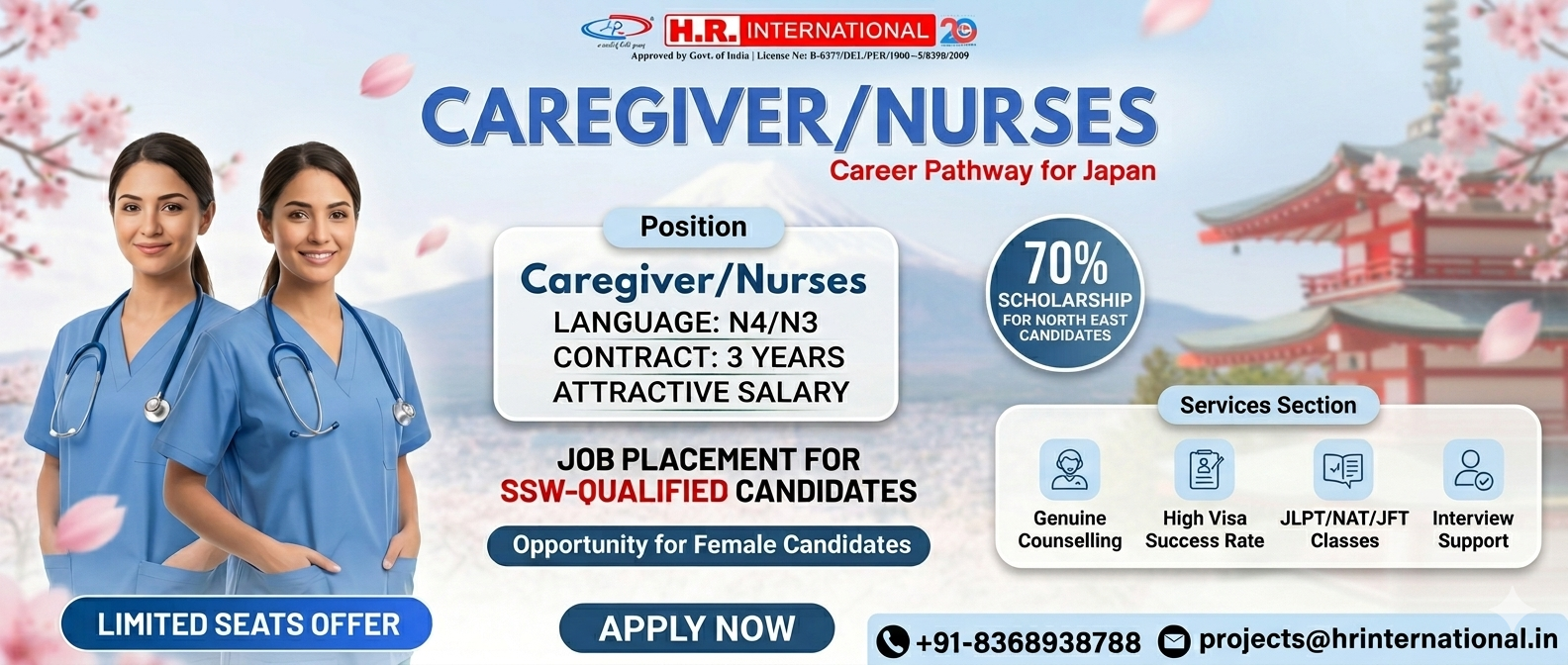
What makes this pathway stand out isn’t just the job placement—it’s the complete ecosystem built around your success. From Japanese language training (JLPT/NAT/JFT N4/N3) to genuine counselling, visa support, and even a 70% scholarship for North East candidates, everything is structured to reduce barriers and maximize your chances of success. You’re not just applying for a job; you’re entering a guided career journey.
Think about it like a bridge. On one side, you have your ambition, your willingness to work hard, and your desire to grow Internationally. On the other side lies Japan’s healthcare sector, offering attractive salaries, structured work environments, and long-term career prospects. H.R. International acts as that bridge—making sure you don’t fall through the cracks during the transition.
The program is especially appealing because it combines training, placement, and long-term career growth into one streamlined process. Add to that the 3-year contract, job security, and opportunities for SSW-qualified candidates, and you begin to see why this is more than just a job—it’s a life-changing move.
Why Japan Needs Caregiver/Nurses
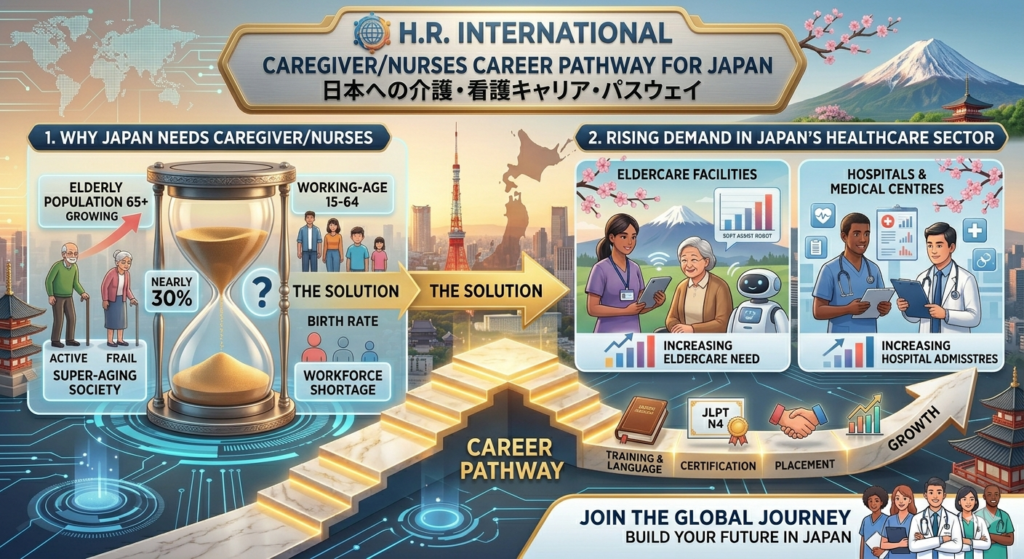
Japan is currently facing one of the fastest-aging populations in the world. With nearly 30% of its population aged 65 or older, the demand for healthcare services—especially caregiving—is skyrocketing. This demographic shift has created an urgent need for trained caregiver/nurses who can provide both medical and emotional support to elderly citizens.
Unlike many countries where healthcare roles are oversaturated, Japan offers a unique gap between demand and supply. Local workforce shortages have pushed the government to open doors for International candidates through structured programs like the Specified Skilled Worker (SSW) visa. This means foreign professionals are not only welcomed but actively encouraged.
For candidates from India and especially the North East region, this presents a rare opportunity. Cultural adaptability, empathy, and dedication—qualities often associated with Indian caregivers—are highly valued in Japan’s healthcare system. It’s not just about filling vacancies; it’s about building trust and delivering quality care.
Rising Demand in Japan’s Healthcare Sector
The numbers speak volumes. According to recent projections, Japan will need over 2.5 million caregivers by 2025, yet the domestic workforce simply isn’t enough to meet this demand. This gap has led to increased recruitment of International caregiver/nurses, making programs like H.R. International more relevant than ever.
Hospitals, nursing homes, and elderly care facilities are continuously expanding. With longer life expectancy and lower birth rates, the ratio of caregivers to patients is becoming increasingly imbalanced. This creates a stable and long-term demand for professionals who are willing to work in this sector.
What’s interesting is that Japan doesn’t just offer jobs—it offers structure. Employees benefit from regulated working hours, proper training, and a respectful work culture. For many candidates, this is a significant upgrade compared to unorganized or underpaid roles elsewhere.
And here’s the real kicker: once you gain experience in Japan, your global employability skyrockets. Countries across Europe and Asia recognize Japanese healthcare experience as a benchmark of quality.
Overview of Caregiver/Nurses Position in Japan via H.R. International
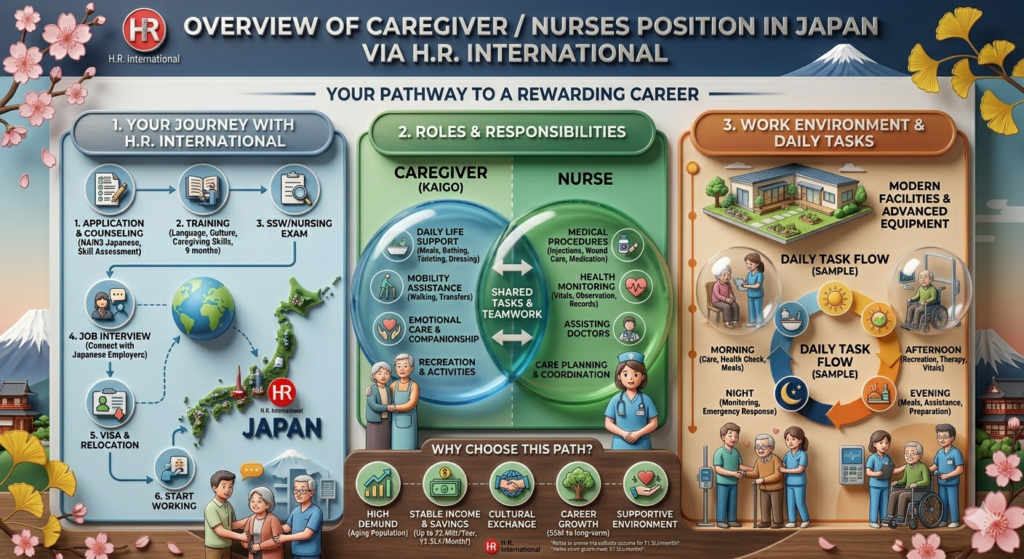
Stepping into the Caregiver/Nurses position in Japan via H.R. International is not just about employment—it’s about entering a highly respected and structured profession that plays a vital role in society. Caregiving in Japan goes beyond routine medical assistance; it blends compassion, discipline, and cultural sensitivity into daily work. Through this program, candidates are carefully prepared to meet Japanese standards, ensuring they don’t just survive in the role but truly thrive.
The position is designed to give candidates both stability and growth. You are placed in certified healthcare facilities such as nursing homes, rehabilitation centers, and hospitals where systems are streamlined and expectations are clearly defined. Unlike many unstructured caregiving roles in other countries, Japan ensures that every caregiver operates within a professional framework, supported by trained supervisors and modern equipment.
What makes this opportunity even more attractive is the emphasis on dignity and respect—both for patients and employees. Caregivers are treated as essential contributors to society, not just workers. That mindset shift alone can be incredibly motivating for individuals looking to build a meaningful career abroad.
H.R. International plays a crucial role here by bridging cultural and professional gaps. They ensure candidates are trained not only in technical caregiving skills but also in Japanese etiquette, communication style, and workplace expectations. This preparation reduces the chances of culture shock and helps candidates integrate smoothly into their new environment.
For many, this job becomes more than a paycheck—it becomes a stepping stone to long-term International success. With experience, caregivers can explore advanced roles, specialized training, or even transition into nursing positions within Japan or globally.
Roles and Responsibilities of Caregiver/Nurses
Understanding the roles and responsibilities of caregiver/nurses is essential before stepping into this career path. This isn’t a desk job—it’s hands-on, people-centered, and deeply impactful work. Caregivers are responsible for assisting elderly patients with their daily activities, ensuring their comfort, safety, and overall well-being.
Daily responsibilities typically include helping patients with bathing, dressing, eating, and mobility. In addition, caregivers often monitor vital signs, assist with medication routines under supervision, and provide emotional support. Think of it as being both a healthcare assistant and a companion—someone who ensures not just physical health but also emotional stability.
Another critical aspect is maintaining hygiene and cleanliness, both for the patient and the surrounding environment. Japanese healthcare standards are known for their precision, so attention to detail becomes a key skill. Caregivers are trained to follow strict protocols, ensuring that every task is carried out efficiently and respectfully.
Communication also plays a huge role. Even with N4/N3 level Japanese, caregivers must be able to understand patient needs and respond appropriately. This is why language training is heavily emphasized before placement. Over time, as language skills improve, so does confidence and efficiency in handling responsibilities.
Work Environment and Daily Tasks
The work environment for caregiver/nurses in Japan is structured, disciplined, and surprisingly supportive. Most facilities operate with clearly defined schedules, ensuring that employees are not overwhelmed. Shifts are organized, breaks are regulated, and teamwork is strongly encouraged.
A typical day might start with patient check-ins, followed by assisting with morning routines such as bathing and dressing. Midday tasks often involve meal assistance, light medical monitoring, and recreational activities designed to keep patients engaged. Evening routines focus on preparing patients for rest and ensuring their comfort overnight.
One of the standout aspects of working in Japan is the emphasis on teamwork. Caregivers rarely work alone; they are part of a coordinated unit that includes nurses, supervisors, and other staff members. This reduces stress and creates a collaborative environment where help is always available.
Facilities are also equipped with modern tools and assistive devices that make physical tasks easier. From mobility aids to automated systems, technology plays a significant role in improving efficiency and reducing physical strain.
For many candidates, the biggest surprise is how organized everything is. There’s a system for everything—from reporting issues to handling emergencies—which creates a sense of security and predictability in daily work life.
Language Requirements – JLPT/NAT/JFT (N4/N3) for Japan Jobs
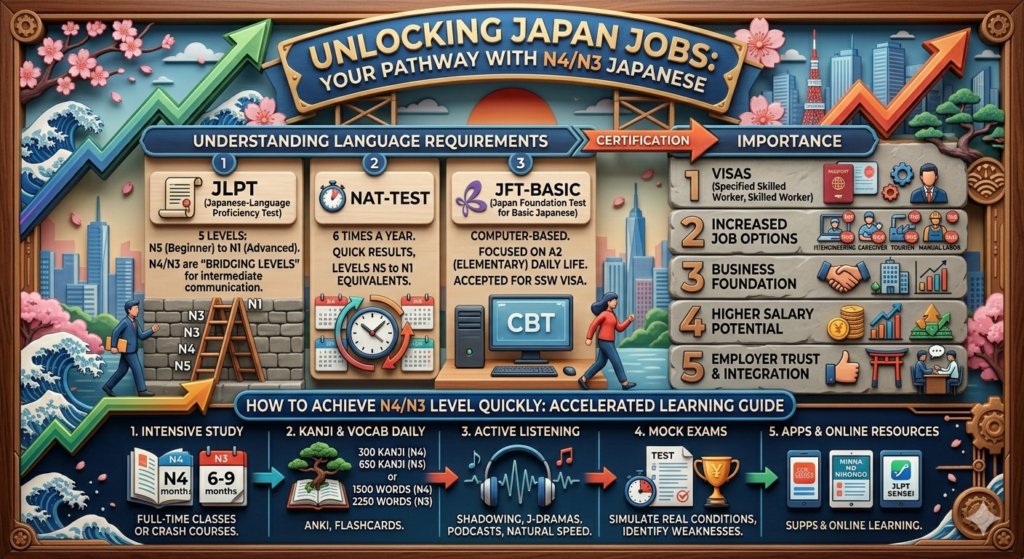
When it comes to building a career in Japan, language is not optional—it’s essential. The requirement of JLPT/NAT/JFT (N4/N3) might seem intimidating at first, but it’s actually a manageable and rewarding milestone. These certifications are your gateway to communication, integration, and professional success in Japan.
H.R. International understands this challenge and provides structured training programs to help candidates achieve the required language levels. The focus isn’t just on passing exams—it’s on practical communication skills that can be used in real-life caregiving scenarios.
Learning Japanese also opens doors beyond the workplace. It helps you navigate daily life, build relationships, and truly experience the culture. Without it, even simple tasks like shopping or commuting can become stressful.
The good news? Reaching N4 or N3 level is entirely achievable with consistent effort and the right guidance. Many candidates start from scratch and successfully clear these levels within a few months of dedicated training.
Importance of Japanese Language Certification
The importance of Japanese language certification cannot be overstated. It’s not just a requirement for employment—it’s a key factor in determining how smoothly you adapt to life in Japan. Employers prioritize candidates who can communicate effectively, as it directly impacts patient care quality.
Language skills also influence your career growth. Higher proficiency levels can lead to better job roles, increased responsibilities, and even higher salaries. It’s like unlocking new levels in a game—the better you get, the more opportunities you access.
Additionally, certifications like JLPT, NAT, and JFT are globally recognized. This means your efforts don’t just benefit your career in Japan but also enhance your resume for opportunities in other countries.
How to Achieve N4/N3 Level Quickly
Achieving N4/N3 level Japanese quickly requires a mix of smart strategy and consistent effort. H.R. International’s training programs are designed to simplify this process by breaking down complex concepts into manageable lessons.
Daily practice is key. Instead of cramming, candidates are encouraged to immerse themselves in the language through listening, speaking, reading, and writing exercises. Think of it like learning to swim—you don’t just read about it; you get into the water.
Mock tests, interactive sessions, and real-life conversation practice help build confidence. Over time, what once seemed like a difficult language starts to feel familiar and even enjoyable.
3-Year Contract Details for Caregiver/Nurses in Japan
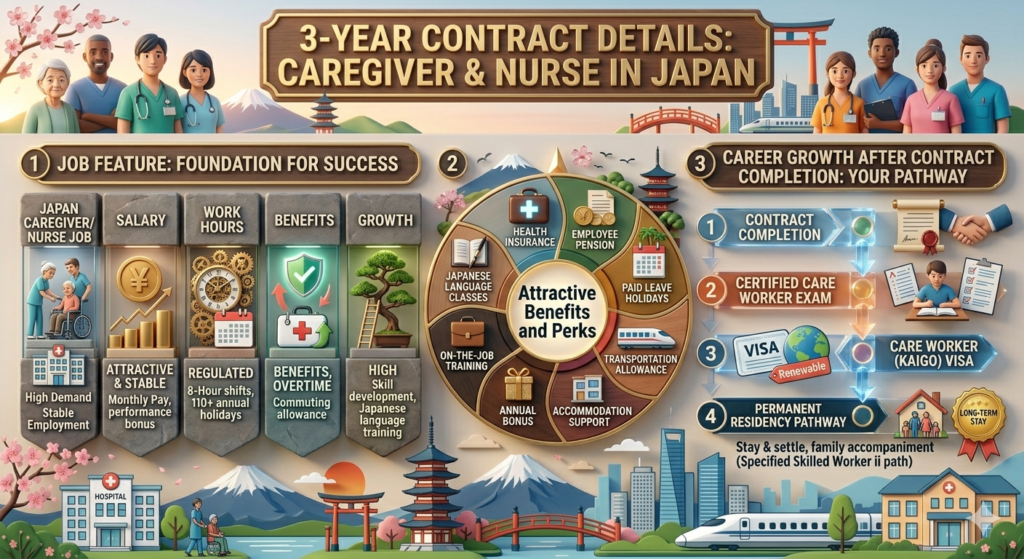
The 3-year contract for caregiver/nurses in Japan offers a balance of stability and flexibility. It gives candidates enough time to gain valuable experience, adapt to the work culture, and plan their future steps.
This contract structure ensures job security, which is a major concern for many International workers. Knowing that you have a stable position for three years allows you to focus on skill development and financial growth without constant uncertainty.
Salary Structure and Attractive Benefits
One of the biggest highlights of this program is the attractive salary offered to caregiver/nurses. While exact figures may vary, the pay is competitive and often includes additional benefits such as accommodation support, overtime pay, and insurance coverage.
Here’s a simplified comparison:
| Feature | Japan Caregiver Job |
| Salary | Attractive & Stable |
| Work Hours | Regulated |
| Benefits | Insurance, Overtime |
| Growth | High |
This combination of financial and professional benefits makes the opportunity highly appealing.
Career Growth After Contract Completion
After completing the 3-year contract, candidates are not at a dead end—in fact, they’re just getting started. Many go on to renew contracts, switch to higher roles, or explore opportunities in other countries.
Experience in Japan acts as a powerful credential, opening doors globally. It’s like having a stamp of excellence on your resume.
70% Scholarship for North East Candidates – A Golden Opportunity

The 70% scholarship for North East candidates offered by H.R. International is easily one of the most compelling aspects of this entire caregiver/nurses career pathway for Japan. For many aspiring candidates, financial constraints often become the biggest obstacle when pursuing International opportunities. Training fees, language classes, visa processing everything adds up quickly. This scholarship directly addresses that challenge, making the dream of working in Japan far more accessible and realistic.
Think about it this way: instead of worrying about how to afford the journey, you can focus on preparing for it. Covering 70% of the total cost significantly reduces the burden on candidates and their families, especially those coming from regions where access to such global opportunities is limited. It’s not just financial aid—it’s a doorway being opened.
The North East region of India is known for producing hardworking, disciplined, and culturally adaptable individuals—qualities that align perfectly with Japan’s work culture. By offering this scholarship, H.R. International is not only supporting individuals but also tapping into a pool of talent that can truly excel in caregiving roles.
Another important aspect is that scholarships often come with structured support. Candidates receiving this benefit are usually guided more closely, ensuring they stay on track with language learning, interview preparation, and documentation. This increases their chances of success even further.
Ultimately, this initiative is about leveling the playing field. It ensures that talent and determination matter more than financial background, giving deserving candidates a fair shot at building an International career.
Eligibility Criteria for Scholarship
Understanding the eligibility criteria for the 70% scholarship for North East candidates is crucial if you want to take advantage of this opportunity. While the program is designed to be inclusive, there are certain requirements that ensure candidates are well-prepared and committed.
Typically, applicants must belong to the North East region of India and demonstrate a genuine interest in working as caregiver/nurses in Japan. Basic educational qualifications are required, usually a minimum of high school completion, although candidates with healthcare backgrounds may have an added advantage.
Age also plays a role, as most programs prefer candidates within a specific working-age range to ensure adaptability and long-term contribution. Physical fitness and a willingness to learn are equally important, as caregiving is both mentally and physically demanding.
Another key requirement is the commitment to complete Japanese language training (JLPT/NAT/JFT N4/N3). Since communication is essential in caregiving, candidates must be ready to invest time and effort into language learning.
How to Apply for Scholarship Program
Applying for the 70% scholarship program through H.R. International is a straightforward yet structured process. It begins with an initial inquiry—either through the provided contact number +91-8368938788 or via email at projects@hrInternational.in.
Once you express interest, the team conducts a preliminary assessment to understand your background, eligibility, and career goals. This is followed by genuine counselling sessions where every detail of the program is explained clearly—no hidden surprises, no vague promises.
After that, candidates are guided through documentation, enrollment in language classes, and preparation for interviews. The process is designed to be transparent and supportive, ensuring that applicants don’t feel lost at any stage.
Job Placement for SSW-Qualified Candidates in Japan
For those who have already achieved or are aiming to achieve the Specified Skilled Worker (SSW) qualification, H.R. International offers dedicated job placement for SSW-qualified candidates in Japan. This is a significant advantage because finding the right employer abroad can often be the most challenging part of the journey.
Instead of navigating the job market alone, candidates benefit from established networks and partnerships that H.R. International has built over time. This ensures that placements are not only legitimate but also aligned with the candidate’s skills and expectations.
Understanding Specified Skilled Worker (SSW) Visa
The SSW visa is a specialized work visa introduced by the Japanese government to address labor shortages in key sectors, including healthcare and caregiving. It allows foreign workers to legally work in Japan for a defined period while enjoying structured employment conditions.
What makes the SSW visa attractive is its flexibility and recognition. It’s not just a temporary work permit—it’s a pathway that can lead to extended stays and career growth within Japan. Candidates under this visa are treated as skilled professionals, not temporary labor.
Placement Process by H.R. International
The placement process by H.R. International is designed to eliminate uncertainty. From matching candidates with suitable employers to preparing them for interviews, every step is handled with precision.
Candidates receive interview support, including mock sessions and guidance on answering questions confidently. Once selected, the team assists with visa processing, documentation, and pre-departure orientation.
Special Opportunity for Female Candidates in Caregiver/Nurses Roles
The opportunity for female candidates in this program is particularly noteworthy. Caregiving is a profession where empathy, patience, and attention to detail are highly valued—qualities that many female candidates naturally bring to the role.
H.R. International actively encourages women to apply, ensuring they receive equal opportunities and support throughout the process.
Benefits and Safety Measures for Women Workers
Safety is a top priority when working abroad, and Japan is known for being one of the safest countries in the world. Female candidates benefit from secure accommodations, structured workplaces, and strict labor laws that protect employee rights.
In addition, H.R. International provides guidance on cultural adaptation and workplace behavior, ensuring women feel confident and secure in their new environment.
Success Stories of Female Candidates
Many female candidates have successfully built careers through this pathway, transforming their lives and supporting their families back home. Their journeys serve as powerful examples of what’s possible with the right support and determination.
Services Offered by H.R. International for Japan Career Pathway
The services section of H.R. International is where the real value of this program becomes evident. It’s not just about sending candidates abroad—it’s about preparing them thoroughly and supporting them at every stage.
Genuine Counselling and Career Guidance
The genuine counselling provided ensures that candidates fully understand what they’re signing up for. There’s no sugarcoating—just clear, honest guidance that helps individuals make informed decisions.
High Visa Success Rate and Interview Support
A high visa success rate is one of the strongest indicators of a reliable program. Combined with interview support, candidates are given every possible advantage to succeed.
JLPT/NAT/JFT Classes and Interview Preparation Support
Language training and interview preparation are at the core of this program’s success.
Training Modules and Teaching Methods
Structured JLPT/NAT/JFT classes ensure candidates are fully prepared for language exams and real-world communication.
Mock Interviews and Confidence Building
Mock interviews help candidates overcome nervousness and present themselves effectively.
Limited Seats Offer – Apply Now with H.R. International
The limited seats offer means this opportunity won’t be available forever. Delaying your decision could mean missing out entirely.
Application Process and Contact Details
To apply:
- Call: +91-8368938788
- Email: projects@hrInternational.in
Why You Should Apply Immediately
Opportunities like this don’t come often. With attractive salary, 3-year contract, job placement, and 70% scholarship for North East candidates, this is a complete career package.
Conclusion
The H.R. International Caregiver/Nurses Career Pathway for Japan is more than just a job program—it’s a structured, supportive, and opportunity-rich journey into International healthcare. From language training to job placement, from scholarships to visa success, every element is designed to help candidates succeed.
FAQs
1. What is the required language level for this program?
Candidates must achieve JLPT/NAT/JFT N4/N3 level.
2. Is there any scholarship available?
Yes, a 70% scholarship for North East candidates is offered.
3. What is the contract duration?
The program offers a 3-year contract.
4. Are female candidates eligible?
Yes, there is a strong opportunity for female candidates.
5. How can I apply?
You can call +91-8368938788 or email projects@hrInternational.in
Leave a Reply