
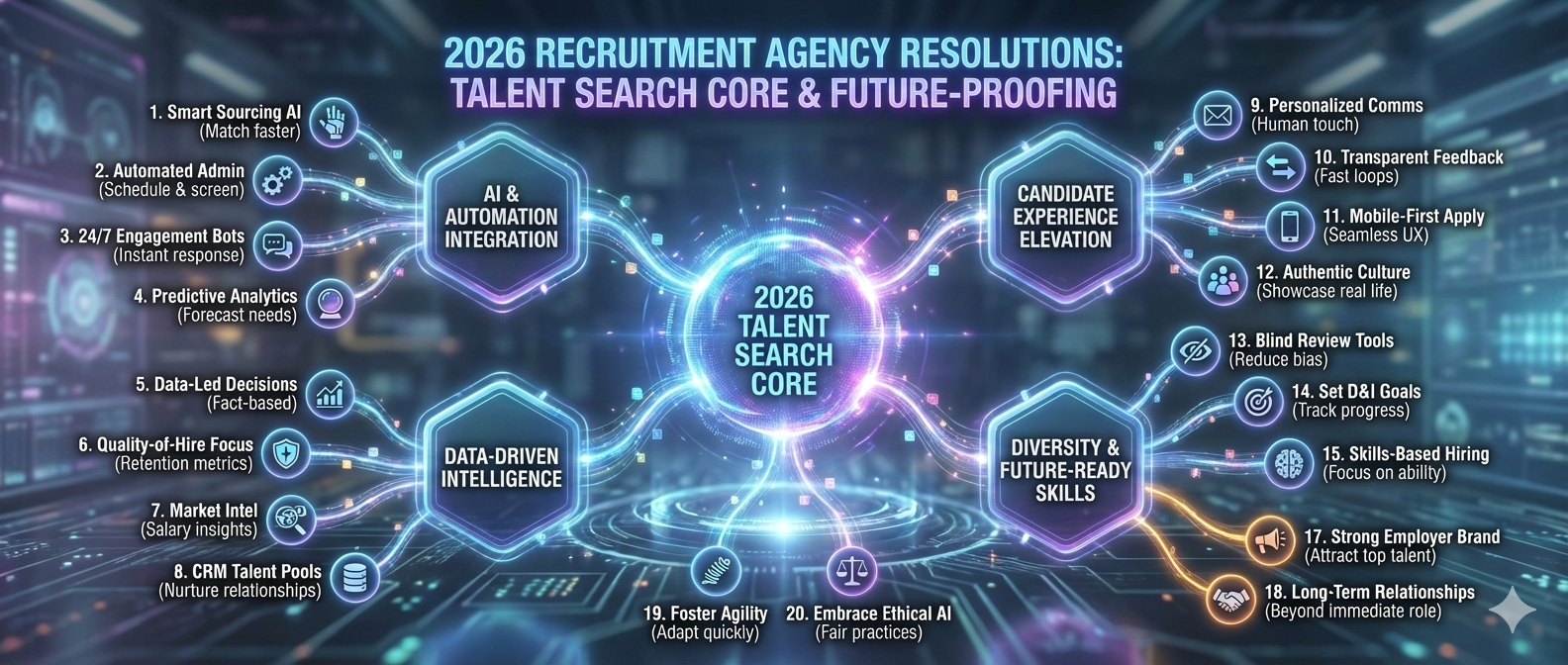


The recruitment landscape entering 2026 is defined by accelerated digital adoption, shifting candidate expectations, and an increasingly competitive talent search environment. As recruitment agencies adapt to these realities, we must commit to strategic New Year resolutions that strengthen sourcing, engagement, and long-term value creation. The following 20 New Year resolutions for recruitment agencies are designed to elevate hiring outcomes, future-proof operations, and position us as trusted partners in the evolving world of work.
1. Prioritize Data-Driven Talent Search Strategies

In 2026, recruitment agencies must commit to decisions backed by data rather than assumptions. Advanced analytics enable us to identify sourcing channels that deliver high-quality candidates, forecast hiring needs, and reduce time-to-fill. By integrating talent intelligence platforms, we strengthen workforce planning and optimize recruitment outcomes.
We should analyze candidate behavior, application trends, and placement success rates to refine recruitment strategies. Data-driven talent search allows recruitment agencies to allocate resources efficiently, improve candidate matching accuracy, and demonstrate measurable value to clients.
2. Strengthen Employer Branding Advisory Services
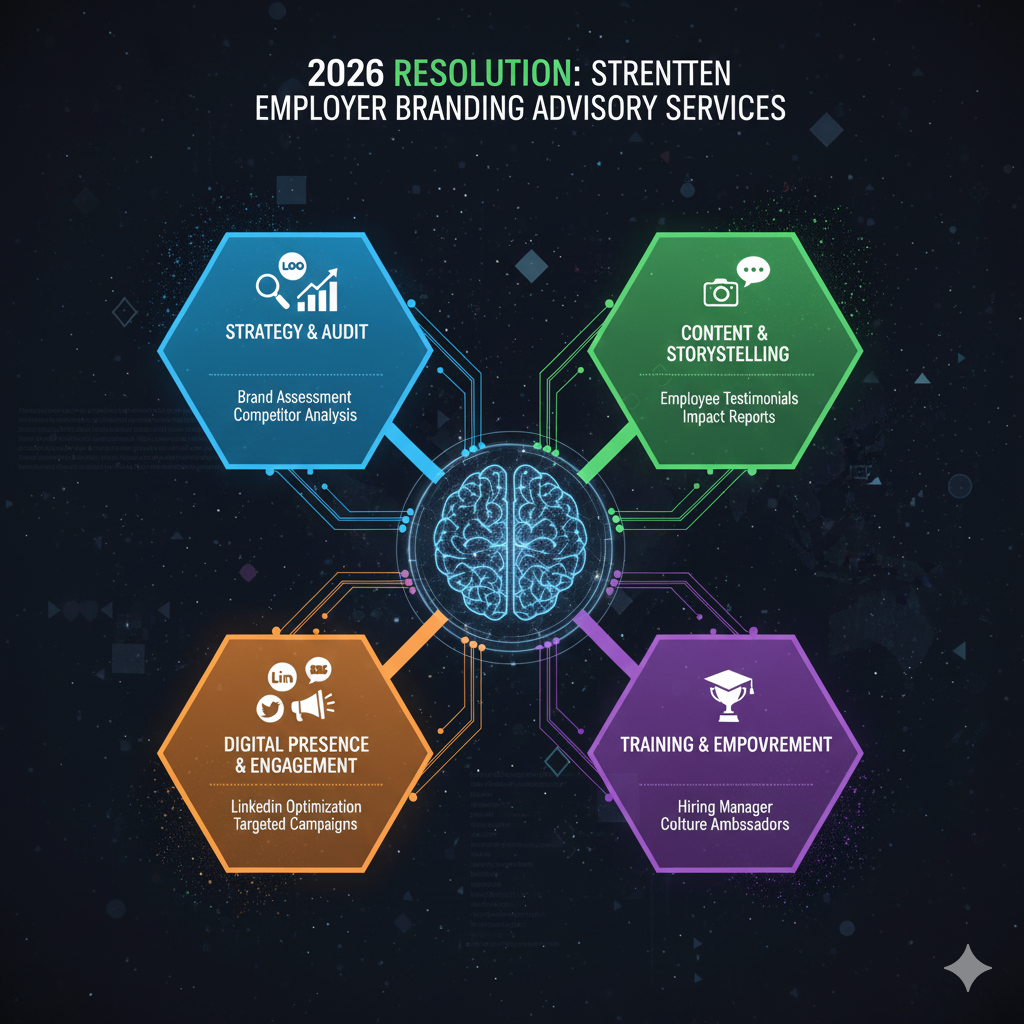
Recruitment agencies in 2026 must expand beyond sourcing and become employer brand advisors. Candidates evaluate organizations based on culture, purpose, and growth opportunities before applying. We should guide clients in shaping compelling employer value propositions that resonate with modern talent.
By advising on career pages, job descriptions, and digital presence, recruitment agencies enhance candidate attraction. Strong employer branding reduces drop-off rates, improves offer acceptance, and positions clients as employers of choice in competitive markets.
3. Invest in AI-Powered Recruitment Technology

Artificial intelligence is no longer optional for recruitment agencies focused on scalable talent search in 2026. AI-driven screening, resume parsing, and predictive analytics improve efficiency while maintaining hiring quality.
We must resolve to adopt ethical AI tools that reduce bias and enhance fairness. Automation allows recruiters to focus on relationship-building and strategic consulting rather than administrative tasks, elevating agency performance and candidate experience.
4. Build Talent Communities for Future Hiring Needs

Reactive recruitment is outdated. Recruitment agencies should commit to building proactive talent communities that support long-term hiring pipelines. By nurturing relationships with passive candidates, we ensure access to ready talent when demand arises.
Engaging candidates through newsletters, virtual events, and industry insights strengthens loyalty and trust. Talent communities transform recruitment agencies into ecosystem builders rather than transactional intermediaries.
5. Enhance Candidate Experience Across Touchpoints

Candidate experience remains a critical differentiator for recruitment agencies in 2026. Every interaction—from initial outreach to post-placement follow-up—must be seamless, transparent, and respectful.
We should standardize communication timelines, provide constructive feedback, and personalize candidate journeys. A positive candidate experience strengthens reputation, increases referrals, and ensures sustainable talent search success.
6. Commit to Diversity, Equity, and Inclusion in Talent Search

Recruitment agencies must treat DEI as a strategic priority rather than a checkbox. Inclusive hiring practices expand talent pools and drive innovation for client organizations.
In 2026, we should resolve to audit job descriptions, sourcing channels, and interview processes for bias. By championing equitable hiring, recruitment agencies reinforce credibility and align with evolving workforce values.
7. Upskill Recruiters in Strategic Workforce Consulting

Recruitment agencies must evolve from order-takers to workforce advisors. We should invest in training recruiters on labor market trends, skills forecasting, and workforce planning methodologies.
This resolution empowers us to provide consultative insights that help clients navigate talent shortages, remote work models, and skills transformation. Strategic advisory capabilities elevate agency relevance and long-term partnerships.
8. Optimize Recruitment Marketing for Talent Attraction

Talent search in 2026 demands sophisticated recruitment marketing strategies. Recruitment agencies should resolve to leverage SEO-optimized job content, targeted social campaigns, and employer storytelling.
By aligning recruitment marketing with candidate search behavior, we increase visibility and engagement. Recruitment agencies that master digital attraction outperform competitors reliant on traditional sourcing methods.
9. Strengthen Client Collaboration and Transparency

Clear communication and alignment are essential for successful recruitment outcomes. Recruitment agencies should establish structured intake processes, regular reporting, and transparent performance metrics.
This resolution ensures shared expectations and faster decision-making. Strong collaboration builds trust, reduces misalignment, and improves placement quality in complex talent search assignments.
10. Embrace Remote and Hybrid Talent Search Models

The global talent pool is more accessible than ever. Recruitment agencies in 2026 must fully embrace remote and hybrid hiring models to meet client demands.
We should refine sourcing strategies for cross-border talent, understand regional compliance requirements, and advise clients on distributed workforce best practices. This resolution expands reach and unlocks new opportunities.
11. Develop Specialized Industry Expertise

Generalist recruitment is increasingly insufficient. Recruitment agencies should resolve to deepen specialization within key industries and skill domains.
By understanding niche talent markets, compensation benchmarks, and regulatory environments, we deliver higher-value insights. Specialized expertise strengthens credibility and improves candidate-client alignment.
12. Improve Speed Without Sacrificing Quality

Speed remains critical in competitive talent search, but quality cannot be compromised. Recruitment agencies must refine workflows to accelerate hiring while maintaining rigorous assessment standards.
We should streamline screening processes, leverage technology, and pre-qualify talent pools. Faster placements enhance client satisfaction and prevent candidate loss to competitors.
13. Leverage Predictive Hiring Analytics

Predictive analytics enable recruitment agencies to anticipate future hiring trends and skills demand. In 2026, we should resolve to integrate forecasting tools into recruitment planning.
This approach supports proactive sourcing, reduces reactive hiring pressure, and positions agencies as forward-thinking talent partners. Predictive insights drive smarter talent search strategies.
14. Strengthen Post-Placement Engagement

The recruitment process does not end at placement. Recruitment agencies should commit to post-placement follow-ups that support retention and performance.
Regular check-ins with candidates and clients identify challenges early and reinforce long-term relationships. This resolution enhances placement longevity and repeat business.
15. Expand Talent Search Through Alternative Credentials

Traditional degrees are no longer the sole indicator of capability. Recruitment agencies in 2026 must resolve to recognize alternative credentials, certifications, and skills-based assessments.
This inclusive approach broadens talent pools and aligns hiring with real-world competencies. Skills-first talent search improves diversity and hiring accuracy.
16. Enhance Compliance and Ethical Recruitment Standards
Regulatory complexity continues to increase across regions. Recruitment agencies must prioritize compliance, data protection, and ethical recruitment practices.
We should resolve to stay informed on labor laws, privacy regulations, and ethical sourcing standards. Strong governance protects reputation and client trust.
17. Build Stronger Candidate Referral Networks
Referrals remain a powerful talent source. Recruitment agencies should formalize referral programs that incentivize candidates and professional networks.
By nurturing referral relationships, we access pre-vetted talent and reduce sourcing costs. Referral-driven talent search improves quality and speed.
18. Invest in Recruiter Wellbeing and Performance
Recruiter burnout undermines performance and client service. Recruitment agencies in 2026 must resolve to prioritize wellbeing, manageable workloads, and continuous development.
Healthy recruiters deliver better candidate experiences and stronger results. Investing in internal culture supports sustainable growth and talent retention.
19. Measure Success Beyond Placements
Traditional metrics no longer capture recruitment impact. Recruitment agencies should expand success measurement to include retention rates, candidate satisfaction, and client outcomes.
This resolution enables continuous improvement and data-backed storytelling. Comprehensive metrics demonstrate value beyond transactional placements.
20. Commit to Continuous Innovation in Talent Search
The final and most critical resolution is a commitment to innovation. Recruitment agencies must remain agile, experiment with emerging tools, and adapt to changing talent dynamics.
By fostering a culture of learning and experimentation, we ensure relevance in 2026 and beyond. Innovation-driven recruitment agencies lead the future of talent search.
Conclusion
As we enter 2026, recruitment agencies face unprecedented opportunity and complexity in talent search. These 20 New Year resolutions for recruitment agencies provide a strategic framework for strengthening sourcing, enhancing candidate experience, and delivering measurable client value. By committing to data-driven decision-making, ethical practices, and continuous innovation, we position ourselves at the forefront of modern recruitment. Success in 2026 will belong to recruitment agencies that evolve with purpose, precision, and people-centric strategies.
Leave a Reply