
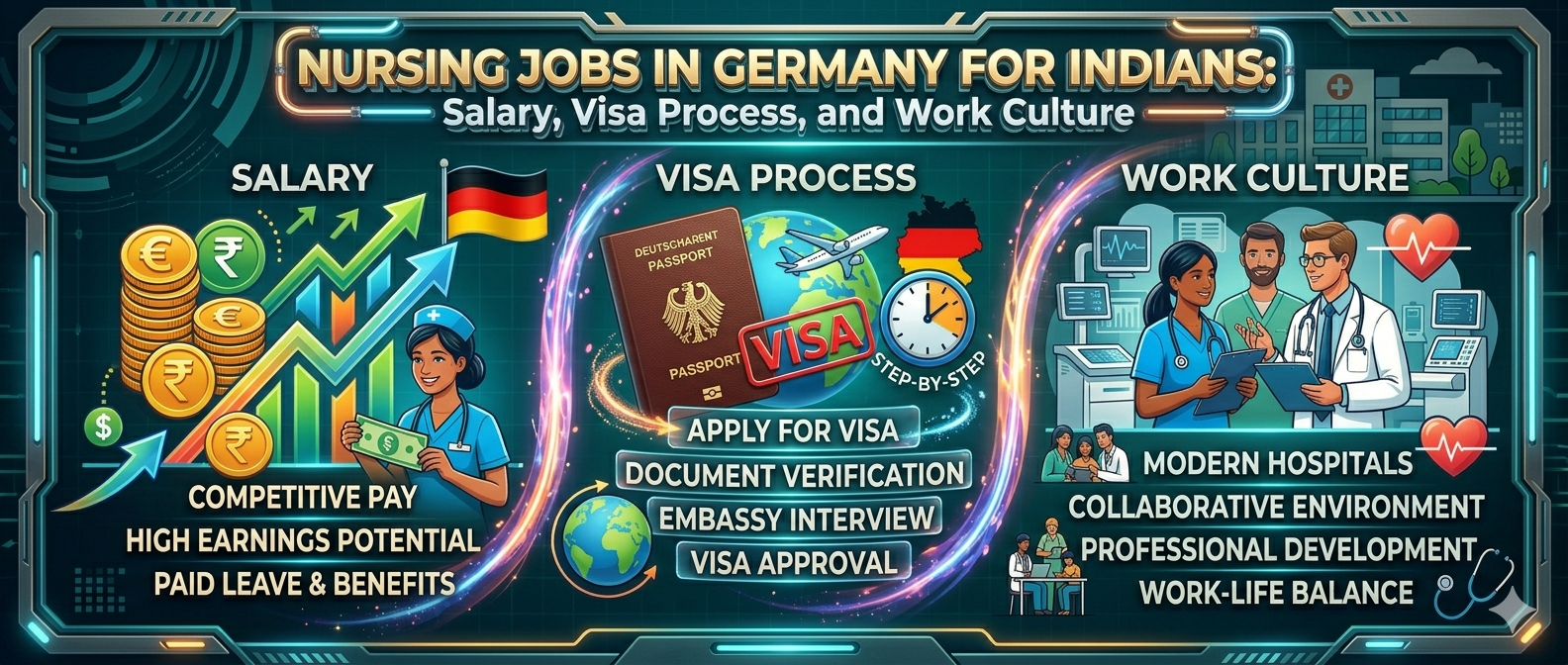

Germany has become one of the most attractive destinations for healthcare professionals across the world, especially for Indian nurses looking for international career growth. With an aging population and a severe shortage of healthcare workers, Germany is actively recruiting qualified nurses from countries like India. Thousands of Indian nurses are now choosing Germany because of its competitive salaries, strong labor laws, advanced healthcare system, and impressive quality of life. The country offers a structured career path, permanent residency opportunities, and access to world-class medical infrastructure that many developing nations struggle to provide.
The demand for nursing jobs in Germany for Indians has increased rapidly over the last decade. German hospitals, rehabilitation centers, elderly care homes, and healthcare agencies are constantly searching for skilled nursing professionals who can support the growing healthcare burden. Indian nurses are known globally for their dedication, compassion, adaptability, and clinical skills, making them highly desirable candidates for German employers. Another major attraction is the possibility of earning a stable income while enjoying social benefits such as paid leave, insurance coverage, and retirement plans.
At the same time, understanding Germany’s work environment is equally important before making the move. The German workplace follows strict rules regarding punctuality, professionalism, documentation, and communication. Indian professionals often find the transition rewarding but culturally different. Learning about Germany work culture facts can help nurses adapt more smoothly and build successful careers abroad. This article explores everything Indian nurses need to know, including salary expectations, visa procedures, language requirements, job opportunities, and the real benefits of building a healthcare career in Germany.
Why Germany Is Becoming a Top Destination for Indian Nurses
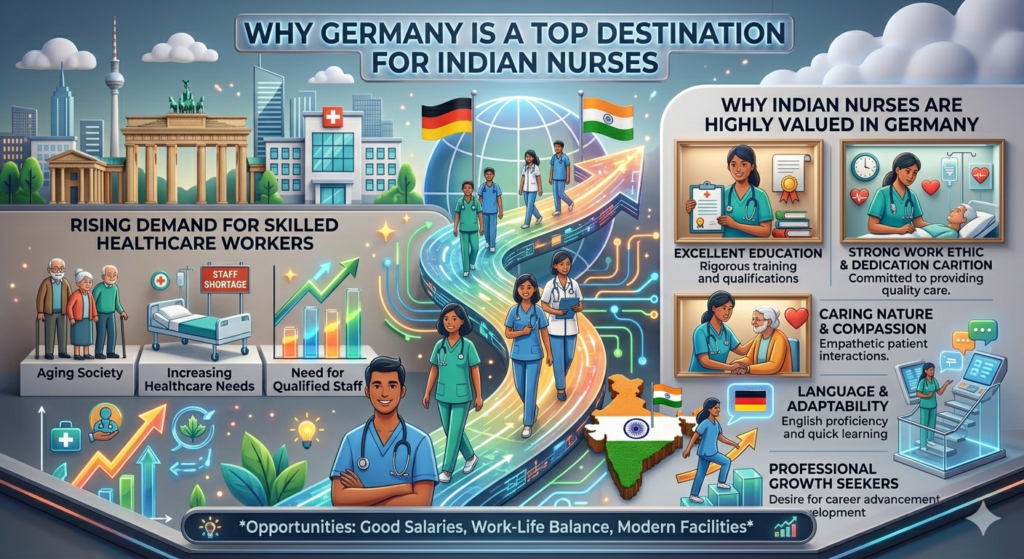
Germany’s healthcare system is one of the strongest in Europe, and the country is currently facing a major shortage of nurses. According to Germany’s Federal Employment Agency, the nation needs tens of thousands of additional nurses every year to support its aging population. This shortage has opened doors for qualified foreign healthcare professionals, especially from India, where many nurses are trained according to international healthcare standards. Hospitals and healthcare agencies across Germany are now partnering with recruitment companies to bring Indian nurses into the workforce.
Another reason behind Germany’s popularity is economic stability. Compared to many other countries, Germany offers reliable employment contracts, strong employee rights, and excellent healthcare infrastructure. Indian nurses who migrate to Germany often experience better working conditions than in many Gulf countries or developing healthcare systems. Nurses receive proper overtime compensation, regulated work hours, annual paid leave, and job security. These factors make the nursing career in Germany highly appealing for professionals seeking long-term stability.
Germany also provides pathways for permanent residency and family reunification. After a few years of legal employment, many nurses become eligible for long-term settlement options. Families can access education, healthcare, and social welfare systems that are among the best in Europe. This transforms Germany from just a workplace into a life-building opportunity. Indian nurses often describe Germany as a country where hard work truly translates into personal and professional growth.
Rising Demand for Skilled Healthcare Workers
Germany’s aging population is one of the main reasons behind the surge in German healthcare jobs. Elderly care facilities, rehabilitation centers, and hospitals are expanding rapidly, yet the domestic workforce is unable to fill all vacancies. Experts predict that Germany could face a shortage of over 500,000 healthcare workers by 2030 if international recruitment does not continue.
This shortage creates tremendous opportunities for Indian nurses. Healthcare institutions are not only hiring nurses but also offering language training, relocation support, accommodation assistance, and integration programs. Recruitment campaigns specifically target countries like India because Indian nursing education is respected internationally. Nurses with ICU, emergency, elderly care, and surgical experience are especially in high demand.
Technology has also transformed German healthcare. Modern hospitals use advanced medical equipment and digital patient management systems, giving Indian nurses exposure to cutting-edge healthcare practices. Working in such an environment helps professionals gain valuable international experience while improving their clinical expertise. These advantages make Germany one of the best destinations for healthcare careers abroad.
Why Indian Nurses Are Highly Valued in Germany
Indian nurses have built a strong reputation across global healthcare systems due to their clinical knowledge, discipline, and adaptability. German employers often appreciate Indian nurses for their patient-centered approach and willingness to work in demanding healthcare environments. In many German hospitals, multicultural teams are common, and Indian professionals are increasingly becoming an essential part of the workforce.
One significant factor is English proficiency. Many Indian nurses already possess strong communication skills in English, which helps during initial training and adaptation periods. Once they learn German, they often integrate successfully into the healthcare system. Employers also value the practical experience Indian nurses gain in high-pressure healthcare environments back home.
Germany’s healthcare recruiters frequently organize hiring drives in Indian cities such as Kochi, Bengaluru, Chennai, and Hyderabad. Specialized agencies help nurses with interviews, documentation, and relocation processes. As a result, the path toward Indian nurse job opportunities abroad has become more structured and accessible than ever before.
Nursing Career in Germany: What Indian Nurses Need to Know
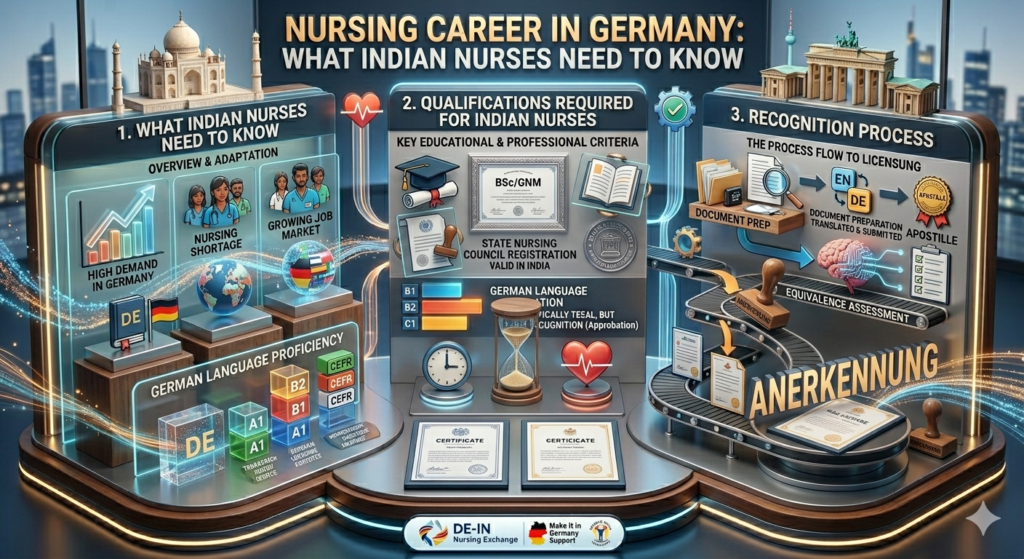
Building a successful nursing career in Germany requires preparation, patience, and proper understanding of the country’s healthcare regulations. Germany has strict professional standards for nurses, and foreign applicants must complete recognition procedures before receiving full authorization to work independently. While the process may seem complicated at first, it is highly rewarding for those who complete it successfully.
Indian nurses generally begin by securing a job offer from a German employer or recruitment agency. After that, they apply for qualification recognition through German authorities. Depending on educational background and work experience, nurses may need adaptation training or examinations before receiving a permanent nursing license. During this period, many work as nursing assistants while completing required procedures.
Career growth opportunities are another reason why Germany stands out. Nurses can specialize in areas such as intensive care, elderly care, oncology, emergency medicine, or surgical nursing. Leadership positions, management roles, and advanced healthcare certifications are also available. German healthcare institutions encourage professional development and often sponsor additional training programs. For ambitious nurses, Germany offers not just a job but a genuine career path.
Qualifications Required for Indian Nurses in Germany
To qualify for Germany hospital jobs for nurses, Indian applicants usually need a recognized nursing degree or diploma along with professional registration from the Indian Nursing Council or relevant state council. Clinical experience is highly preferred, although fresh graduates may still find opportunities through specific recruitment programs.
A valid passport, educational transcripts, work certificates, and proof of language proficiency are essential during the application process. Germany also requires nurses to undergo qualification recognition to ensure their education matches German standards. In some cases, adaptation training programs are necessary before receiving full licensure.
Candidates who possess ICU, operation theater, pediatric, or geriatric nursing experience often have better chances of receiving employment offers quickly. Specialized skills are highly valued because Germany’s healthcare system faces shortages in critical departments.
Recognition of Indian Nursing Degrees in Germany
Degree recognition is one of the most important stages in the Germany nursing visa process. German authorities evaluate whether an Indian nursing qualification matches local standards. If significant differences exist, applicants may need to complete compensation measures such as adaptation courses or competency examinations.
The process varies slightly between German states, but the goal remains the same: ensuring nurses can safely practice according to German healthcare standards. While this may seem demanding, many Indian nurses successfully complete recognition every year.
Recognition procedures can take several months, so early preparation is essential. Proper documentation and certified translations significantly reduce delays. Many recruitment agencies now assist nurses through this process, making international relocation easier and more organized.
Germany Nurse Salary for Indians
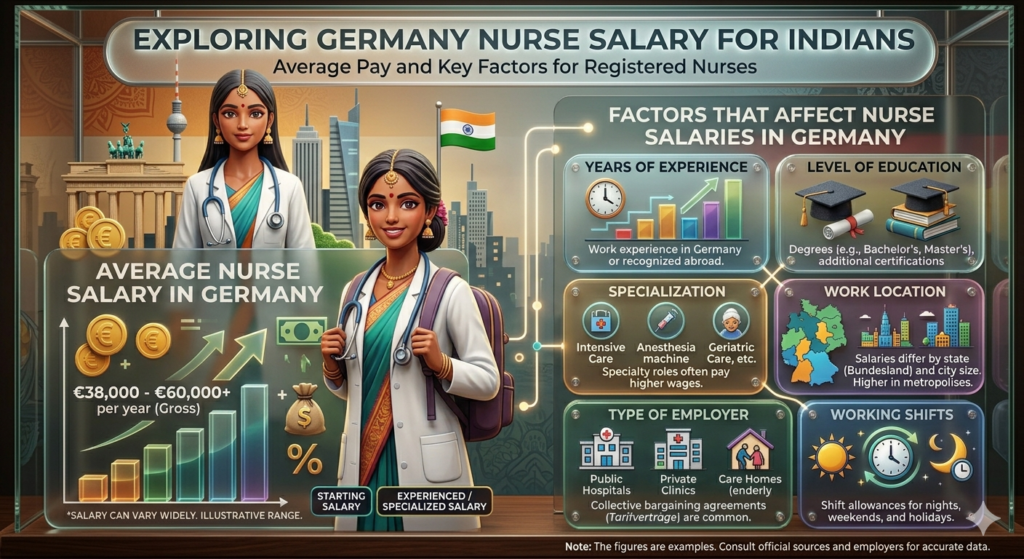
One of the biggest reasons behind the growing interest in nursing jobs in Germany for Indians is the attractive salary structure. Compared to many developing countries, Germany offers significantly better pay, along with social benefits that improve overall quality of life. Indian nurses moving to Germany often discover that their earnings are not only higher but also more stable and legally protected. The healthcare sector in Germany follows regulated labor standards, ensuring that employees receive fair compensation, paid leave, overtime benefits, and pension contributions.
The average Germany nurse salary for Indians usually ranges between €2,500 and €4,500 per month depending on qualifications, experience, specialization, and location. Nurses who are still completing their recognition process may initially earn slightly lower salaries as nursing assistants, often around €2,000 to €2,500 monthly. Once full registration is completed, salaries increase considerably. Specialized nurses working in intensive care units, operating rooms, emergency departments, or geriatric care often earn above-average wages because of the increasing demand in those sectors.
Another important factor is Germany’s strong social security system. Salaries are accompanied by health insurance, unemployment protection, retirement pensions, and paid vacation. Nurses generally receive around 25 to 30 days of paid annual leave, which is far more generous than what many healthcare workers experience in other countries. Shift allowances and overtime compensation further increase monthly earnings. Night shifts, weekend work, and public holiday duties usually come with additional pay rates.
Living expenses vary across German cities. Metropolitan areas such as Munich, Frankfurt, and Hamburg tend to have higher housing costs, while smaller cities are more affordable. However, salaries in larger cities are also usually higher. Even after expenses, many Indian nurses manage to save a substantial portion of their income while supporting families back home. This financial stability is one of the strongest reasons why Germany continues to attract healthcare professionals from India.
Average Salary of Nurses in Germany
The salary structure for nurses in Germany depends on both public and private healthcare institutions. Public hospitals often follow standardized wage agreements called “Tarifvertrag,” which provide transparent salary scales based on experience and qualifications. A newly qualified registered nurse may earn around €2,800 to €3,200 monthly before taxes, while experienced nurses can earn above €4,000.
Specialized nursing professionals earn even higher salaries. ICU nurses, surgical nurses, and anesthesia nurses are particularly in demand and can command premium wages. Nurses working in elderly care facilities also receive competitive compensation due to Germany’s aging population. Additional certifications and advanced training programs often lead to salary increases and career promotions.
German employers also provide several non-monetary benefits that improve overall financial well-being. Subsidized transportation, accommodation assistance, relocation bonuses, and free language courses are commonly offered during Germany nursing recruitment campaigns. Some hospitals even cover visa processing costs and provide temporary housing for international nurses during their transition period.
Factors That Affect Nurse Salaries in Germany
Several factors influence the Germany nurse salary for Indians, and understanding these variables can help candidates make informed career decisions. One of the most important elements is language proficiency. Nurses who achieve higher levels of German fluency often qualify for better-paying positions more quickly because communication is essential in patient care.
Work experience also plays a major role. Nurses with several years of experience in critical care, emergency medicine, oncology, or surgical departments are highly sought after. Specialized skills allow candidates to negotiate better contracts and faster promotions. Educational background matters too, especially for nurses holding bachelor’s degrees or advanced certifications.
Geographical location impacts salary as well. Southern German states like Bavaria and Baden-Württemberg generally offer higher wages due to stronger regional economies. However, the cost of living in those regions may also be higher. Nurses should evaluate both income and living expenses before selecting a workplace.
Finally, the type of employer affects compensation. University hospitals, private healthcare chains, rehabilitation centers, and elderly care facilities each offer different salary structures. Some institutions provide stronger benefits packages, while others focus on flexible schedules and career development opportunities.
Germany Nursing Visa Process for Indian Nurses
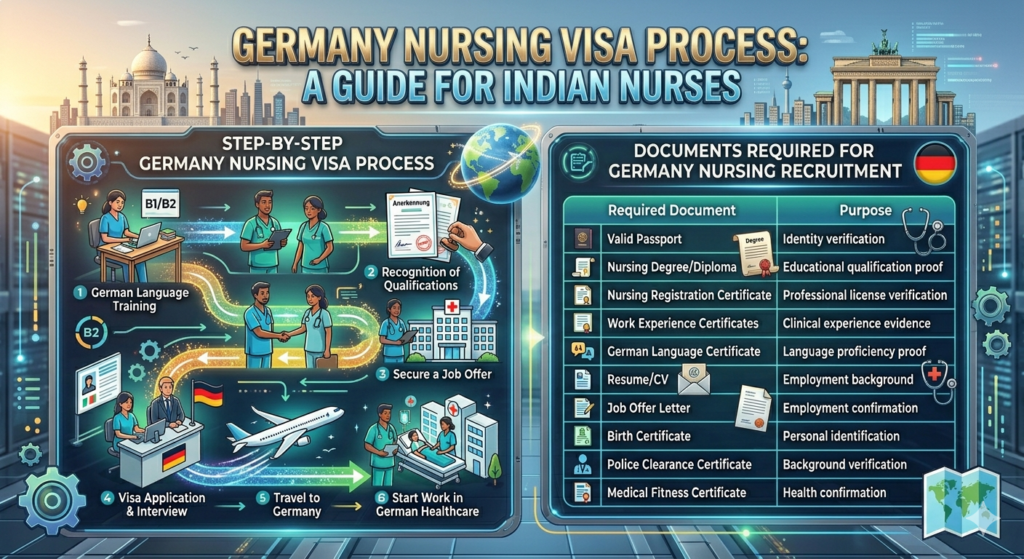
The Germany nursing visa process is a crucial step for Indian healthcare professionals planning to work abroad. While the process requires careful preparation, Germany has simplified immigration pathways in recent years because of the urgent need for healthcare workers. Indian nurses who follow the correct procedures and submit proper documentation usually experience a smooth transition into the German workforce.
The journey often begins with securing a job offer from a German employer or healthcare recruitment agency. Many hospitals actively recruit from India through international hiring campaigns and online interviews. Once a job offer is received, candidates can begin qualification recognition procedures and visa applications simultaneously in many cases.
Germany offers different visa categories depending on the applicant’s status. Nurses with recognized qualifications may apply directly for skilled worker visas, while those still undergoing recognition may receive visas for qualification measures. This flexibility allows nurses to enter Germany legally while completing adaptation training or examinations required for full registration.
The German government has introduced several reforms to speed up skilled migration. Processing times have improved in many regions, although applicants should still prepare for administrative delays. Proper planning, accurate documentation, and language preparation significantly improve the chances of approval.
Step-by-Step Germany Nursing Visa Process
The first step in the Germany nursing visa process is obtaining recognition of nursing qualifications. Candidates submit educational certificates, work experience documents, and professional licenses to German authorities for evaluation. Certified translations are usually required because all documents must be available in German.
The second step involves securing a job contract or offer letter from a German employer. Many hospitals prefer candidates who already possess basic German language skills, typically at the B1 or B2 level. Some employers even sponsor language training in India before relocation.
After receiving recognition approval or partial recognition, nurses apply for a visa through the German Embassy or Consulate in India. Visa interviews generally focus on employment details, qualifications, financial stability, and language preparation. Once approved, candidates can travel to Germany and begin work or adaptation programs.
Upon arrival, nurses complete registration formalities, local residency procedures, and health insurance enrollment. Those under adaptation programs continue supervised training until they receive full nursing licenses. Although the process may take several months, the long-term career benefits are substantial.
Documents Required for Germany Nursing Recruitment
The documentation process for Germany nursing recruitment is detailed but manageable with proper organization. Essential documents typically include:
| Required Document | Purpose |
| Valid Passport | Identity verification |
| Nursing Degree/Diploma | Educational qualification proof |
| Nursing Registration Certificate | Professional license verification |
| Work Experience Certificates | Clinical experience evidence |
| German Language Certificate | Language proficiency proof |
| Resume/CV | Employment background |
| Job Offer Letter | Employment confirmation |
| Birth Certificate | Personal identification |
| Police Clearance Certificate | Background verification |
| Medical Fitness Certificate | Health confirmation |
All documents usually need certified German translations. Missing paperwork can delay applications significantly, so careful preparation is essential. Many recruitment agencies assist nurses in organizing and verifying documentation before submission.
German Healthcare Jobs and Hospital Opportunities
The healthcare industry in Germany is enormous and continuously expanding. This growth creates a wide variety of German healthcare jobs for international professionals, especially nurses from India. Hospitals, elderly care homes, rehabilitation centers, outpatient clinics, and specialized medical facilities all require trained nursing staff. Germany’s healthcare system values professionalism and patient care, making skilled nurses essential to daily operations.
One major advantage for Indian nurses is the diversity of opportunities available. Unlike some countries where foreign healthcare workers are restricted to limited roles, Germany allows nurses to explore multiple specializations and long-term career pathways. Professionals can work in intensive care, surgery, pediatrics, oncology, geriatrics, psychiatry, rehabilitation, or home healthcare. Each sector offers unique experiences and career growth opportunities.
Public hospitals in Germany are among the largest employers of nurses. These institutions often provide structured salary systems, extensive training programs, and stable contracts. Private hospitals and healthcare groups also recruit heavily, especially in urban areas where patient demand is high. Elderly care facilities are another rapidly growing sector because Germany has one of Europe’s oldest populations.
The country’s healthcare investment is also impressive. Germany spends over 12% of its GDP on healthcare, one of the highest percentages in the world. This investment translates into modern facilities, advanced medical technology, and better staffing conditions. For Indian nurses seeking professional development and financial stability, Germany offers one of the most reliable healthcare employment markets globally.
Germany Hospital Jobs for Nurses in Public and Private Sectors
There are thousands of Germany hospital jobs for nurses available across public and private healthcare institutions. Public hospitals are generally funded by regional governments and provide highly structured work environments. Nurses working in public institutions often benefit from union agreements, predictable salary increments, and excellent retirement benefits.
Private hospitals, on the other hand, may offer faster promotions, performance-based incentives, and modern workplace facilities. Many private healthcare providers actively recruit international nurses because of severe staffing shortages. These employers often assist with relocation services, language training, and housing support.
Indian nurses frequently find opportunities in departments experiencing critical shortages. Intensive care units, elderly care wards, emergency medicine departments, and rehabilitation centers are particularly active in international recruitment. Nurses willing to work flexible shifts or specialize in high-demand areas often secure employment quickly.
The working environment in German hospitals is highly professional. Documentation accuracy, patient safety, and teamwork are taken very seriously. While the transition may initially feel challenging for Indian nurses, many adapt successfully and appreciate the organized healthcare structure.
Healthcare Careers in Germany Beyond Hospitals
Hospitals are not the only option for healthcare careers in Germany. Nurses can also work in nursing homes, rehabilitation clinics, outpatient care centers, home healthcare agencies, schools, and community health programs. Germany’s elderly care sector is especially important because millions of senior citizens require long-term medical assistance and daily support.
Home healthcare services are growing rapidly as more patients prefer receiving treatment in familiar surroundings. Nurses working in home care often enjoy flexible schedules and closer patient relationships. Rehabilitation centers are another attractive option for professionals interested in long-term patient recovery and therapy support.
Some experienced nurses also move into administrative roles, healthcare education, or medical coordination positions after gaining German work experience. The healthcare system encourages professional development, and advanced training opportunities are widely available.
For Indian professionals looking to build stable international careers, Germany provides far more than temporary employment. It offers a complete professional ecosystem where nurses can continue growing for decades.
German Language for Nurses: Why It Matters
For Indian healthcare professionals planning to build a successful nursing career in Germany, learning the German language is not optional—it is essential. While many Germans understand English, patient care in hospitals and healthcare facilities is conducted almost entirely in German. Nurses communicate with doctors, patients, elderly residents, family members, pharmacists, and administrative staff daily. A strong command of the language directly affects patient safety, professional confidence, and career advancement.
Many Indian nurses initially underestimate the importance of language preparation. Clinical knowledge alone is not enough in Germany’s healthcare system because communication plays a major role in diagnosis, medication management, patient education, and emergency response. Imagine trying to comfort an elderly patient in pain or explain post-surgery instructions without fully understanding the language. Even highly skilled nurses can struggle professionally if they cannot communicate clearly.
German employers usually require nurses to achieve at least B1 or B2 level proficiency under the Common European Framework of Reference for Languages (CEFR). Some federal states in Germany specifically require B2-level medical German certification before granting full nursing recognition. This standard ensures nurses can manage patient interactions safely and professionally.
The good news is that many recruitment agencies and hospitals support language learning programs for international nurses. Some employers even sponsor intensive German classes in India before relocation. Indian nurses who dedicate time to learning the language often integrate faster, build stronger workplace relationships, and gain access to higher-paying opportunities. Language skills become the bridge between qualification and long-term success in Germany’s healthcare sector.
Required German Language Levels for Nurses
The required level of German language for nurses depends on the federal state and employer, but B1 and B2 are the most common standards. B1 is considered an intermediate level where candidates can manage everyday communication, while B2 demonstrates stronger fluency suitable for professional healthcare interactions.
Most German employers prefer candidates with B2 certification because nurses handle sensitive patient conversations, medication explanations, and emergency instructions. Medical vocabulary also becomes important. Nurses need to understand symptoms, treatment terminology, and documentation language used in hospitals and care homes.
Language exams are typically conducted by recognized institutions such as Goethe-Institut, TELC, or TestDaF. Some states also require additional nursing-specific language examinations after arrival in Germany. These tests evaluate practical communication skills in medical settings rather than just grammar knowledge.
Although reaching B2 level may seem challenging at first, many Indian nurses achieve it successfully within 8 to 12 months of focused study. Consistency is more important than speed. Watching German media, practicing conversations daily, and learning medical vocabulary early can significantly improve fluency.
Best Ways for Indian Nurses to Learn German
Indian nurses preparing for Germany nursing recruitment can choose from multiple language-learning methods depending on budget, schedule, and learning style. Traditional classroom coaching remains popular in major Indian cities like Kochi, Bengaluru, Chennai, and Hyderabad, where several institutes specialize in German training for healthcare professionals.
Online learning has also become highly effective. Platforms like Goethe-Institut Online, Duolingo, Babbel, and YouTube language channels allow nurses to practice daily from home. Virtual classes are particularly useful for working professionals balancing hospital duties with exam preparation.
One of the most effective strategies is combining language study with healthcare vocabulary from the beginning. Instead of memorizing random phrases, nurses should practice medical conversations such as patient admissions, medication instructions, and emergency responses. This practical approach helps candidates feel more confident once they begin working in Germany.
Speaking practice is equally important. Many learners understand grammar but hesitate during real conversations. Joining German-speaking groups, participating in mock interviews, and practicing role-play exercises can improve fluency dramatically. Nurses who actively use the language every day often adapt much faster after relocating to Germany.
Ten Germany Work Culture Facts Every Indian Nurse Should Know
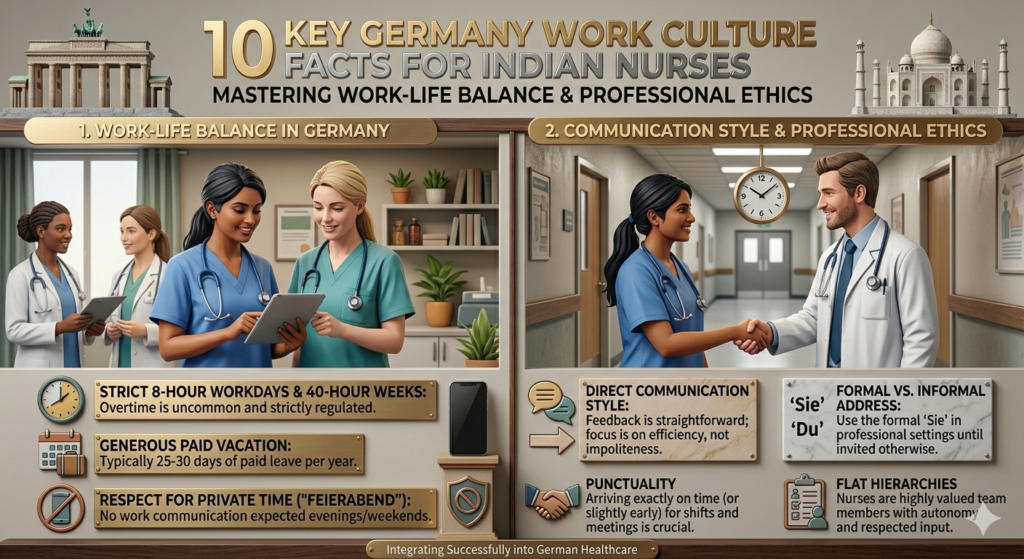
Understanding Germany work culture facts is just as important as understanding salary or visa procedures. Germany’s workplace culture is built around discipline, punctuality, professionalism, efficiency, and respect for rules. Indian nurses entering the German healthcare system often experience a cultural shift because workplace expectations can differ significantly from those in India.
One of the first things many nurses notice is the strong emphasis on punctuality. Arriving late to shifts or meetings is considered unprofessional and disrespectful. Time management is deeply valued in German society, especially in hospitals where delays can directly impact patient care.
Communication style is another major difference. Germans tend to communicate directly and honestly. Feedback is usually straightforward rather than indirect. For Indian professionals accustomed to softer communication styles, this can initially feel harsh, but it is generally intended to improve efficiency rather than offend anyone.
Germany also places strong importance on work-life balance. Employees are encouraged to take vacations, avoid excessive overtime, and maintain personal well-being. Unlike some countries where long work hours are seen as dedication, Germany values productivity within scheduled hours. Nurses often appreciate this healthier approach after adjusting to the system.
Professional hierarchy exists but is usually less rigid than in many Asian workplaces. Nurses are expected to voice concerns, ask questions, and contribute actively to patient care discussions. Team collaboration is highly respected, and everyone is expected to follow protocols carefully.
Work Life Balance in Germany
One of the most attractive aspects of working abroad is the excellent work life balance in Germany. German labor laws are designed to protect employees from burnout and exploitation. Nurses typically work regulated hours, receive guaranteed breaks, and enjoy generous vacation policies.
Most full-time nurses work around 38 to 40 hours per week. Overtime is compensated either financially or through additional leave. Public holidays are respected, and annual paid vacations usually range between 25 and 30 days. This allows professionals to rest, travel, spend time with family, and maintain better mental health.
Germany also values personal time outside work. Colleagues generally separate professional and private life clearly. It is uncommon for employers to expect staff to remain constantly available after working hours. This balance creates a healthier environment for long-term career sustainability.
For Indian nurses used to heavy workloads and unpredictable schedules, Germany’s structured system can feel refreshing. The ability to maintain both career growth and personal well-being is one of the strongest benefits of working in Germany.
Communication Style and Professional Ethics
German workplace communication is known for being clear, direct, and practical. In hospitals, this communication style supports patient safety because misunderstandings can have serious consequences. Nurses are expected to provide accurate documentation, ask questions when uncertain, and report issues immediately.
Professional ethics are taken very seriously in Germany. Confidentiality, accountability, and procedural compliance are fundamental parts of healthcare work. Employees who follow rules carefully gain trust quickly within their teams.
Teamwork is another defining characteristic of German hospitals. Doctors, nurses, therapists, and support staff collaborate closely in patient management. Indian nurses often find that their opinions are respected when they demonstrate competence and professionalism.
Another important cultural fact is equality in the workplace. Senior staff may hold authority, but mutual respect remains essential. Open discussions and constructive criticism are common. Once Indian nurses understand this communication culture, many find the work environment highly organized and professionally rewarding.
Benefits of Working in Germany for Indian Nurses
There are numerous benefits of working in Germany for Indian healthcare professionals, extending far beyond salary alone. Germany offers a complete package that combines financial security, career growth, social protection, and high living standards. This combination is what makes the country one of the top destinations for international nurses.
Financial stability is often the first noticeable benefit. Compared to nursing salaries in India, Germany offers significantly higher earning potential. Nurses can support families, save money, and improve long-term financial security while still enjoying a comfortable lifestyle. Strong labor protections also ensure salaries are paid fairly and consistently.
Healthcare workers in Germany receive comprehensive social benefits, including health insurance, unemployment protection, retirement pensions, and maternity or parental leave. These systems provide long-term stability that many nurses cannot easily access elsewhere. Even in difficult situations such as illness or job transitions, employees are protected under German labor laws.
Another major advantage is professional development. Germany encourages continuous learning through workshops, certifications, and specialization programs. Nurses can pursue advanced healthcare roles while gaining international clinical experience recognized globally. This exposure strengthens future career opportunities both within and outside Germany.
The overall quality of life is another important factor. Germany is known for safe cities, efficient public transportation, excellent infrastructure, and strong environmental standards. Families benefit from quality education systems and healthcare services. Many Indian nurses eventually apply for permanent residency and choose to settle long-term because of these advantages.
Financial and Career Growth Advantages
The financial rewards of Germany employment opportunities for Indians extend beyond monthly salaries. Overtime pay, shift allowances, annual bonuses, and pension contributions create long-term financial growth. Some hospitals also support continuing education financially, helping nurses build advanced careers without major personal investment.
Career progression opportunities are extensive. Nurses can specialize in critical care, dialysis, oncology, pediatrics, surgical assistance, or rehabilitation medicine. Leadership and management roles are also accessible to experienced professionals.
International experience gained in Germany significantly enhances a nurse’s global employability. Healthcare professionals with European work experience often become highly competitive candidates in international healthcare markets.
Personal Lifestyle and Long-Term Settlement Benefits
Germany’s immigration system allows skilled workers to pursue permanent residency after fulfilling employment and residency requirements. This creates long-term stability for Indian nurses planning to build futures abroad.
Family reunification is another major benefit. Spouses and children can often join nurses in Germany, access education systems, and benefit from healthcare services. Children receive high-quality education opportunities that can shape stronger futures.
Germany also provides a multicultural environment where international communities continue growing. Indian grocery stores, cultural associations, temples, and festivals are available in many cities, helping migrants maintain cultural connections while adapting to European life.
Indian Nurse Job Opportunities Abroad: Why Germany Leads the List
Among all global destinations offering Indian nurse job opportunities abroad, Germany has emerged as one of the strongest choices because of its combination of demand, stability, salary, and immigration support. Countries like the UK, Canada, Australia, and Gulf nations also recruit nurses, but Germany’s long-term settlement pathways and labor protections provide unique advantages.
Germany’s healthcare worker shortage is expected to continue for decades. This means demand for international nurses is not temporary. Hospitals and elderly care institutions urgently require qualified professionals, creating stable employment opportunities for Indian candidates.
Recruitment systems have also become more organized. Government-backed programs, private agencies, and healthcare institutions actively support international hiring through language training and relocation assistance. This structured process reduces uncertainty for first-time migrants.
For Indian nurses seeking a future with professional respect, financial growth, and personal stability, Germany represents much more than just another overseas job market. It offers the possibility of building a secure and fulfilling life abroad.
Conclusion
The rising demand for healthcare workers has transformed Germany into one of the most promising destinations for Indian nurses seeking international careers. From attractive salaries and advanced healthcare infrastructure to long-term residency opportunities and strong employee protections, Germany offers a professional environment where nurses can genuinely thrive. The increasing availability of nursing jobs in Germany for Indians reflects not only the country’s healthcare needs but also the growing trust German employers place in Indian nursing professionals.
One of the biggest advantages for Indian nurses is the balance between financial rewards and quality of life. The average Germany nurse salary for Indians allows professionals to support families, save money, and enjoy a stable future. At the same time, Germany’s labor laws ensure fair working hours, paid leave, healthcare benefits, and retirement protections. These factors create a healthier and more sustainable work environment compared to many other international destinations.
Understanding the Germany nursing visa process and preparing for qualification recognition are essential steps toward success. Nurses who invest time in learning the language and understanding professional expectations generally adapt much faster after relocation. German language proficiency opens doors to better salaries, smoother workplace integration, and stronger patient relationships. Although the process requires patience and preparation, thousands of Indian nurses have already proven that the transition is absolutely achievable.
The country’s work environment also stands out globally. The emphasis on punctuality, discipline, teamwork, and work life balance in Germany creates a professional culture where employees are respected and protected. Learning key Germany work culture facts before moving helps Indian nurses adjust confidently and avoid unnecessary stress during the adaptation period.
Germany’s healthcare sector continues expanding rapidly, creating endless opportunities in hospitals, elderly care facilities, rehabilitation centers, and community healthcare services. These growing German healthcare jobs ensure that international nurses remain highly valuable for years to come. For Indian professionals dreaming of global exposure, career advancement, and long-term stability, Germany has become one of the strongest and most reliable choices available today.
FAQs
1. What is the average Germany nurse salary for Indians?
The average Germany nurse salary for Indians ranges between €2,500 and €4,500 per month depending on qualifications, work experience, specialization, and location. Nurses working in ICU, emergency care, or elderly care often earn higher salaries along with overtime and shift allowances.
2. Is German language mandatory for nursing jobs in Germany for Indians?
Yes, learning German is essential for most nursing jobs in Germany for Indians. Employers usually require B1 or B2 level German language certification because nurses must communicate effectively with patients, doctors, and hospital staff.
3. How long does the Germany nursing visa process take?
The Germany nursing visa process can take several months depending on qualification recognition, documentation, and embassy processing times. On average, the full process may take between 6 and 12 months.
4. Are Indian nursing degrees recognized in Germany?
Yes, Indian nursing degrees can be recognized in Germany after evaluation by German authorities. Some candidates may need adaptation training or competency exams if differences are identified between Indian and German nursing standards.
5. What are the biggest benefits of working in Germany for Indian nurses?
The main benefits of working in Germany include high salaries, strong labor protections, paid vacations, healthcare benefits, retirement plans, career growth opportunities, permanent residency pathways, and excellent work-life balance.
Leave a Reply