

International Day of Peace 2026 and the World of Work

For the recruitment industry, the connection between people and peace is particularly meaningful. Recruitment brings individuals and organizations together, connects candidates with career opportunities, and helps shape the workforce of the future. Through fair practices, responsible hiring, diversity, and respect, recruitment professionals can contribute to workplaces where people feel valued and included.
The theme of connecting people, careers, and purpose highlights an important idea: employment is not only about earning an income. Meaningful work can provide stability, skills, social connections, confidence, and a sense of contribution. When organizations create respectful and inclusive environments, employment can also contribute to stronger communities.
International Day of Peace is therefore a useful moment for employers, recruiters, HR professionals, candidates, and employees to consider how everyday professional decisions can support cooperation, dignity, and social harmony.
Peace and Careers: Building a Better Future Through Employment
Peace and careers are connected in several ways. Access to decent employment can provide individuals with financial stability and opportunities for personal development. A stable career can help people participate more actively in their families and communities while developing skills that contribute to economic growth.
For young people especially, access to employment can be an important pathway toward independence and professional development. Youth employment initiatives can help young professionals gain experience, develop practical skills, and build productive relationships.
Recruitment organizations have an important role in this process. By connecting qualified candidates with legitimate opportunities, recruiters can help bridge the gap between available talent and workforce demand.
Career development can also encourage collaboration across cultures, industries, and geographical boundaries. When people work together toward shared professional objectives, they can learn from different perspectives and develop stronger communication and teamwork skills.
Peaceful Workplaces and the Importance of Workplace Harmony

Peaceful workplaces are environments where employees can perform their responsibilities in an atmosphere of respect, cooperation, and professional safety. Workplace peace does not mean that employees will always agree. Differences in ideas, approaches, and opinions are natural in professional environments.
Instead, workplace harmony involves managing differences constructively.
Organizations can support workplace harmony by encouraging:
- Respectful communication
- Equal opportunities
- Fair treatment
- Collaboration between teams
- Appropriate conflict-resolution processes
- Recognition of employee contributions
- Clear workplace policies
- Professional behavior
- Inclusive leadership
- Employee wellbeing
Recruitment plays a role even before an employee joins an organization. Job descriptions, candidate communication, interview processes, and selection practices can influence how applicants perceive an employer.
Creating positive experiences throughout the recruitment journey can establish a foundation of trust between candidates and organizations.
Recruitment and Peace: Connecting Talent With Opportunity
The relationship between recruitment and peace becomes especially relevant when considering the social impact of employment. Recruitment is fundamentally about connecting people with organizations that need their skills and experience.
A responsible recruitment process can help candidates understand job expectations, workplace conditions, compensation structures, and career development opportunities before accepting an offer.
Transparent communication is particularly important in international recruitment. Candidates moving between countries may face additional considerations involving documentation, professional qualifications, relocation, accommodation, and workplace adaptation.
Clear information and responsible support can help reduce uncertainty and create more positive experiences for candidates and employers.
Recruitment can therefore contribute to professional environments where people are treated with dignity throughout the hiring process.
Ethical Recruitment: Putting People at the Center
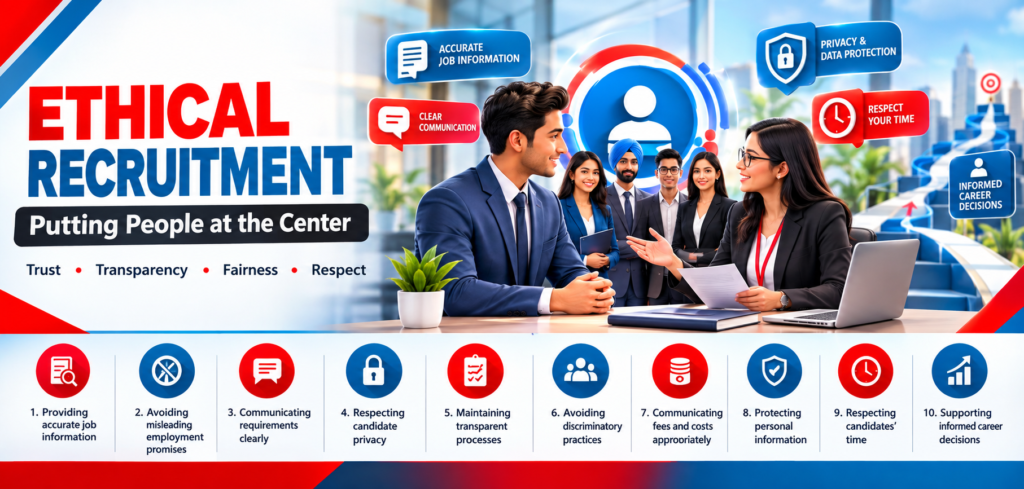
Ethical recruitment focuses on fairness, transparency, respect, and responsible treatment of candidates. It is particularly important when recruitment involves international mobility, vulnerable job seekers, or large-scale workforce placement.
Ethical recruitment can include:
- Providing accurate job information
- Avoiding misleading employment promises
- Communicating requirements clearly
- Respecting candidate privacy
- Maintaining transparent processes
- Avoiding discriminatory practices
- Communicating fees and costs appropriately
- Protecting personal information
- Respecting candidates’ time
- Supporting informed career decisions
Recruiters can strengthen trust by ensuring that candidates receive realistic information rather than exaggerated claims about employment opportunities.
For employers, ethical recruitment can also support stronger employer reputation and more sustainable workforce relationships.
On International Day of Peace 2026, ethical recruitment offers an opportunity to recognize that professional relationships should be based on respect and responsibility.
Inclusive Hiring and Workplace Diversity
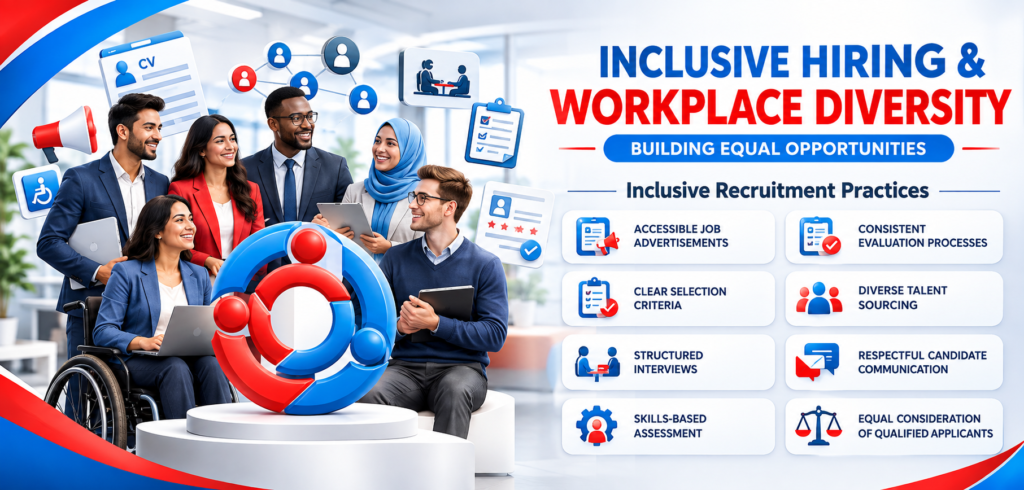
Inclusive hiring helps organizations create teams that bring together people with different experiences, skills, backgrounds, and perspectives.
Workplace diversity can contribute to broader perspectives and collaborative problem-solving when organizations create an environment where employees are respected and able to participate.
Recruitment teams can support inclusive hiring by focusing on relevant skills and qualifications while ensuring that unnecessary barriers do not prevent suitable candidates from accessing opportunities.
Inclusive recruitment practices may include:
- Accessible job advertisements
- Clear selection criteria
- Structured interviews
- Skills-based assessment
- Consistent evaluation processes
- Diverse talent sourcing
- Respectful candidate communication
- Equal consideration of qualified applicants
Diversity does not end when someone receives a job offer. Organizations also need workplace practices that support inclusion after hiring.
A diverse workforce can thrive when employees have opportunities to contribute, communicate, learn, and progress within the organization.
Meaningful Employment and the Purpose of Work
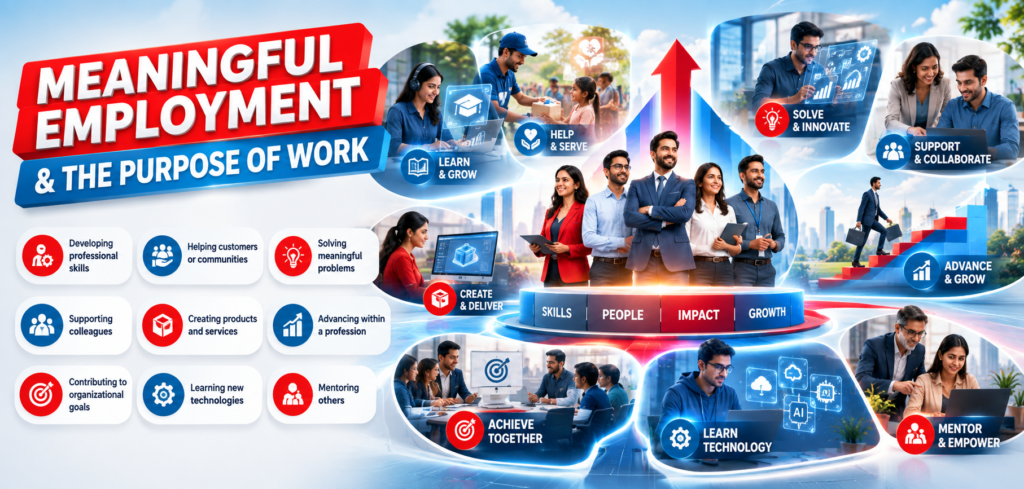
Meaningful employment goes beyond receiving a salary. For many people, work can provide a sense of identity, achievement, learning, contribution, and connection.
Employees may find purpose through:
- Developing professional skills
- Helping customers or communities
- Solving meaningful problems
- Supporting colleagues
- Creating products and services
- Advancing within a profession
- Contributing to organizational goals
- Learning new technologies
- Mentoring others
Recruiters can help candidates identify opportunities that align with their skills, experience, professional interests, and long-term goals.
Employers can support meaningful employment by creating opportunities for development and giving employees clarity about how their roles contribute to broader organizational objectives.
When people understand the purpose behind their work, professional responsibilities can become more connected to personal growth and organizational impact.
Global Talent and the Growth of a Connected Workforce
The modern labor market increasingly connects employers with global talent. Professionals may work across borders, relocate internationally, or collaborate with colleagues in different countries.
This creates opportunities for knowledge exchange and cross-cultural collaboration.
International recruitment can connect healthcare professionals, engineers, technology specialists, hospitality workers, skilled tradespeople, managers, and other professionals with organizations experiencing workforce demand.
A global workforce can bring together different languages, experiences, educational backgrounds, and professional approaches.
However, global recruitment also requires responsible processes. Candidates should understand the conditions associated with international employment, including professional requirements, contracts, relocation arrangements, and relevant regulations.
Respecting cultural differences is equally important. Organizations can support internationally recruited employees through orientation programs, communication support, cultural awareness initiatives, and inclusive workplace practices.
Career Opportunities and the Role of Responsible Recruitment

Access to career opportunities can have a significant impact on individuals and families. Recruiters act as an important connection between people looking for employment and organizations seeking talent.
Responsible recruitment means recognizing the human impact of these connections.
For candidates, responsible recruitment can involve receiving accurate information and appropriate guidance throughout the process. For employers, it can mean finding candidates whose skills and qualifications align with genuine workforce requirements.
Responsible recruitment can also reduce misunderstandings by establishing clear expectations from the beginning.
A professional recruitment process should therefore consider both sides of the employment relationship.
The goal is not simply to fill a vacancy. Sustainable recruitment considers whether the opportunity, candidate, employer, and workplace are appropriately aligned.
Employee Wellbeing and a Culture of Respect
Employee wellbeing is closely connected to the quality of workplace relationships. Organizations can support wellbeing through respectful management, reasonable workplace policies, communication, professional development, and mechanisms for addressing concerns.
A positive work environment can encourage employees to collaborate and communicate more effectively.
Recruiters may not control every aspect of an employee’s experience after hiring, but they can help candidates understand organizational expectations and workplace environments before placement.
Employers can strengthen wellbeing by developing cultures where employees can raise concerns appropriately and where respectful behavior is expected.
These practices contribute to a broader culture of peace—one based on dignity, understanding, cooperation, and constructive communication.
Social Harmony and Peaceful Communities Through Employment
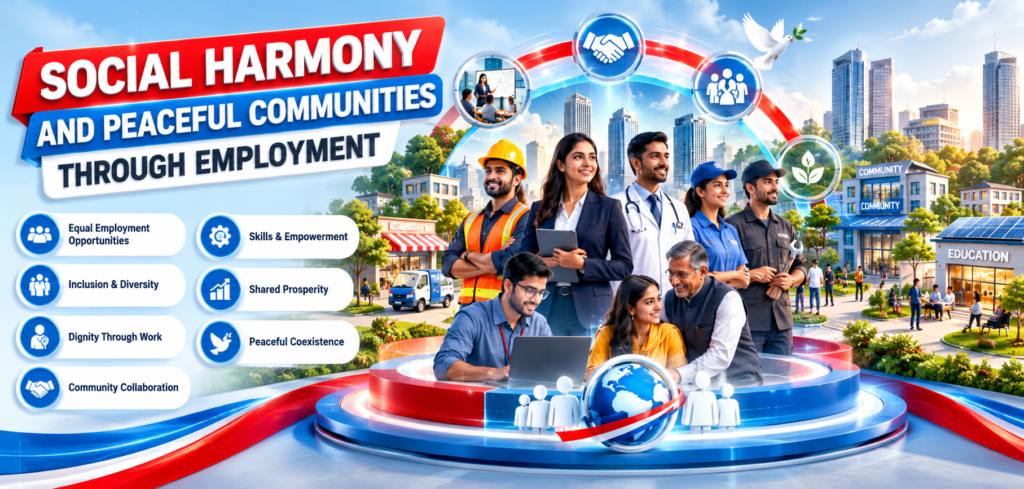
Employment is also connected to society beyond the workplace. When people have access to opportunities to develop their skills and participate economically, they can contribute to families, organizations, and communities.
Social harmony can be strengthened when individuals from different backgrounds have opportunities to work together and participate in shared professional environments.
Peaceful communities are supported by relationships built on trust, respect, and cooperation. Employment cannot solve every social or economic challenge, but decent work and inclusive opportunities can contribute to community stability and participation.
Recruitment professionals can therefore view their role as part of a wider ecosystem. Every successful placement connects not only a candidate and an employer but also potentially influences a family, professional network, and community.
Youth Employment and the Next Generation
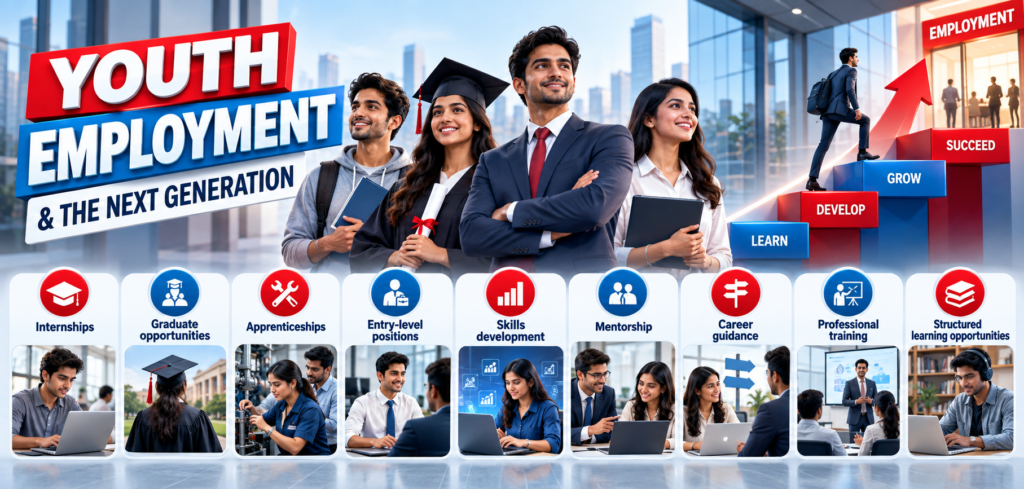
Youth employment deserves particular attention because young professionals are entering a rapidly changing labor market.
Many young people face challenges such as limited professional experience, changing skill requirements, competition for entry-level positions, and the need to adapt to emerging technologies.
Recruitment organizations and employers can support young professionals through:
- Internships
- Graduate opportunities
- Apprenticeships
- Entry-level positions
- Skills development
- Mentorship
- Career guidance
- Professional training
- Structured learning opportunities
Supporting young people in developing careers can contribute to long-term economic participation.
Young professionals also bring fresh ideas, digital skills, creativity, and new perspectives. Providing them with opportunities to participate meaningfully in the workforce can benefit both individuals and organizations.
Employment and Peacebuilding: Creating Opportunities Through Work
The connection between employment and peacebuilding can be understood through the broader relationship between economic opportunity, social participation, and community development.
Employment alone cannot guarantee peace. However, access to fair opportunities can provide people with productive ways to use their skills and participate in society.
Organizations can contribute by creating workplaces based on cooperation and equal respect.
Recruitment can support this process by connecting people with legitimate employment opportunities and helping organizations build diverse teams.
Peacebuilding in the workplace can involve practical actions such as constructive communication, conflict-resolution mechanisms, teamwork, employee development, and respect for different perspectives.
These practices can help create professional environments where disagreements are managed through dialogue rather than hostility.
Purpose-Driven Careers and the Future of Work
Purpose-driven careers are increasingly discussed in the context of employee expectations and organizational culture. Many professionals want to understand not only what they will do at work but also why their work matters.
Purpose can be connected to many different professions. A healthcare professional may contribute to patient care. An educator may support learning. An engineer may develop infrastructure. A technology professional may build useful digital systems. A recruiter may connect people with employment opportunities.
There is no single definition of career purpose. It can differ from person to person.
Recruitment professionals can help candidates explore opportunities that match their professional capabilities and interests while employers can communicate how individual roles contribute to organizational objectives.
This creates a stronger connection between people, careers, and purpose.
Global Cooperation and the Future of Work
The modern workforce depends increasingly on global cooperation. Organizations collaborate across borders, professionals work with international teams, and businesses recruit talent from different regions.
Such cooperation requires communication and mutual understanding.
International Day of Peace 2026 provides an opportunity to recognize the importance of these professional connections. Cross-border recruitment can bring together individuals who may have different languages, cultures, educational systems, and professional experiences.
Organizations that encourage respectful collaboration can benefit from this diversity while helping employees adapt to international working environments.
The future of recruitment is likely to involve continued movement of talent across sectors and borders. Responsible systems will be important for ensuring that this growth remains focused on transparency, fairness, and respect.
How Recruitment Companies Can Support a Culture of Peace

Recruitment organizations can incorporate peace-oriented principles into everyday operations without changing their fundamental business purpose.
Practical steps can include:
Promote Transparent Communication
Provide candidates with accurate information about positions, responsibilities, requirements, and employment conditions.
Encourage Inclusive Hiring
Use fair and consistent processes that give qualified candidates appropriate opportunities.
Respect Candidate Dignity
Treat every applicant professionally, regardless of whether they are ultimately selected.
Support International Candidates
Where international recruitment is involved, provide clear information about relevant processes and expectations.
Encourage Workplace Diversity
Help employers access diverse talent pools while maintaining skills-based recruitment practices.
Protect Candidate Information
Handle personal and professional information responsibly throughout recruitment.
Promote Long-Term Career Development
Consider opportunities that support candidates’ professional growth rather than focusing only on immediate vacancies.
These steps can help create a recruitment ecosystem built around professionalism, trust, and respect.
International Day of Peace 2026: A Shared Responsibility
International Day of Peace 2026 can serve as a reminder that peace is influenced by everyday interactions as well as major international events.
Recruiters, employers, employees, and candidates all have roles to play in creating respectful professional environments.
Recruitment professionals can connect people with opportunities. Employers can create inclusive workplaces. Employees can contribute through respectful communication and collaboration. Candidates can make informed decisions about their career paths.
Together, these actions can strengthen workplace relationships and contribute to broader social cooperation.
Connecting People, Careers and Purpose
International Day of Peace 2026 offers a meaningful opportunity for the recruitment and HR industry to consider the connection between employment and peaceful communities.
Peace and careers intersect through opportunity, dignity, inclusion, and cooperation. Ethical recruitment, inclusive hiring, meaningful employment, and workplace diversity can help organizations create professional environments where people are respected and supported.
At the same time, youth employment, global talent, employee wellbeing, and responsible recruitment can contribute to a workforce that is better prepared for an interconnected future.
A career can be more than a job. It can be a pathway to skills, independence, purpose, collaboration, and contribution. Likewise, recruitment can be more than filling vacancies. It can connect people with opportunities that influence their professional and personal lives.
By promoting fairness, respect, transparency, and inclusion, the recruitment industry can contribute to a culture of peace within workplaces and across communities.
On International Day of Peace 2026, connecting people with the right careers and meaningful opportunities can be viewed as one practical way of supporting cooperation, dignity, and a more inclusive future.
Leave a Reply