
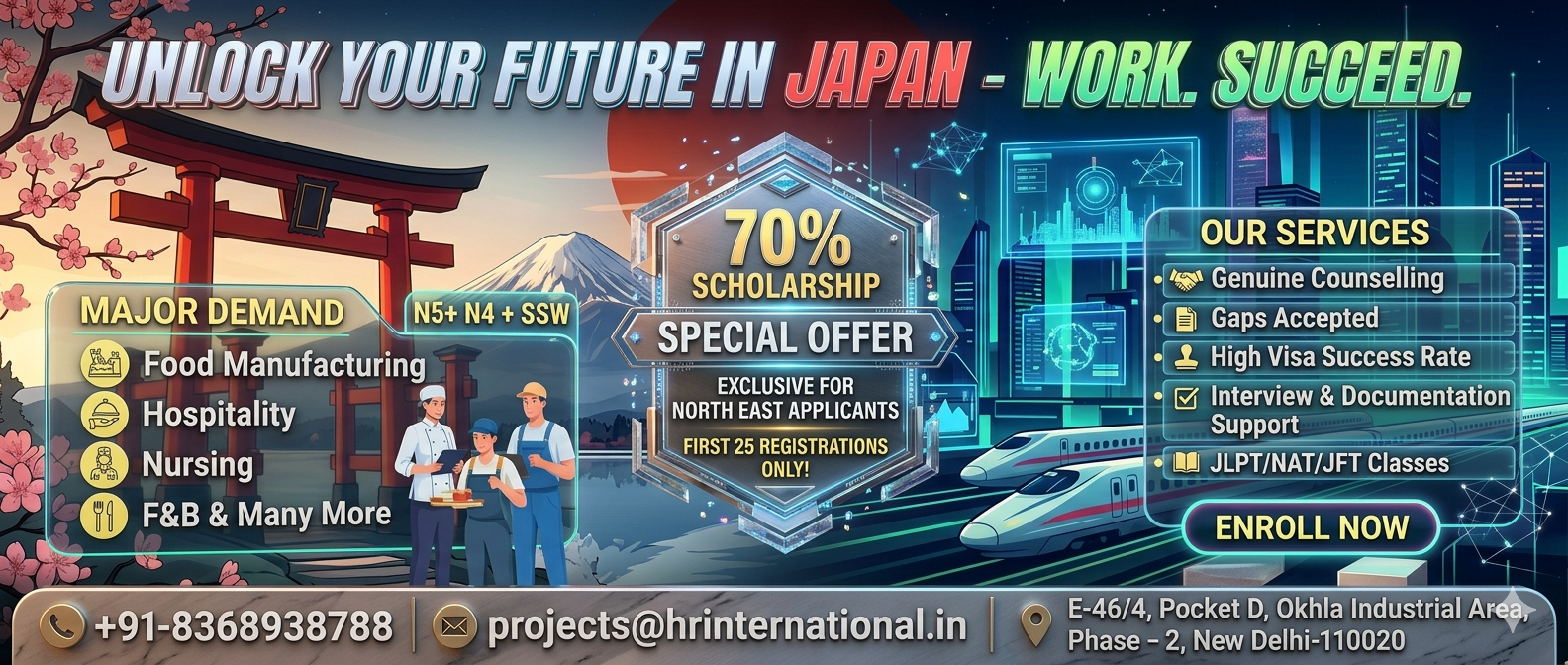

Japan is one of the most advanced and culturally rich countries in the world. From futuristic cities and bullet trains to centuries-old temples and traditions, the country offers a unique combination of innovation and heritage. Over the last few years, the demand for skilled foreign workers has increased rapidly, creating thousands of jobs in Japan opportunities for students and professionals from India and other countries. Industries like food manufacturing, hospitality, healthcare, and technical services are actively recruiting international talent because Japan is facing a shortage of workers due to its aging population.
At the same time, many aspiring candidates dream of working in Japan because of the country’s high salary standards, excellent work environment, safety, and global career exposure. Programs such as the Japan scholarship program, skill development training, and language education have made it easier for international applicants to enter the Japanese workforce legally and confidently. Candidates with qualifications in hospitality, nursing, and manufacturing are finding enormous opportunities under the SSW visa Japan category.
For students and job seekers in India, especially those from the North East region, special opportunities and scholarships are opening doors like never before. With proper guidance, language training, and visa support, the dream to work and succeed in Japan is becoming a reality for many young professionals. This guide explores everything about Japan facts and culture, future jobs, scholarships, visas, career sectors, and how expert support can help you build a successful future in Japan.
Understanding Japan Facts and Culture Before Building Your Career

Japan is not just a country of technology and skyscrapers; it is a society deeply rooted in discipline, respect, and community values. Anyone planning to work or study in Japan should first understand the importance of Japanese culture because adapting to local customs significantly improves career success. Japanese society values punctuality, honesty, teamwork, and dedication. Even small gestures such as bowing while greeting or maintaining silence in public transportation reflect the country’s culture of respect and harmony.
One fascinating aspect of Japan facts and culture is the balance between modern life and traditional practices. Tokyo, Osaka, and Yokohama showcase some of the world’s most advanced infrastructure, while Kyoto and Nara preserve ancient temples and cultural rituals that are centuries old. Festivals, tea ceremonies, cherry blossom celebrations, and traditional arts remain an important part of daily life. This blend creates a unique environment where international workers can experience both professional growth and cultural enrichment.
Japan is also globally recognized for cleanliness, safety, and efficiency. Public transport systems are highly organized, streets are exceptionally clean, and crime rates are among the lowest in the world. For international students and workers, this means a secure and comfortable lifestyle. Employers in Japan appreciate workers who show responsibility, politeness, and willingness to learn. These values often matter just as much as technical skills.
Another interesting cultural fact is Japan’s strong focus on continuous improvement, often called “Kaizen.” This philosophy encourages workers and companies to improve processes daily. It creates an environment where employees learn discipline, teamwork, and productivity. For Indian candidates planning to build international careers, Japan offers not only employment but also valuable life experience that can shape their future positively.
Jobs in Japan Opportunities Are Expanding for Global Applicants
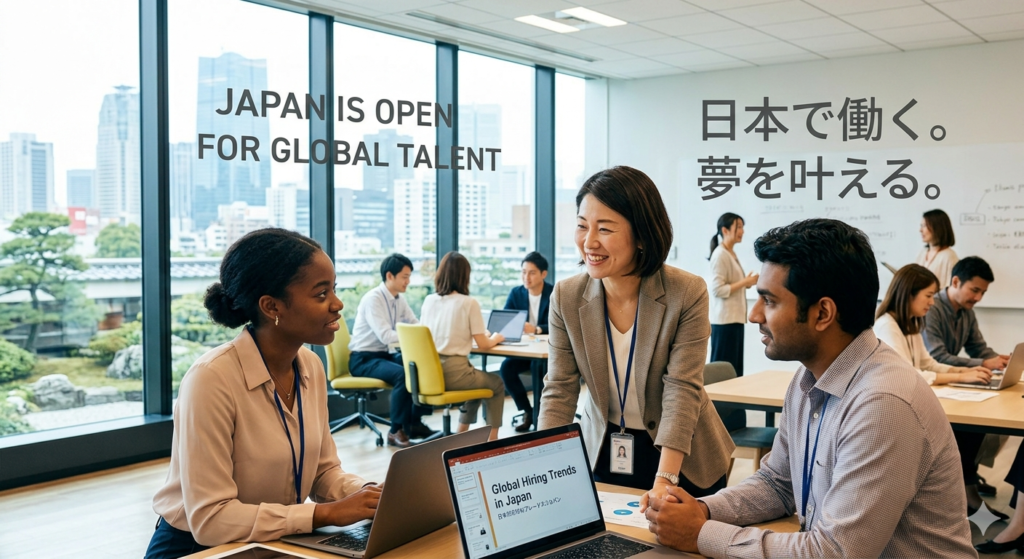
The rise in jobs in Japan opportunities is directly linked to Japan’s demographic challenges. The country has one of the world’s oldest populations, and many industries are struggling to find enough workers. As a result, Japan has opened its doors to skilled international candidates through various visa programs and employment pathways. This shift has created enormous opportunities for students and professionals who are ready to adapt and contribute.
Industries such as manufacturing, healthcare, hospitality, construction, and food services are actively hiring foreign workers. According to Japanese labor statistics, the number of foreign workers in Japan has crossed two million in recent years, and the demand continues to grow. Employers are especially looking for disciplined, hardworking, and trainable candidates who can support long-term workforce needs.
One major advantage of working in Japan is salary growth combined with skill enhancement. Employees gain international work experience while learning advanced systems and technologies. Japanese companies often provide structured training programs, accommodation support, insurance benefits, and career progression opportunities. These benefits make Japan highly attractive compared to many other international job destinations.
Young professionals from India are increasingly choosing Japan because the country offers stability and future growth. Unlike temporary labor markets, Japan focuses on long-term workforce integration. Workers can improve language skills, build savings, and even apply for extended residence opportunities after gaining experience. With proper preparation and support, candidates can secure rewarding careers that transform their professional lives permanently.
Food Manufacturing Jobs Japan Are Creating Strong Career Paths
Among the fastest-growing sectors, food manufacturing jobs Japan are attracting thousands of international workers. Japan’s food processing industry plays a crucial role in supplying products to supermarkets, restaurants, hotels, and export markets. Due to labor shortages, companies are actively recruiting foreign candidates under the SSW visa system.
These jobs typically involve food packaging, quality checking, machine operations, processing, hygiene management, and warehouse support. Workers receive professional training to ensure they meet Japanese quality standards. One of the biggest advantages of entering this sector is that prior advanced experience is not always necessary. Candidates with basic technical understanding, discipline, and willingness to learn can successfully enter the industry.
The work environment in Japanese food manufacturing companies is highly organized and safety-focused. Employees follow strict hygiene standards and operational guidelines. This helps workers develop professional discipline and technical skills that are valuable globally. Companies often provide accommodation assistance, transportation support, overtime opportunities, and insurance coverage.
Salary packages in food manufacturing can vary depending on location and employer, but many workers earn attractive monthly incomes with overtime benefits. Since Japan values long-term employees, dedicated workers often receive promotions and improved opportunities over time. For candidates looking for stable employment with career growth, food manufacturing has become one of the strongest pathways into Japan’s workforce ecosystem.
Hospitality Careers in Japan Are Booming After Tourism Growth
The tourism sector in Japan has experienced massive growth, creating strong demand for workers in hotels, restaurants, cafes, resorts, and entertainment facilities. As international tourism increases, hospitality careers in Japan are becoming one of the most promising employment sectors for foreign candidates.
Japan is famous for its hospitality culture, known as “Omotenashi,” which represents selfless service and attention to detail. Employees in this sector are trained to provide exceptional customer experiences. International workers are particularly valuable because they can communicate with tourists from different countries and support multilingual services.
Roles in hospitality include hotel staff, front desk operations, housekeeping, restaurant service, food and beverage support, kitchen assistance, and tourism coordination. Candidates who possess basic Japanese communication skills and customer service abilities often have better employment opportunities. This is why many training programs focus heavily on language education before placement.
The hospitality industry also provides excellent exposure to Japanese culture and professional standards. Workers learn communication skills, time management, teamwork, and customer interaction techniques that are valuable worldwide. As tourism continues to recover and expand, hospitality careers are expected to remain one of the strongest employment sectors for international candidates in the coming years.
Japan Nursing Jobs Offer Stability and International Experience
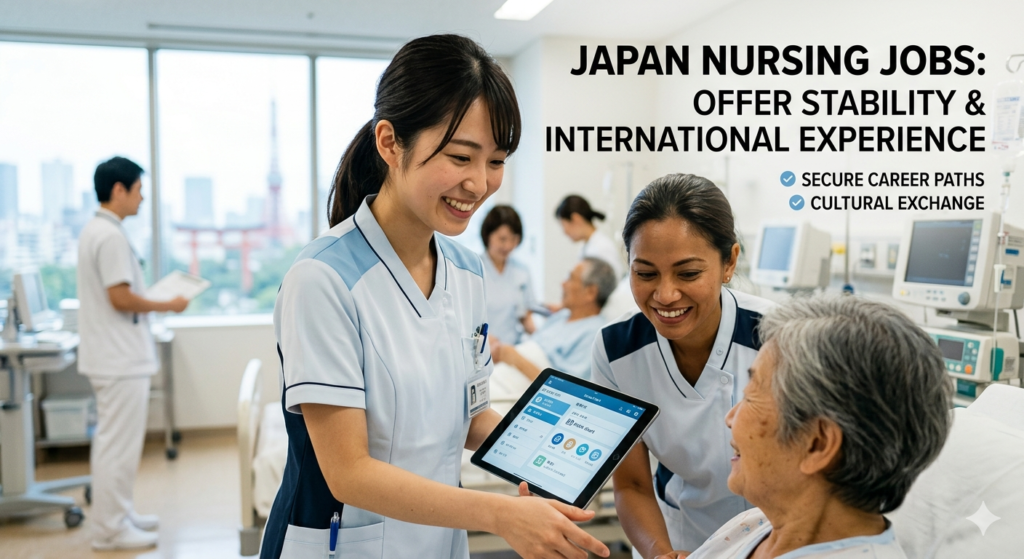
Healthcare is another sector facing serious labor shortages in Japan. The country’s aging population has increased the need for caregivers, nursing assistants, and healthcare professionals. As a result, Japan nursing jobs are becoming highly attractive for international applicants seeking long-term stability.
Nursing and caregiving roles involve supporting elderly patients, assisting with daily activities, maintaining hygiene, monitoring health conditions, and providing emotional support. Japan’s healthcare system is known for its high standards and advanced medical infrastructure. Working in this sector allows professionals to gain globally respected experience.
One major benefit of nursing jobs in Japan is job security. Healthcare services will continue expanding due to demographic trends, ensuring consistent demand for trained professionals. Employers often provide accommodation support, healthcare insurance, language training, and professional certification assistance.
Caregiving work also helps candidates develop compassion, patience, and cross-cultural communication skills. While the work can be physically and emotionally demanding, many professionals find it deeply rewarding. For candidates looking for meaningful careers with international growth opportunities, Japan’s healthcare industry offers a powerful pathway toward personal and professional success.
Japan Work Visa and Therefore SSW Visa Japan Explained
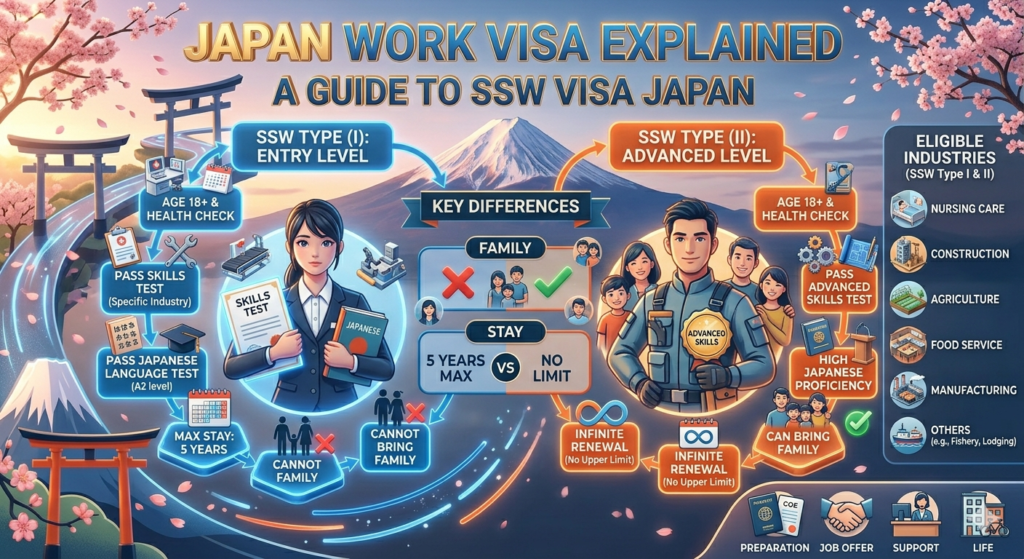
Understanding the Japan work visa process is essential for anyone planning to build a career in Japan. One of the most popular employment pathways today is the SSW visa Japan, also known as the Specified Skilled Worker visa. This visa was introduced to address labor shortages in key industries and allows foreign workers to legally work in Japan.
The SSW visa covers sectors such as food manufacturing, hospitality, nursing care, agriculture, construction, and industrial services. Candidates usually need basic Japanese language proficiency along with sector-specific skill tests. Language qualifications such as JLPT N5 are commonly accepted as proof of communication ability.
The application process includes documentation verification, interviews, language assessment, medical tests, and employer sponsorship. Professional support can significantly improve the success rate because visa procedures require accuracy and compliance with Japanese immigration rules. Many candidates benefit from consultancy services that assist with interview preparation and documentation handling.
One important advantage of the SSW visa is that it offers legal employment protection and structured working conditions. Workers receive fair wages, regulated hours, insurance coverage, and labor rights similar to Japanese employees. This creates a secure environment for international workers who want to establish long-term careers in Japan.
Japan Scholarship Program and Education Benefits
Education and training play a major role in preparing candidates for international careers. The Japan scholarship program has become a valuable opportunity for students and aspiring workers who need financial assistance while pursuing language education and career development.
Scholarship programs can reduce educational expenses significantly, making overseas preparation more accessible. In this special initiative, eligible candidates can receive up to 70% scholarship support, helping them access language classes, training modules, and career guidance programs at affordable costs.
A particularly exciting opportunity is the furthermore North East applicants offer, designed specifically for candidates from North East India. The first 25 registrations under this special program may receive exclusive benefits and scholarship advantages. Such initiatives are helping deserving students and job seekers overcome financial barriers while accessing global career opportunities.
Scholarship-supported programs often include language education, visa guidance, interview preparation, and documentation assistance. This comprehensive support system helps candidates prepare confidently for international employment. For many young professionals, scholarships are not just financial aid—they are life-changing opportunities that open doors to global careers.
In Addition Japanese Language Classes Improve Job Success
Language is one of the most important factors for career success in Japan. In addition Japanese language classes help candidates communicate effectively, adapt to workplace culture, and improve employment opportunities significantly.
Employers in Japan prefer workers who can understand instructions, interact with colleagues, and communicate with customers. Even basic language ability creates a strong positive impression during interviews. Candidates with JLPT or NAT certifications often receive better job opportunities and smoother workplace integration.
Professional language training programs focus on speaking, listening, reading, and workplace communication. Students learn daily conversation skills along with industry-specific vocabulary related to hospitality, manufacturing, and healthcare sectors. Interactive teaching methods help candidates gain confidence gradually.
Language learning also improves cultural understanding. Students become familiar with Japanese etiquette, greetings, workplace behavior, and communication styles. This reduces cultural barriers and helps workers adapt more comfortably after arriving in Japan. Strong language preparation can truly become the foundation for long-term success abroad.
Meanwhile JLPT N5 Preparation for Beginners
For beginners planning to work in Japan, meanwhile JLPT N5 preparation is often the first step toward language certification. The Japanese Language Proficiency Test (JLPT) measures reading, listening, and grammar skills, and N5 represents the beginner level.
JLPT N5 preparation includes learning Hiragana, Katakana, basic Kanji, simple sentence structures, vocabulary, and everyday conversation patterns. Students practice listening comprehension and develop the ability to understand simple workplace instructions. Training programs usually include mock tests, speaking exercises, and personalized guidance.
Apart from JLPT, candidates may also prepare for NAT and JFT examinations depending on employer or visa requirements. These exams evaluate practical communication skills and are widely accepted for employment applications under the SSW system.
Consistent practice is the key to language success. Students who dedicate regular time to vocabulary, pronunciation, and listening exercises often progress quickly. Achieving N5 certification not only improves job opportunities but also increases confidence during interviews and workplace communication.
Japan Job Consultancy India and Japan Employment Support
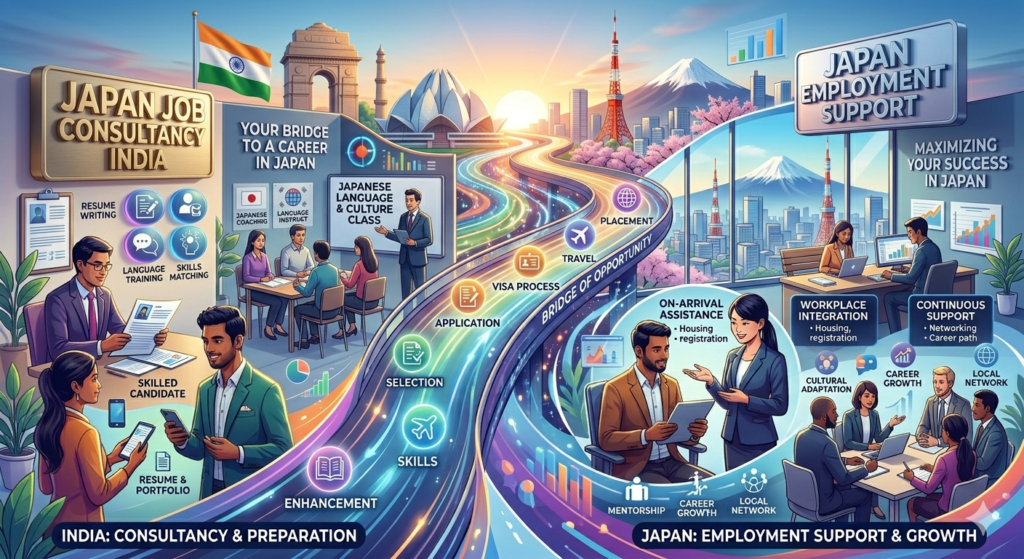
Professional guidance plays a major role in international career success. Reliable Japan job consultancy India services help candidates navigate the complex process of language training, interviews, visa documentation, and employer matching.
A trusted consultancy provides Japan employment support through genuine counselling, career planning, and transparent information. Many candidates struggle because they lack proper guidance about visa rules, employer expectations, and language requirements. Expert support reduces confusion and helps applicants make informed decisions.
One of the most important advantages of professional consultancy assistance is documentation accuracy. Visa applications require multiple documents including educational certificates, passport verification, medical reports, and employment paperwork. Even small mistakes can delay approvals. Proper support ensures smoother processing and higher approval chances.
Consultancy services also conduct interview preparation sessions where candidates learn communication techniques, workplace etiquette, and employer expectations. These training sessions improve confidence and professionalism significantly. For first-time international applicants, such support can make the difference between rejection and successful placement.
Genuine Counselling and High Visa Success Japan
Candidates often worry about scams, fake job offers, and unclear procedures while planning international careers. This is why genuine counselling and high visa success Japan services are extremely important. Professional organizations with transparent processes help candidates avoid misinformation and build trust throughout the journey.
Experienced counselors assess a candidate’s education, language ability, career interests, and financial situation before recommending suitable pathways. This personalized guidance helps applicants choose the right industry, training program, and visa category according to their strengths and goals.
High visa success rates are usually achieved through proper documentation support, interview preparation, employer coordination, and compliance with immigration requirements. Professional consultants guide applicants step by step, reducing errors and increasing approval chances significantly.
Candidates also receive emotional confidence through structured support systems. Preparing for overseas careers can feel overwhelming, especially for first-time travelers. Proper counselling transforms uncertainty into clarity, helping candidates move forward with confidence and preparation.
Interview and Documentation Support Services
Interview preparation is one of the most critical stages in securing employment abroad. Japanese employers value discipline, politeness, confidence, and communication skills during interviews. Professional training helps candidates understand employer expectations and present themselves effectively.
Documentation support is equally important because immigration procedures require accurate paperwork and timely submissions. Services often include passport guidance, certificate verification, medical documentation, visa application assistance, and employer coordination.
Mock interview sessions prepare candidates for real-world interactions with Japanese employers. Applicants practice self-introduction, workplace communication, and industry-related responses. Trainers also guide students on dress code, body language, and professional etiquette according to Japanese standards.
Such support systems reduce stress and improve overall readiness. Candidates who receive proper interview and documentation training often perform better during recruitment processes and adapt more smoothly after reaching Japan.
Work and Succeed in Japan With the Right Career Strategy
The dream to work and succeed in Japan is becoming achievable for thousands of international candidates every year. With rising labor demand, structured visa systems, scholarship programs, and language training opportunities, Japan offers a realistic pathway toward global career success.
Success in Japan depends on preparation, discipline, adaptability, and continuous learning. Candidates who invest time in language education, cultural understanding, and skill development often achieve better employment outcomes and long-term career growth. Whether you choose hospitality, food manufacturing, nursing, or technical services, Japan provides valuable international exposure and financial stability.
Special programs such as the 70% scholarship, north east applicants offer, and professional employment support services are helping more students and workers access these opportunities confidently. By combining the right training with proper guidance, candidates can build rewarding futures in one of the world’s most respected economies.
Japan is not only a destination for employment; it is a place where individuals can transform their lives through discipline, innovation, and global experience. For those ready to embrace new challenges and opportunities, the journey toward a successful future in Japan starts today.
FAQs
1. What are the best jobs in Japan opportunities for Indian candidates?
The most in-demand sectors include food manufacturing, hospitality, nursing care, construction, and technical services. These industries actively recruit foreign workers through SSW visa programs.
2. What is the minimum language requirement for working in Japan?
Most entry-level jobs require basic Japanese proficiency such as JLPT N5, NAT, or JFT certification. Language ability improves visa approval and job opportunities.
3. How does the Japan work visa process work?
Candidates usually need employer sponsorship, language qualifications, skill tests, documentation verification, and immigration approval under visa categories like SSW.
4. Are scholarships available for studying or preparing for Japan jobs?
Yes, many organizations provide scholarship support programs, including special offers with up to 70% financial assistance for eligible candidates.
5. Why is Japan a good country for international workers?
Japan offers high safety standards, structured work culture, international experience, career growth opportunities, stable income, and long-term professional development.
Contact Information
HR International
📞 +91-8368938788
📧 projects@hrinternational.in
📍 E-46/4, Pocket D, Okhla Industrial Area, Phase – 2, New Delhi-110020
Leave a Reply