
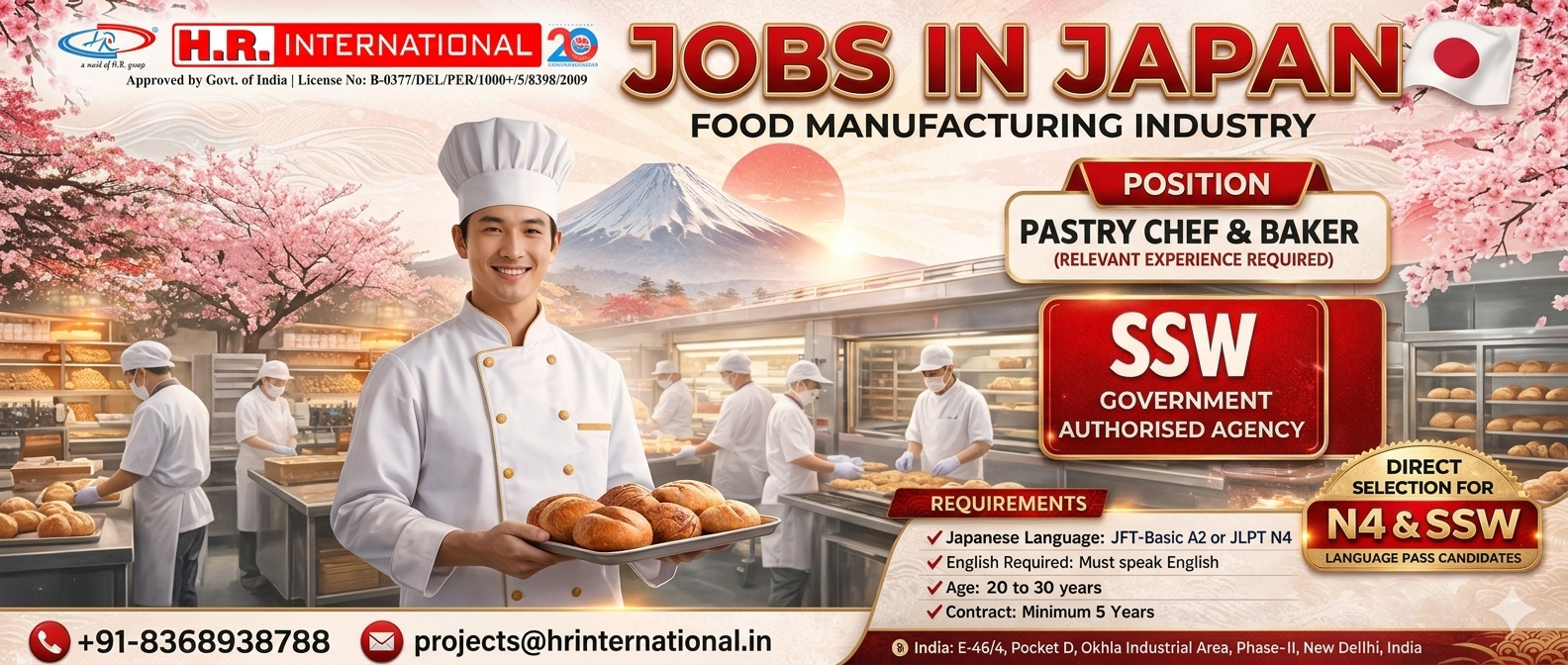
Overview of Jobs in Japan for Indians in 2026

Why Japan is Hiring Foreign Skilled Workers
Japan is no longer just a travel dream—it has become one of the most attractive destinations for skilled professionals, especially in sectors like food manufacturing. With a rapidly aging population and declining workforce, Japan has opened its doors wide for international talent. If you’re someone with hands-on experience in baking or pastry arts, this shift isn’t just news—it’s an opportunity knocking loudly.
The Jobs in Japan market has evolved significantly in recent years. According to government-backed workforce reports, Japan needs hundreds of thousands of foreign workers under the Specified Skilled Worker (SSW) program to sustain industries like food processing and manufacturing. This is exactly where skilled Indian workers are stepping in. Why Indians? Because of their strong work ethic, adaptability, and culinary skills that align well with Japan’s precision-driven food industry.
For many candidates, the idea of Work in Japan for Indians once seemed complicated. Language barriers, visa issues, and unclear processes often discouraged applicants. But now, structured programs like SSW and agencies like H.R. International are simplifying everything. If you meet the eligibility—like Japanese language proficiency (JLPT N4 or JFT Basic A2)—you’re already halfway there.
The most exciting part? These aren’t just temporary gigs. These are structured career opportunities with long-term contracts, skill growth, and global exposure. Whether you’re aiming for Chef Jobs International or specifically targeting pastry and bakery roles, Japan offers stability, respect, and a chance to elevate your career to international standards.
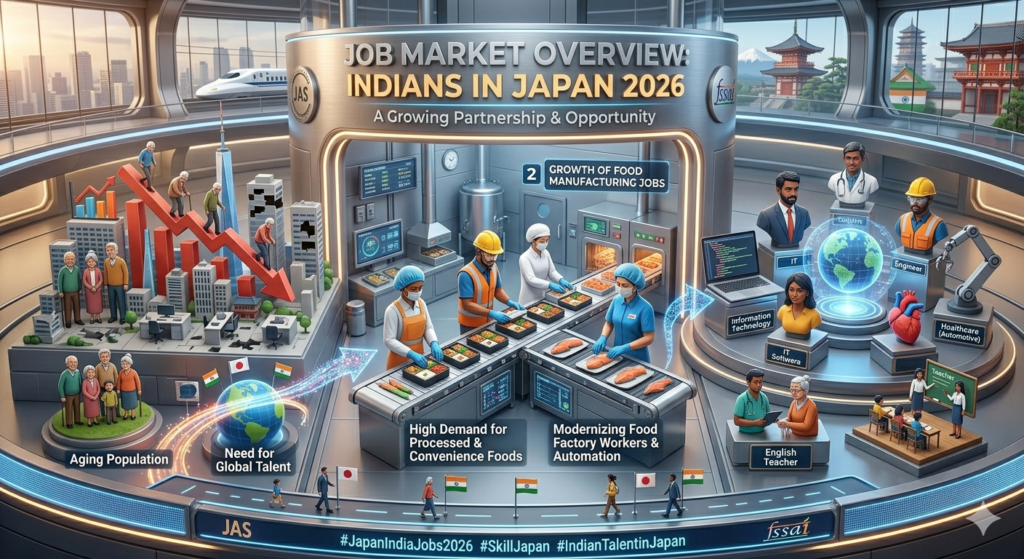
Growth of Food Manufacturing Jobs in Japan
The rise of Food Manufacturing Jobs in Japan is not accidental—it’s driven by demand, innovation, and a deep-rooted culture of quality. Japan’s food industry is one of the most advanced in the world, blending tradition with cutting-edge technology. From artisanal bakeries to large-scale production units, there’s a constant need for skilled professionals who understand both craftsmanship and consistency.
Now think about this: Japan’s convenience store culture alone generates billions in food sales annually. Fresh baked goods, pastries, and ready-to-eat meals are replenished multiple times a day. That level of demand requires a massive workforce behind the scenes—this is where Baker Jobs Abroad and pastry chef roles come into play.
For candidates exploring Japan Job Vacancy 2026, the food manufacturing sector stands out as one of the most accessible entry points. Why? Because it values skill over formal degrees. If you’ve got real-world experience in baking or pastry preparation, you already meet one of the biggest requirements.
Another interesting aspect is the emphasis on hygiene, precision, and presentation. Japanese food standards are among the highest globally. Working in this environment not only sharpens your skills but also enhances your professional credibility worldwide. Imagine returning to your home country—or moving to another international destination—with Japanese work experience on your resume. That’s a game-changer.
And with agencies offering Direct Selection Japan Jobs, the hiring process has become faster and more transparent. No middle layers, no confusion—just a clear path from application to employment.
H.R. International – Direct Selection Japan Jobs Explained
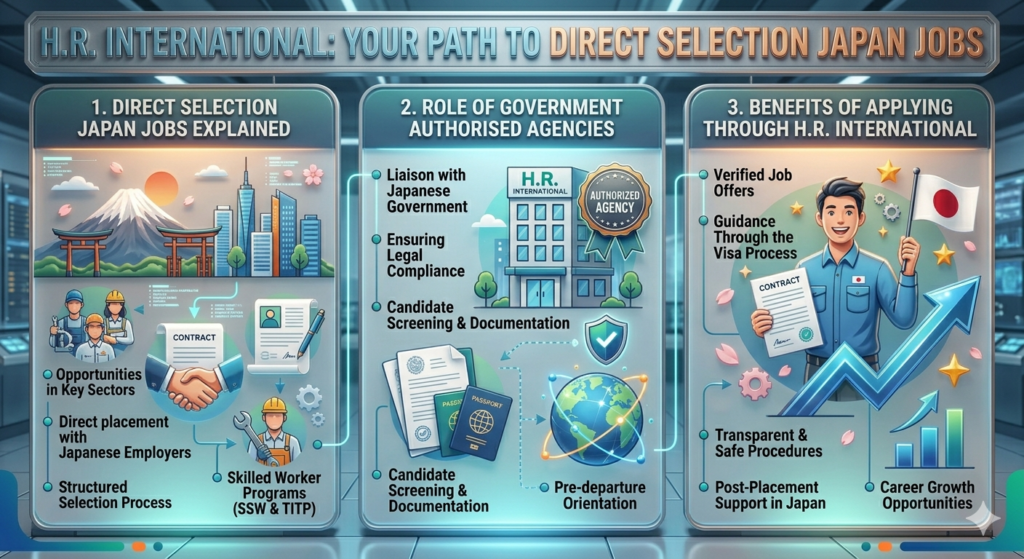
Role of Government Authorised Agencies
When it comes to securing genuine Japan Government Jobs or private sector roles abroad, the biggest concern is always trust. This is where government-authorised agencies like H.R. International play a crucial role. They act as a bridge between employers in Japan and skilled workers in India, ensuring that the hiring process is not only transparent but also legally compliant.
H.R. International operates under strict guidelines, making it a reliable option for candidates seeking Direct Selection Japan Jobs. What does “direct selection” really mean? It means you are being hired directly by the employer without unnecessary intermediaries, reducing both time and risk. This is especially important in overseas employment, where scams and misinformation can often mislead applicants.
The agency also assists with documentation, visa processing, and interview preparation. For candidates applying under the SSW Visa Japan program, this support becomes invaluable. From ensuring your language certification is valid to helping you prepare for employer interviews, every step is streamlined.
Another key advantage is that these agencies maintain direct relationships with Japanese companies. This means they understand exactly what employers are looking for—whether it’s technical baking skills, hygiene practices, or teamwork abilities. That insight gives candidates a significant edge during selection.
Benefits of Applying Through H.R. International
Choosing the right recruitment partner can make or break your overseas career plans. With H.R. International, candidates gain access to verified Japan Job Vacancy 2026 listings, reducing uncertainty and increasing success rates.
One of the standout benefits is the clarity in requirements. You’re told upfront what qualifications you need—like Japanese Language N4 Jobs eligibility or JFT Basic A2 Jobs certification. No hidden criteria, no last-minute surprises. This level of transparency helps candidates prepare better and approach the opportunity with confidence.
Additionally, H.R. International offers end-to-end support. From your initial application to your final departure, they guide you through every phase. Need help understanding the Skilled Worker Japan visa? They’ve got you covered. Unsure about interview questions? They provide training sessions.
And let’s not ignore the psychological comfort. Moving to another country is a big step. Having a trusted agency ensures you’re not navigating it alone. You know where you’re going, who you’re working for, and what to expect.
For anyone serious about Apply Jobs Japan Online, this structured approach removes guesswork and replaces it with a clear, actionable path.
Pastry Chef Jobs Japan – Roles, Skills, and Expectations
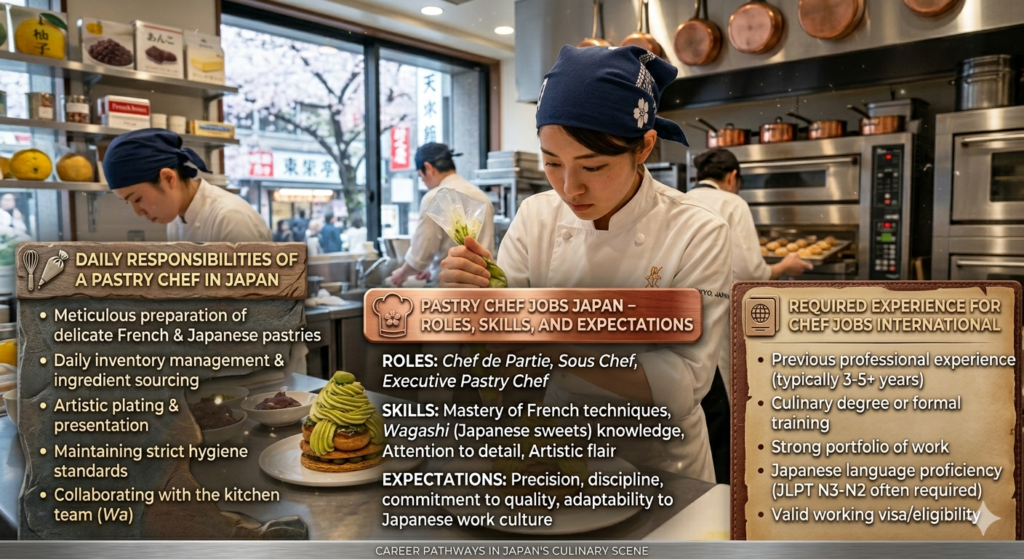
Daily Responsibilities of a Pastry Chef in Japan
Stepping into the world of Pastry Chef Jobs Japan is like entering a finely tuned orchestra where every movement matters. Precision, timing, and consistency aren’t just expectations—they’re non-negotiable standards. A typical day for a pastry chef in Japan begins early, often before sunrise, preparing fresh batches of dough, creams, fillings, and decorative elements that will be used throughout the day. Unlike casual baking environments, Japanese kitchens operate with near-surgical discipline, where even a few grams off in measurement can be considered unacceptable.
You might be wondering—what makes this different from pastry jobs elsewhere? The answer lies in the culture. In Japan, food is treated as an art form. Whether it’s a delicate strawberry shortcake or a perfectly laminated croissant, presentation is just as important as taste. This means pastry chefs are expected to master both technical skills and aesthetic sensibilities. Working in Food Manufacturing Jobs within Japan’s pastry sector often involves producing items at scale while maintaining handcrafted quality—a balance that demands both speed and perfection.
Another key aspect of Chef Jobs International in Japan is teamwork. Kitchens are highly collaborative spaces where communication—often in basic Japanese—is essential. This is why meeting the Japanese Language N4 Jobs requirement becomes more than just a checkbox; it’s a practical necessity for daily operations.
Cleanliness and hygiene are also deeply embedded in the work culture. Every workstation must be spotless, tools sanitized, and processes strictly followed. These habits not only ensure product safety but also build discipline that benefits your entire culinary career.
By the end of the day, the workload can be physically demanding, but the sense of accomplishment is undeniable. You’re not just baking—you’re contributing to a system that values excellence at every level.
Required Experience for Chef Jobs International
When it comes to qualifying for Pastry Chef Jobs Japan, experience isn’t just preferred—it’s essential. Employers are looking for candidates who can hit the ground running, not those who need basic training. Typically, applicants should have hands-on experience in bakeries, hotels, or food production units where they’ve already developed core skills like dough preparation, baking techniques, and dessert assembly.
But here’s where it gets interesting: Japanese employers often value consistency over creativity in entry-level international roles. While innovation is appreciated, your ability to replicate a product perfectly every single time is what truly sets you apart. This aligns closely with the expectations in Skilled Worker Japan programs, where reliability is a key hiring factor.
For those aiming at Overseas Bakery Jobs, understanding industrial equipment is a major plus. Many food manufacturing units in Japan use advanced machinery for mixing, proofing, and baking. Familiarity with such tools can significantly increase your chances of selection during Direct Selection Japan Jobs processes.
English communication is another requirement that shouldn’t be underestimated. While Japanese is necessary for daily work, basic English proficiency ensures you can understand training materials, safety instructions, and communicate with international staff members. This dual-language ability makes you more versatile and valuable in the workplace.
Think of your experience as your passport. The more relevant and hands-on it is, the smoother your transition into Japan’s highly structured food industry will be.
Baker Jobs Abroad – Opportunities in Japan’s Bakery Sector

Work Environment in Japanese Bakeries
Working in Baker Jobs Abroad, especially in Japan, offers a completely different perspective compared to local bakery roles. The environment is fast-paced, highly organized, and deeply rooted in discipline. Japanese bakeries are known for their punctuality—products must be ready exactly on time, whether for early morning customers or large-scale distribution networks.
In many Food Manufacturing Jobs, bakeries operate almost like production lines, but with a strong emphasis on craftsmanship. Each team member is assigned specific tasks, from mixing ingredients to shaping dough and overseeing baking cycles. This specialization allows for efficiency while maintaining high-quality output. If you’re used to multitasking in a small bakery, this structured approach might feel different at first—but it quickly becomes second nature.
Another defining feature is the use of technology. Many bakeries incorporate automated systems for temperature control, fermentation, and baking. For candidates pursuing Overseas Bakery Jobs, adapting to these systems is crucial. It’s not just about baking skills anymore; it’s about integrating those skills with modern tools.
Work culture also deserves attention. Respect, hierarchy, and teamwork are deeply ingrained in Japanese workplaces. Senior staff members guide juniors, and there’s a strong emphasis on learning through observation and repetition. This creates an environment where continuous improvement is part of daily life.
Despite the demanding nature of the job, many workers find the experience rewarding. The exposure to international standards, combined with the opportunity to work in a culturally rich environment, makes these roles highly attractive for those seeking Work in Japan for Indians.
Demand for Overseas Bakery Jobs
The demand for Baker Jobs Abroad in Japan is steadily increasing, driven by both domestic consumption and export markets. Japanese baked goods—known for their unique textures and flavors—are gaining popularity worldwide. This surge in demand requires a consistent supply of skilled workers who can maintain production levels without compromising quality.
For candidates exploring Japan Job Vacancy 2026, the bakery sector offers a promising entry point. Unlike some industries that require advanced degrees, bakery jobs prioritize hands-on experience and skill. This makes them accessible to a wider range of applicants, especially those with practical training.
The introduction of the SSW Visa Japan program has further accelerated hiring in this sector. By simplifying visa processes and clearly defining skill requirements, the program has made it easier for foreign workers to enter the Japanese job market. This is particularly beneficial for those with JFT Basic A2 Jobs or Japanese Language N4 Jobs qualifications.
Employers are not just looking for workers—they’re looking for long-term contributors. With contracts often lasting a minimum of five years, these roles provide stability and career growth. Over time, workers can advance to supervisory positions or specialize in specific areas of baking and pastry production.
If you’ve ever considered taking your baking skills to an international level, this is the moment to act. The combination of demand, structured programs, and reliable recruitment channels like H.R. International makes it easier than ever to turn that ambition into reality.
SSW Visa Japan – Complete Guide for Skilled Worker Japan Program
What is the Specified Skilled Worker (SSW) Visa
The SSW Visa Japan is one of the most significant developments in Japan’s immigration policy in recent years. Designed to address labor shortages across multiple industries, including food manufacturing, this visa allows foreign workers to live and work in Japan legally for extended periods.
Under the Skilled Worker Japan program, there are two main categories: SSW Type 1 and Type 2. For most candidates applying for Food Manufacturing Jobs or bakery roles, SSW Type 1 is the relevant category. It allows workers to stay in Japan for up to five years, with the possibility of renewal under certain conditions.
What makes this visa particularly attractive is its structured approach. Unlike traditional work visas that often require high educational qualifications, the SSW visa focuses on skill and language ability. If you meet the requirements—such as passing the JFT Basic A2 Jobs test or achieving Japanese Language N4 Jobs certification—you’re eligible to apply.
Another advantage is the inclusion of support systems. Employers are required to provide assistance with accommodation, daily life, and integration into Japanese society. This makes the transition smoother for foreign workers, especially those experiencing life abroad for the first time.
For anyone serious about Apply Jobs Japan Online, understanding the SSW visa is essential. It’s not just a document—it’s your gateway to a structured and secure career in Japan.
Benefits of SSW Visa for Food Industry Workers
The benefits of the SSW Visa Japan extend far beyond legal employment. For workers in the food industry, it opens doors to stable income, skill development, and international exposure. One of the most immediate advantages is job security. With contracts often spanning several years, workers can plan their finances and future with confidence.
Another key benefit is fair wages. Japanese labor laws ensure that foreign workers are paid on par with local employees performing similar roles. This is a significant improvement compared to many other international job markets, where wage disparities can be an issue.
Training and skill enhancement are also integral to the program. Workers are continuously trained to meet Japan’s high standards, which adds immense value to their professional profiles. Whether you’re in Pastry Chef Jobs Japan or Baker Jobs Abroad, the experience gained here is recognized globally.
Additionally, the visa provides access to healthcare and social security benefits, ensuring overall well-being. This level of support makes the idea of Work in Japan for Indians not just feasible, but highly appealing.
In a competitive global job market, having international experience backed by a structured program like SSW can set you apart. It’s not just about earning—it’s about evolving as a professional.
Japanese Language N4 Jobs & JFT Basic A2 Jobs Requirements
Importance of Language for Work in Japan for Indians
If there’s one factor that can make or break your journey toward Work in Japan for Indians, it’s language. You might have exceptional baking skills or years of experience in Food Manufacturing Jobs, but without basic Japanese communication ability, adapting to the workplace becomes significantly harder. That’s why requirements like Japanese Language N4 Jobs or JFT Basic A2 Jobs are not just formalities—they are practical necessities.
Imagine stepping into a Japanese bakery where instructions are given quickly during peak hours. There’s no time for translation apps or guesswork. Understanding simple commands, safety instructions, and workflow communication can directly impact your performance and even your safety. This is exactly why employers insist on at least JLPT N4 or JFT Basic A2 certification—it ensures you can function independently in a professional environment.
Another aspect often overlooked is social integration. Work isn’t limited to just your station in the kitchen. You’ll interact with coworkers, supervisors, and sometimes even customers. Being able to understand greetings, basic conversations, and workplace etiquette helps you build relationships and feel less isolated. Over time, this improves job satisfaction and overall mental well-being.
For candidates applying through Direct Selection Japan Jobs, language proficiency also plays a role during interviews. Even if the interview includes English, demonstrating basic Japanese skills shows commitment and seriousness. It tells employers you’re not just looking for a job—you’re ready to adapt to their culture.
Think of language as your bridge. Without it, you’re standing at the edge of opportunity. With it, you’re already halfway across.
How to Qualify JLPT N4 or JFT Basic A2
Achieving eligibility for Japanese Language N4 Jobs or JFT Basic A2 Jobs might sound intimidating at first, but it’s more accessible than most people think. These levels represent basic proficiency—you’re not expected to be fluent. Instead, the focus is on understanding everyday expressions, simple sentences, and basic workplace communication.
The JLPT N4 exam tests your reading, listening, and vocabulary skills. You’ll need to recognize around 300 kanji and understand common phrases used in daily life. On the other hand, the JFT Basic A2 test is designed specifically for foreign workers and focuses more on practical communication rather than academic knowledge. Many candidates find JFT slightly easier because it aligns closely with real-world scenarios.
Preparation usually takes a few months, depending on your learning pace. There are numerous online platforms, mobile apps, and coaching centers that specialize in Japanese language training for SSW Visa Japan applicants. Consistency is key—studying even one hour a day can lead to significant progress over time.
One effective strategy is combining textbook learning with audio practice. Listening to Japanese conversations, watching subtitled videos, and practicing speaking aloud can accelerate your understanding. It’s not about perfection; it’s about familiarity.
Once you pass either JLPT N4 or JFT Basic A2, you unlock access to a wide range of Japan Job Vacancy 2026 opportunities. It’s a small investment of time that yields long-term career benefits.
Eligibility Criteria for Japan Job Vacancy 2026
Age, Experience, and English Requirements
Before applying for any Japan Job Vacancy 2026, it’s essential to understand the eligibility criteria clearly. These requirements are not arbitrary—they are designed to ensure that candidates can handle the physical, technical, and cultural demands of working in Japan’s food manufacturing industry.
Let’s start with age. Most positions, including Pastry Chef Jobs Japan and Baker Jobs Abroad, require candidates to be between 20 and 30 years old. This range reflects the physically demanding nature of the job, which often involves long hours of standing, lifting, and repetitive tasks. Employers prefer candidates who can maintain energy and consistency throughout the workday.
Experience is another critical factor. For Chef Jobs International, relevant hands-on experience is mandatory. This means you should have worked in a bakery, hotel kitchen, or food production unit where you’ve actively participated in baking or pastry preparation. The more practical your experience, the stronger your application.
English proficiency is also required, though it doesn’t need to be advanced. Basic speaking and understanding skills are enough to follow instructions, communicate with international staff, and navigate training materials. When combined with Japanese Language N4 Jobs eligibility, this dual-language ability makes you highly adaptable.
These criteria might seem strict at first glance, but they are actually designed to set you up for success. Meeting them ensures you’re not only selected but also capable of thriving in your new role.
Contract Terms and Employment Duration
One of the most appealing aspects of Direct Selection Japan Jobs is the clarity in contract terms. Unlike uncertain job arrangements in some countries, Japanese employment contracts are detailed and structured. For most Food Manufacturing Jobs, including bakery and pastry roles, the minimum contract duration is five years under the SSW Visa Japan program.
This long-term commitment offers stability, which is rare in many international job markets. You’re not just working for a few months—you’re building a career. Over these five years, you gain valuable experience, improve your language skills, and adapt to a highly professional work environment.
Another advantage is the consistency in work conditions. Working hours, salary, overtime policies, and leave entitlements are clearly defined in the contract. This transparency eliminates confusion and helps you plan your finances effectively.
Employers also provide support services, such as accommodation assistance and orientation programs. This makes the transition smoother, especially for first-time international workers. For those pursuing Work in Japan for Indians, this level of support can make a huge difference in overall experience.
By the end of the contract period, many workers find themselves in a much stronger position—both financially and professionally. Some even explore advanced opportunities within Japan or in other countries, leveraging their international experience.
Apply Jobs Japan Online – Step-by-Step Process
Documents Required for Application
Applying for Jobs in Japan has become more streamlined thanks to digital platforms and agencies like H.R. International. However, preparation is key. Having the right documents ready can significantly speed up your application process and improve your chances of selection.
Typically, you’ll need the following:
- Updated resume highlighting relevant experience in Food Manufacturing Jobs
- Passport with valid expiry date
- Educational certificates (if applicable)
- Experience certificates from previous employers
- Japanese language certification (JLPT N4 or JFT Basic A2 Jobs)
- Basic English proficiency proof (if required)
- Passport-sized photographs
Each document plays a specific role. Your resume showcases your skills, while your language certificate proves your ability to adapt to the Japanese work environment. Experience certificates are particularly important for Chef Jobs International, as they validate your hands-on expertise.
Accuracy is crucial. Even small errors or missing information can delay your application. That’s why many candidates rely on agencies to review their documents before submission.
Interview & Selection Process
The interview process for Direct Selection Japan Jobs is designed to assess both your technical skills and your readiness to work in Japan. It usually begins with a preliminary screening, where your documents and qualifications are reviewed.
If shortlisted, you’ll be invited for an interview—often conducted online or in person, depending on the employer. Questions may cover your previous experience, specific baking techniques, and your understanding of workplace discipline. For Pastry Chef Jobs Japan, you might even be asked scenario-based questions to evaluate your problem-solving skills.
Language ability is also assessed. Even a simple self-introduction in Japanese can leave a strong impression. It shows effort and willingness to integrate into the work culture.
Once selected, the agency assists with visa processing under the SSW Visa Japan category. This includes documentation, medical tests, and pre-departure orientation.
The entire process might take a few weeks to a few months, depending on the employer and visa timelines. Patience and preparation are key. Once everything is complete, you’re ready to begin your journey toward a rewarding international career.
Japan Government Jobs vs Private Sector Food Manufacturing Jobs
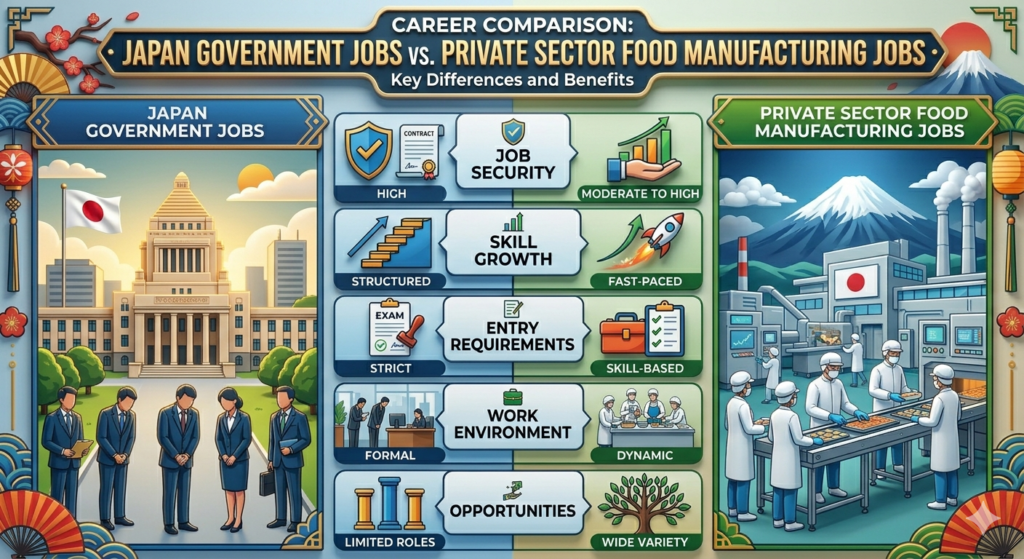
Key Differences and Benefits
When exploring Japan Government Jobs versus private sector roles in Food Manufacturing Jobs, it’s important to understand the distinctions clearly. While both offer stable employment, they differ in structure, flexibility, and growth opportunities.
Government-linked roles often provide higher job security and standardized benefits. However, they may have stricter entry requirements and less flexibility in terms of role variation. On the other hand, private sector jobs—especially in bakery and pastry production—offer more dynamic work environments and faster skill development.
Here’s a quick comparison:
| Feature | Government Jobs | Private Sector Jobs |
| Job Security | High | Moderate to High |
| Skill Growth | Structured | Fast-paced |
| Entry Requirements | Strict | Skill-based |
| Work Environment | Formal | Dynamic |
| Opportunities | Limited roles | Wide variety |
For candidates applying through H.R. International, most opportunities fall under private sector employment but are aligned with government regulations like the SSW Visa Japan program. This combination offers the best of both worlds—structured employment with room for growth.
Ultimately, the choice depends on your career goals. If you value stability and gradual progression, government roles might suit you. If you prefer hands-on experience and rapid skill enhancement, private sector Overseas Bakery Jobs are the way to go.
Conclusion
The opportunity to secure Jobs in Japan within the food manufacturing industry is no longer a distant dream—it’s a structured, achievable path for skilled individuals. With roles like Pastry Chef Jobs Japan and Baker Jobs Abroad, candidates can transform their careers while gaining international exposure. Programs like the SSW Visa Japan and support from agencies such as H.R. International simplify the journey, making it accessible and reliable.
From meeting Japanese Language N4 Jobs requirements to understanding contract terms and preparing for interviews, every step plays a crucial role in shaping your success. For those ready to commit, learn, and adapt, Japan offers not just a job, but a life-changing experience.
FAQs
1. What is the minimum qualification for Jobs in Japan food manufacturing sector?
Candidates need relevant experience in baking or pastry along with JLPT N4 or JFT Basic A2 Jobs certification and basic English skills.
2. How long is the contract under SSW Visa Japan?
The minimum contract duration is typically 5 years, depending on the employer and job role.
3. Can beginners apply for Pastry Chef Jobs Japan?
No, relevant hands-on experience is required for most Chef Jobs International roles.
4. Is accommodation provided in Baker Jobs Abroad in Japan?
Yes, employers often assist with accommodation and basic living arrangements.
5. How can I Apply Jobs Japan Online through H.R. International?
You can contact them at +91-8368938788 or email projects@hrinternational.in and submit your documents for Direct Selection Japan Jobs.

Leave a Reply