
Introduction to Healthcare Jobs in Japan for Indians

Japan is quietly becoming one of the most attractive destinations for Indian healthcare professionals, and if you’ve been exploring global career opportunities, this might just be the breakthrough you’ve been waiting for. The demand for healthcare jobs in Japan for Indians has surged dramatically in recent years, driven by the country’s aging population and shrinking workforce. Hospitals, nursing homes, and rehabilitation centers are actively seeking skilled and compassionate professionals from India, especially from the North East region.
Think about it—Japan has one of the highest life expectancies in the world, which means a growing need for caregivers, nurses, and healthcare assistants. At the same time, the younger workforce in Japan is declining, creating a talent gap that international candidates are now filling. This is where organizations like H.R. International step in, bridging the gap between opportunity and talent.
What makes this opportunity even more compelling is that Japan offers not just jobs, but structured career growth, skill development, and a chance to experience a completely different culture. For many Indian candidates, especially from North East India, this represents more than employment—it’s a life-changing experience. From advanced medical infrastructure to disciplined work culture, Japan offers a professional environment that is both challenging and rewarding.
If you’ve ever imagined working abroad in a stable, high-paying, and respectful profession, now is the time to seriously consider applying. The pathway is clearer than ever, and the demand is real. Let’s break down why Japan is opening its doors and why you should walk through them.
Why Japan is Hiring Indian Healthcare Professionals
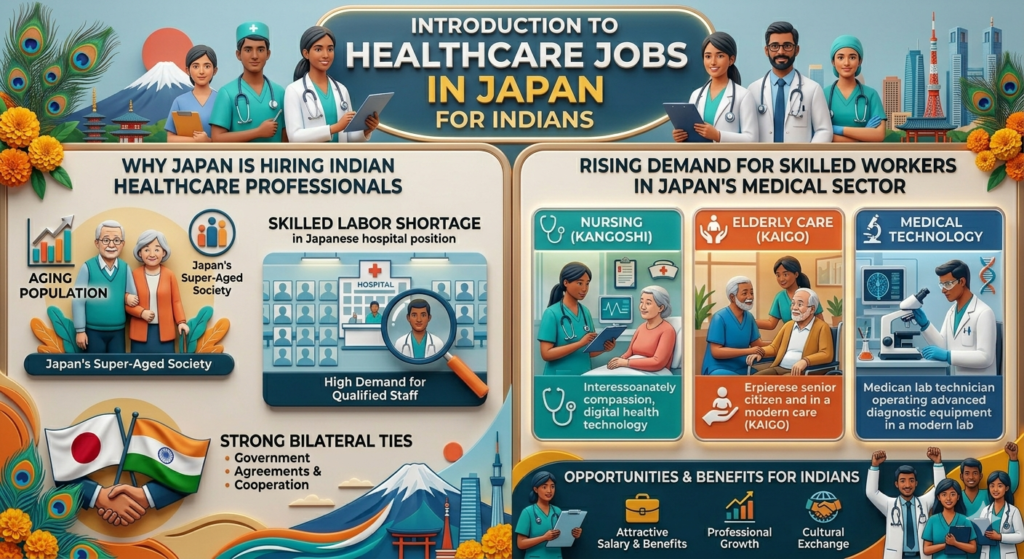
Japan’s healthcare system is under pressure, and the numbers tell the story. With over 28% of its population aged 65 and above, the country is facing a demographic crisis that directly impacts its medical infrastructure. There simply aren’t enough local workers to care for the elderly and manage healthcare facilities efficiently.
This shortage has led Japan to actively recruit foreign workers, and Indian professionals are high on the priority list. Why? Because Indian healthcare workers are known for their dedication, adaptability, and strong foundational training. Whether it’s nursing jobs in Japan for Indians or caregiver roles, employers trust the skill set that Indian candidates bring to the table.
Another reason Japan prefers Indian candidates is the growing diplomatic and economic ties between the two countries. Agreements have been established to facilitate smoother recruitment processes, making it easier for Indians to enter Japan’s workforce legally and securely. Programs like the Specified Skilled Worker (SSW) visa have opened doors that were previously difficult to access.
There’s also a human element to this demand. Japanese patients often require compassionate, patient-centered care—qualities that Indian professionals are naturally known for. This alignment of values makes Indian workers particularly suitable for roles that require empathy and long-term commitment.
In simple terms, Japan needs help, and India has the talent. It’s a win-win situation that is only expected to grow stronger in the coming years.
Rising Demand for Skilled Workers in Japan’s Medical Sector
The demand for healthcare workers in Japan isn’t just increasing—it’s skyrocketing. Hospitals, elderly care homes, and rehabilitation centers are expanding rapidly, yet the workforce isn’t keeping pace. This gap has created thousands of vacancies across various roles, from entry-level caregivers to experienced nurses.
One of the most in-demand categories is Japan caregiver jobs for Indian candidates, where workers assist elderly patients with daily activities, medical routines, and emotional support. These roles are essential in a society where elderly care is becoming a top priority.
At the same time, Japan hospital jobs for Indian workers are also gaining traction. Hospitals are looking for qualified nurses, medical assistants, and support staff who can contribute to patient care and operational efficiency. These positions often come with structured training programs, ensuring that international candidates can adapt smoothly to Japan’s healthcare standards.
What’s interesting is that Japan isn’t just filling positions—it’s investing in long-term talent. Many employers offer language training, cultural orientation, and skill development programs to help foreign workers succeed. This means you’re not just getting a job; you’re building a sustainable career.
For candidates from North East India, the opportunity is even more promising. Their cultural adaptability, communication skills, and willingness to learn make them highly desirable in Japan’s healthcare ecosystem.
The bottom line? The demand is real, the opportunities are expanding, and the timing couldn’t be better.
Healthcare Jobs in Japan for Indians – A Growing Opportunity
The landscape of healthcare jobs in Japan for Indians has evolved from a niche opportunity into a full-fledged career pathway that thousands are now actively pursuing. What used to be a limited hiring channel has now transformed into a structured recruitment ecosystem supported by agencies like H.R. International, government-backed programs, and Japanese employers eager to onboard international talent. If you’re wondering whether this is just a short-term trend, the answer is simple—it’s not. This is a long-term workforce shift driven by demographics and economic necessity.
Japan’s healthcare system is not only advanced but also deeply reliant on human care. Unlike many countries that are rapidly automating patient services, Japan still values personalized attention, especially in elderly care. This creates a unique demand for professionals who can combine technical skills with empathy. Indian candidates, particularly those with experience in caregiving or nursing, fit naturally into this requirement.
Another aspect that makes this opportunity appealing is financial stability. Salaries in Japan’s healthcare sector are competitive, and when combined with benefits like accommodation support, insurance, and overtime pay, the overall compensation becomes highly attractive. For many Indian workers, this means the ability to save more while also gaining international exposure.
There’s also a strong emphasis on skill development. Employers in Japan invest heavily in training programs, ensuring that workers continuously improve their abilities. Whether it’s learning advanced caregiving techniques or improving Japanese language proficiency, you’ll find yourself growing both professionally and personally.
In short, this isn’t just about working abroad—it’s about building a future. And with the increasing number of Japan hospital jobs for Indian workers, the door is wide open for those ready to step in.
Key Roles Available in Japan’s Healthcare Industry
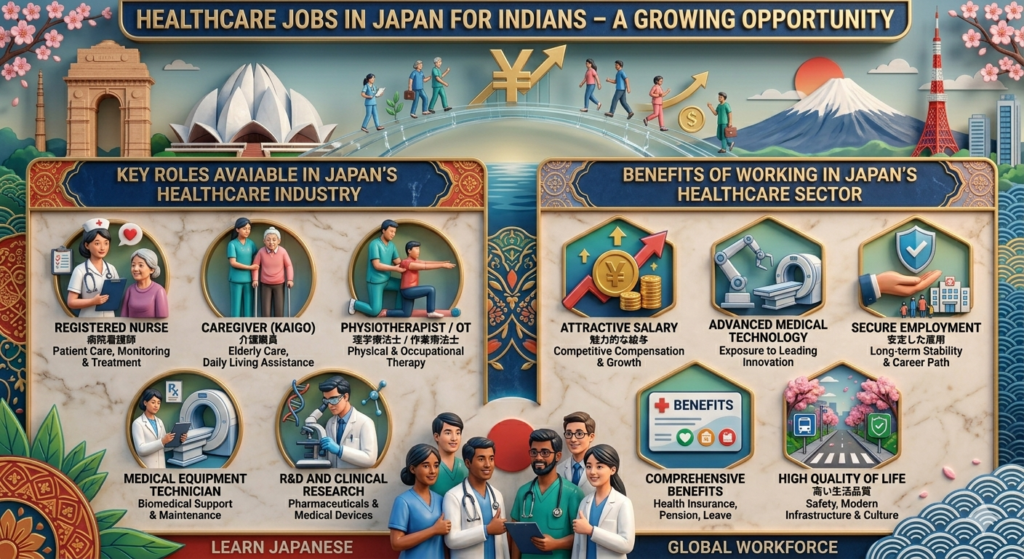
When exploring Japan medical jobs for North East India and other Indian candidates, it’s important to understand the variety of roles available. The healthcare sector in Japan is vast, and it offers opportunities for individuals with different skill levels and qualifications. Whether you’re a trained nurse or someone looking to start a career as a caregiver, there’s likely a role that fits your profile.
Some of the most in-demand positions include caregivers, nursing assistants, registered nurses, rehabilitation aides, and hospital support staff. Among these, caregiver jobs in Japan for foreigners are particularly popular because they often require less formal education compared to nursing roles, making them accessible to a wider range of candidates.
Caregivers typically assist elderly patients with daily activities such as bathing, feeding, and mobility support. While the job can be physically demanding, it is also incredibly rewarding. You’re not just providing care—you’re improving someone’s quality of life.
On the other hand, nursing jobs in Japan for Indians require formal qualifications and licensing, but they come with higher salaries and greater career growth opportunities. Nurses in Japan are respected professionals who play a critical role in patient care and hospital operations.
What’s fascinating is the structured nature of these roles. Japan doesn’t just hire you and leave you to figure things out. There are clear job descriptions, training modules, and performance evaluations that help you succeed. This level of organization makes it easier for foreign workers to adapt and thrive.
So whether you’re starting fresh or bringing years of experience, Japan’s healthcare industry offers a role that aligns with your goals.
Benefits of Working in Japan’s Healthcare Sector
Choosing to work in Japan healthcare sector is about more than just earning a paycheck—it’s about experiencing a lifestyle and professional environment that is both disciplined and deeply rewarding. One of the biggest advantages is job security. Healthcare is an essential service, and in Japan, the demand is only increasing. This means stable employment and long-term career prospects.
Financially, the benefits are compelling. Many employers offer competitive salaries along with additional perks such as housing assistance, transportation allowances, and health insurance. Overtime pay is also common, allowing workers to increase their earnings significantly. Compared to similar roles in India, the earning potential is substantially higher.
But beyond money, there’s the quality of life. Japan is known for its safety, cleanliness, and efficient public systems. Living in such an environment can be a refreshing change, especially for those coming from crowded urban areas. Public transport is reliable, healthcare facilities are top-notch, and everyday life is organized in a way that minimizes stress.
Another major benefit is skill enhancement. Working in Japan exposes you to advanced medical practices and technologies. You’ll learn new techniques, improve your communication skills, and gain international work experience that can open doors globally.
Cultural exposure is another underrated advantage. From traditional festivals to modern city life, Japan offers a unique blend of old and new. For many workers, this becomes one of the most enriching aspects of their journey.
In essence, working in Japan’s healthcare sector is not just a job—it’s an experience that shapes your career and your perspective on life.
Japan Healthcare Jobs for North East Candidates – Why They Are Preferred
The increasing focus on Japan healthcare jobs for North East candidates is not accidental. Employers in Japan have shown a clear preference for candidates from this region of India, and there are several practical reasons behind this trend. It’s not about favoritism—it’s about compatibility, adaptability, and long-term success in a demanding work environment.
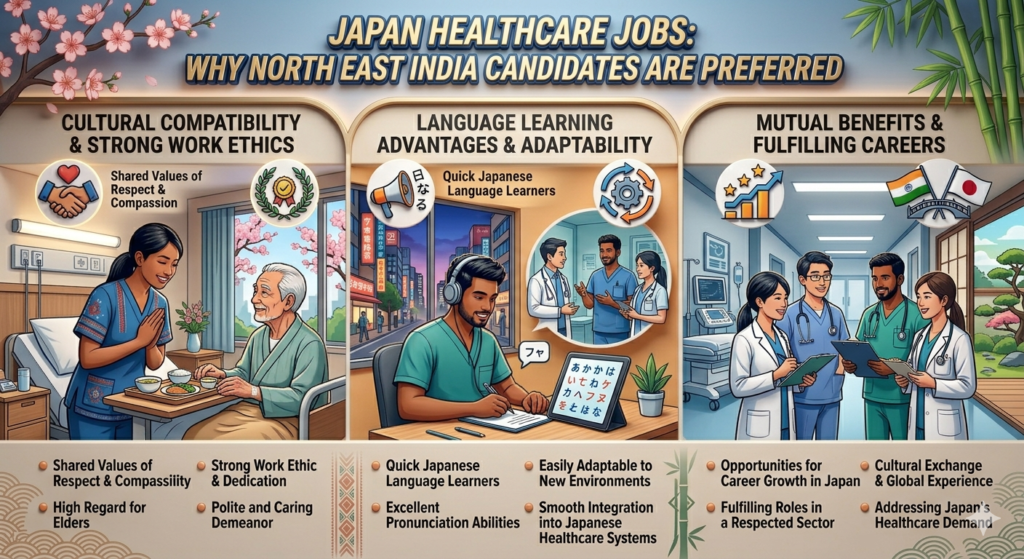
Candidates from North East India often possess strong communication skills, especially in English, which serves as a bridge while learning Japanese. This makes the initial transition smoother, both in training and in real-world job scenarios. Additionally, many individuals from this region are culturally adaptable, which is a huge advantage when moving to a country with distinct traditions and social norms.
Another factor is work ethic. Japanese employers value discipline, punctuality, and respect for hierarchy—qualities that many North East candidates naturally align with. This cultural synergy reduces friction in the workplace and enhances overall productivity.
Physical appearance and demeanor also play a subtle role. Some employers feel that candidates from North East India adapt more easily to Japanese social settings, which can be beneficial in roles that involve direct patient interaction.
What’s important to understand is that this preference translates into more opportunities. Recruitment drives often specifically target North East candidates, offering them better access to training programs and job placements.
For those from the region, this is a golden opportunity. The demand is high, the pathway is clearer, and the chances of success are significantly increased.
Cultural Compatibility and Work Ethics
Cultural compatibility is often an overlooked factor when discussing international employment, but in the case of Japan healthcare jobs for North East candidates, it plays a crucial role. Japan’s work culture is deeply rooted in respect, discipline, and teamwork. Employees are expected to follow strict schedules, maintain high standards of professionalism, and contribute to a harmonious work environment.
Candidates from North East India often find it easier to adapt to these expectations. There’s a natural alignment in values such as respect for elders, community-oriented thinking, and a strong sense of responsibility. These shared traits make the transition smoother and reduce the cultural shock that many foreign workers experience.
Work ethics in Japan are also quite demanding. Punctuality is non-negotiable, attention to detail is critical, and teamwork is essential. For someone unprepared, this can feel overwhelming. But for those who already possess a disciplined approach to work, it becomes an opportunity to excel.
Employers notice this alignment and are more likely to invest in candidates who demonstrate cultural compatibility. This can lead to better job roles, faster promotions, and long-term employment opportunities.
In a way, cultural fit becomes a hidden advantage—one that can significantly influence your success in Japan’s healthcare industry.
Language Learning Advantages and Adaptability
Language is often seen as a barrier, but for many North East candidates, it becomes a stepping stone. When pursuing Japan SSW healthcare jobs for Indians, learning Japanese is a mandatory part of the process. The good news? Candidates from North East India often pick up the language faster due to their exposure to diverse linguistic environments.
Japanese language proficiency is typically measured through the JLPT (Japanese Language Proficiency Test), and most healthcare roles require at least an N4 or N3 level. While this might sound challenging, structured training programs make it achievable within months.
Adaptability goes beyond language. It includes adjusting to new food, climate, work routines, and social norms. This is where many candidates from North East India excel. Their openness to new experiences and willingness to learn make them highly adaptable in a foreign environment.
Employers recognize this adaptability and are more inclined to hire candidates who can integrate quickly into their systems. This not only benefits the employer but also enhances the worker’s overall experience.
So while language might seem like a hurdle at first, it often turns into one of your strongest assets.
Apply Healthcare Jobs in Japan – Step-by-Step Process
If you’re serious about your international career, understanding how to apply healthcare jobs in Japan is the first practical step toward turning that ambition into reality. The process may seem complex at first glance, but once you break it down, it becomes surprisingly structured and manageable—especially when guided by a reputable recruitment agency like H.R. International.
The journey typically begins with registration. Candidates submit their profiles, educational qualifications, and work experience details to the agency. This is followed by an initial screening process where recruiters assess whether you meet the basic eligibility criteria for available roles such as caregiver jobs in Japan for foreigners or nursing jobs in Japan for Indians. At this stage, honesty and accuracy in your documentation are critical because even minor discrepancies can delay your application.
Once shortlisted, candidates are usually enrolled in a training program. This includes Japanese language training, cultural orientation, and job-specific skill development. Think of this phase as your foundation—it prepares you not just to pass interviews but to actually succeed in the workplace. Many candidates underestimate this step, but it’s where the real transformation happens.
After training, interviews are conducted by Japanese employers, often via video calls. These interviews focus not only on technical skills but also on attitude, communication, and willingness to adapt. Once selected, the process moves to documentation and visa application, particularly for roles under the Japan SSW healthcare jobs for Indians category.
The final stage involves pre-departure orientation, travel arrangements, and initial settlement support in Japan. It’s a well-orchestrated process designed to minimize confusion and maximize success. So instead of feeling overwhelmed, think of it as a guided pathway—one that thousands have successfully navigated before you.
Application Procedure through H.R. International
When applying through H.R. International, the process becomes significantly smoother and more transparent. This agency has built a strong reputation for connecting Indian talent with global opportunities, particularly in Japan hospital jobs for Indian workers. Their structured approach ensures that candidates are supported at every stage, from application to placement.
The first step involves submitting your application either online or through their office network. Once your profile is reviewed, you’ll receive guidance on the most suitable roles based on your qualifications and interests. This personalized approach is what sets professional agencies apart—they don’t just place you anywhere; they match you with the right opportunity.
Training is a major component of their service. Candidates are enrolled in Japanese language classes and skill development programs tailored to specific roles like Japan caregiver jobs for Indian candidates. These sessions are designed to prepare you for both the job and the cultural environment you’ll be entering.
H.R. International also assists with interview preparation. Mock interviews, communication coaching, and cultural tips are provided to boost your confidence. This is especially helpful for first-time international job seekers who may feel nervous about interacting with foreign employers.
Once you’re selected, the agency handles documentation, visa processing, and even travel arrangements. They also provide post-arrival support, ensuring that you settle into your new role comfortably.
In essence, working with H.R. International transforms a potentially complicated process into a streamlined experience, allowing you to focus on what truly matters—building your career.
Required Documents and Eligibility Criteria
Before you apply healthcare jobs in Japan, it’s essential to understand the documentation and eligibility requirements. Missing even a single document can delay your application, so preparation is key. The good news is that the requirements are straightforward and clearly defined.
Typically, candidates need to provide educational certificates, identity proof (such as a passport), and work experience letters if applicable. For nursing jobs in Japan for Indians, additional certifications and licenses may be required, depending on the role. Medical fitness certificates are also mandatory, ensuring that candidates are physically capable of handling job responsibilities.
Language proficiency is another critical requirement. Most roles, especially under the Japan SSW healthcare jobs for Indians program, require candidates to pass a basic Japanese language test (usually JLPT N4 or equivalent). This ensures that you can communicate effectively in the workplace.
Eligibility criteria also include age limits, usually between 18 and 35 years, and a clean background record. Some roles may require prior experience, while others, like entry-level caregiver positions, focus more on attitude and willingness to learn.
What’s important is not just meeting these requirements but presenting them effectively. Organized documentation and clear communication can significantly improve your chances of selection.
Think of this stage as laying the groundwork. The stronger your preparation, the smoother your journey will be.
Nursing Jobs in Japan for Indians – Career Growth and Stability
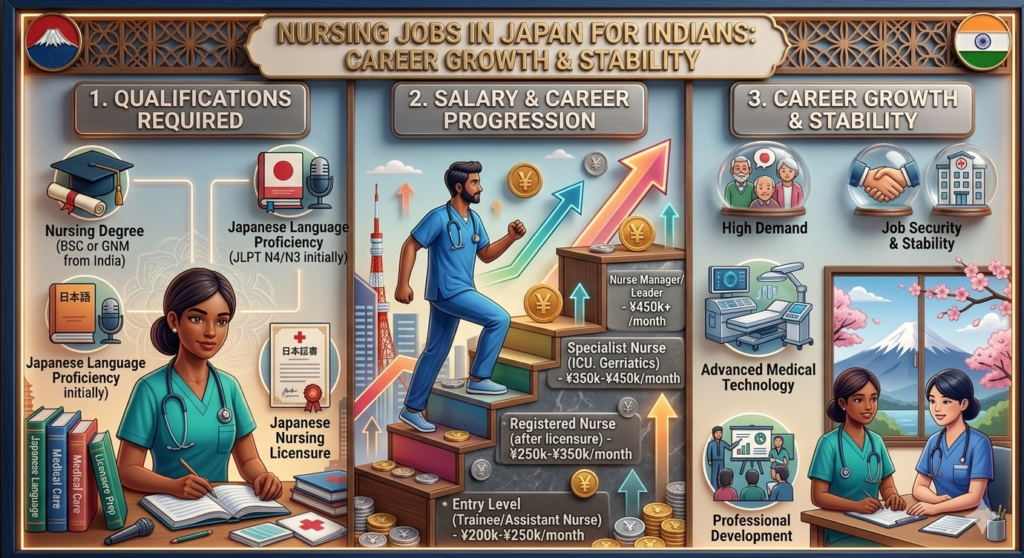
The demand for nursing jobs in Japan for Indians has reached unprecedented levels, making it one of the most secure and rewarding career paths available today. Unlike many professions that face uncertainty due to automation or economic shifts, nursing remains a human-centric field where empathy, skill, and dedication are irreplaceable.
In Japan, nurses are highly respected professionals who play a central role in patient care. They are not just assistants to doctors but key decision-makers in treatment processes. This level of responsibility translates into better salaries, job security, and career growth opportunities.
One of the biggest advantages of pursuing nursing in Japan is the structured career progression. Starting as an assistant nurse, you can gradually move up to senior roles, specialize in specific medical fields, or even transition into administrative positions. This upward mobility is supported by continuous training and certification programs.
Financially, the benefits are equally attractive. Salaries for nurses in Japan are significantly higher than in India, and additional perks like housing, insurance, and bonuses further enhance the overall package. For many professionals, this means not just financial stability but the ability to support their families back home.
There’s also the aspect of global recognition. Experience gained in Japan’s advanced healthcare system is highly valued worldwide, opening doors to opportunities in other countries.
In short, choosing nursing in Japan is not just a job decision—it’s a long-term investment in your future.
Qualifications Required for Nursing Roles
To secure Japan hospital jobs for Indian workers in nursing roles, candidates must meet specific educational and professional criteria. Typically, a diploma or degree in nursing is mandatory, along with registration from a recognized nursing council. These qualifications ensure that you have the foundational knowledge required to perform your duties effectively.
However, academic credentials alone are not enough. Japanese employers place a strong emphasis on practical skills and patient care experience. This means that candidates with hands-on experience in hospitals or clinics have a significant advantage.
Language proficiency is another crucial factor. For nursing roles, the required level of Japanese is often higher than for caregiver positions. This is because nurses need to communicate complex medical information accurately. Passing the JLPT N3 level is commonly expected, though this may vary depending on the employer.
Training programs provided by agencies like H.R. International help bridge any gaps in knowledge or language skills. These programs are designed to align your capabilities with Japanese standards, ensuring that you’re fully prepared for the job.
Ultimately, the goal is not just to qualify but to excel. With the right preparation, you can position yourself as a strong candidate in a highly competitive field.
Salary and Career Progression for Nurses
When it comes to financial rewards, nursing jobs in Japan for Indians offer a compelling package. Entry-level salaries typically range from ¥200,000 to ¥300,000 per month (approximately ₹1.2 to ₹1.8 lakh), depending on experience and location. With overtime, bonuses, and allowances, the total earnings can increase significantly.
But salary is just one part of the equation. Career progression in Japan’s healthcare system is well-defined and merit-based. Nurses have opportunities to specialize in areas such as geriatrics, pediatrics, or critical care, each offering higher pay and greater responsibility.
Promotions are based on performance, experience, and additional certifications. This means that hardworking individuals can climb the career ladder relatively quickly. Some nurses even transition into teaching or administrative roles, further expanding their career options.
Another important aspect is job stability. Healthcare is an essential service, and in a country like Japan with an aging population, the demand for nurses is only expected to grow. This ensures long-term employment and financial security.
In essence, nursing in Japan is not just about earning a salary—it’s about building a sustainable and fulfilling career.
Japan Caregiver Jobs for Indian Candidates – A Rewarding Career Path
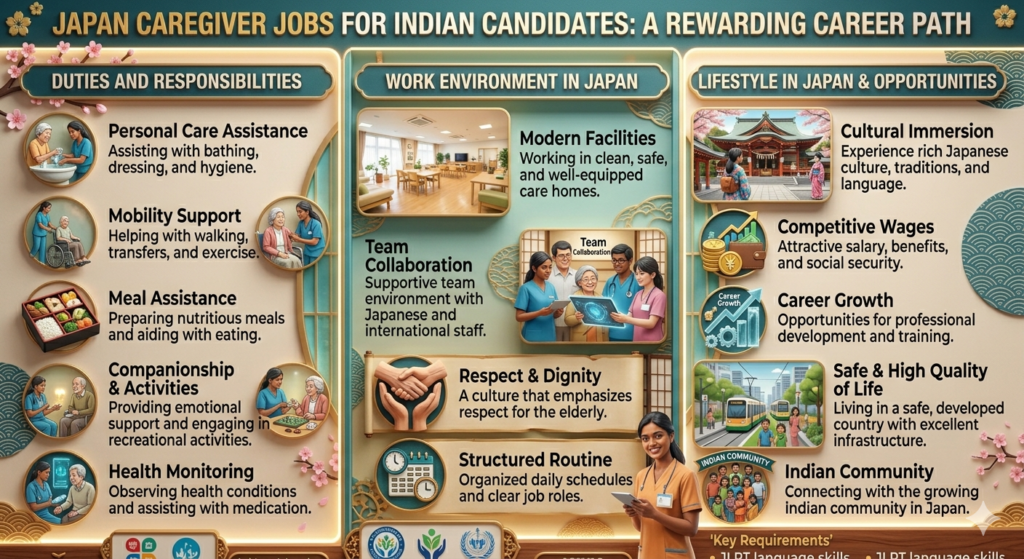
Stepping into Japan caregiver jobs for Indian candidates is not just about employment—it’s about entering a profession that blends compassion, patience, and purpose into everyday work. Caregiving in Japan holds a unique social value because of the country’s rapidly aging population. Elderly care is not seen as a basic service; it is treated with dignity and deep respect. For Indian candidates, especially those seeking stable international careers, this creates a meaningful and financially viable opportunity.
At its core, caregiving is about supporting individuals who need assistance in their daily lives. This includes elderly patients in nursing homes, rehabilitation centers, or private residences. The work may involve helping with meals, mobility, hygiene, and emotional companionship. While the responsibilities can be physically and emotionally demanding, many caregivers describe the experience as deeply fulfilling. You’re not just performing tasks—you’re building human connections that matter.
One of the most appealing aspects of caregiver roles is accessibility. Unlike specialized medical positions, many caregiver jobs in Japan for foreigners do not require advanced degrees. Instead, employers focus on attitude, willingness to learn, and basic training. This opens doors for candidates who may not have formal medical education but possess the right mindset.
Financially, caregiver jobs offer steady income along with benefits such as accommodation support, insurance, and overtime pay. Over time, workers can upgrade their skills, learn advanced caregiving techniques, and even transition into higher-paying roles.
In a way, caregiving becomes more than a job—it evolves into a journey of personal growth, cultural exposure, and professional stability.
Duties and Responsibilities of Caregivers
Understanding the daily responsibilities is essential before stepping into Japan caregiver jobs for Indian candidates. Caregiving in Japan is structured, disciplined, and highly professional. Workers are expected to follow detailed routines while maintaining a compassionate approach toward patients.
A caregiver’s day often begins with assisting patients in their morning routines—helping them wake up, bathe, and get dressed. This is followed by meal preparation and feeding assistance, ensuring that dietary requirements are met. Mobility support is another key responsibility, especially for patients who have difficulty walking or require wheelchairs.
In addition to physical care, emotional support plays a huge role. Many elderly patients experience loneliness, and caregivers often become their primary source of companionship. Simple conversations, listening, and showing empathy can significantly improve a patient’s well-being.
There are also administrative tasks involved, such as maintaining records of patient activities, reporting health changes, and coordinating with medical staff. This requires attention to detail and basic communication skills in Japanese.
What makes caregiving in Japan unique is the emphasis on dignity. Every task, no matter how routine, is performed with respect and professionalism. This approach not only benefits patients but also enhances the caregiver’s sense of purpose.
Work Environment and Lifestyle in Japan
Living and working in Japan as a caregiver offers a lifestyle that is both structured and enriching. When you work in Japan healthcare sector, you quickly notice the emphasis on discipline, cleanliness, and efficiency. Healthcare facilities are well-organized, equipped with modern technology, and designed to provide a safe environment for both patients and staff.
Work schedules are typically fixed, with shifts that may include mornings, evenings, or nights. While the job can be demanding, the structured nature of the work ensures clarity and predictability. Breaks, holidays, and overtime policies are clearly defined, which helps maintain a healthy work-life balance.
Outside of work, life in Japan offers a unique cultural experience. From traditional festivals to modern city life, there’s always something new to explore. Public transportation is efficient, making it easy to travel and discover different parts of the country.
Accommodation is often provided or subsidized by employers, reducing the financial burden on workers. Safety is another major advantage—Japan is known for its low crime rates, making it a comfortable place to live even for first-time international workers.
Adapting to a new culture may take time, but the experience is incredibly rewarding. Over time, what initially feels unfamiliar becomes part of your daily routine, and you begin to appreciate the balance between work and life that Japan offers.
Japan Medical Jobs for North East India – Special Opportunities
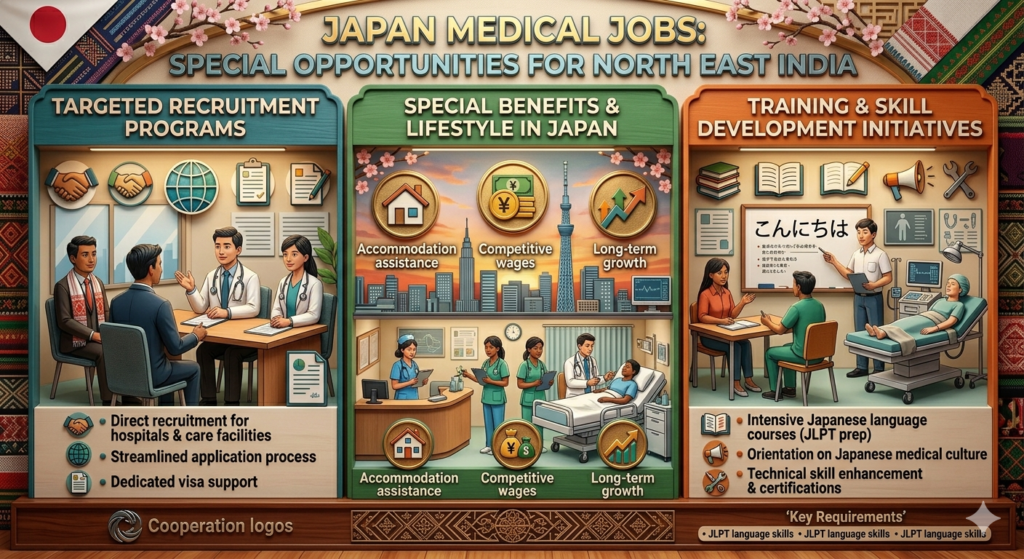
The rise in Japan medical jobs for North East India reflects a targeted effort to recruit candidates who can thrive in Japan’s unique work environment. This is not just a general hiring trend—it’s a focused initiative that recognizes the strengths and adaptability of individuals from this region.
North East Indian candidates often bring a combination of strong communication skills, cultural openness, and a willingness to learn. These qualities align well with the expectations of Japanese employers, making them highly desirable for roles in healthcare. As a result, recruitment programs are increasingly designed to attract and support candidates from this region.
One of the standout features of these opportunities is the availability of structured training programs. Candidates are not expected to be perfect from the start. Instead, they are guided through language training, cultural orientation, and job-specific skill development. This ensures a smoother transition and higher success rates.
Another advantage is community support. As more candidates from North East India join Japan’s workforce, informal networks and support systems are developing. This makes it easier for new workers to adapt, find guidance, and feel less isolated.
In essence, these opportunities are not just about filling vacancies—they’re about building a sustainable workforce that benefits both Japan and the candidates involved.
Targeted Recruitment Programs for North East Candidates
Recruitment for Japan healthcare jobs for North East candidates often involves specialized programs designed to maximize success. These programs are typically organized by agencies like H.R. International in collaboration with Japanese employers and government initiatives.
The process usually begins with outreach campaigns in North East states, where candidates are informed about available opportunities. This is followed by screening and selection, ensuring that applicants meet basic eligibility criteria.
Training is a central component of these programs. Candidates undergo intensive Japanese language courses, often combined with practical training in caregiving or nursing skills. This dual approach ensures that they are both linguistically and technically prepared for their roles.
What sets these programs apart is their focus on long-term success. Instead of simply placing candidates in jobs, they aim to build careers. Continuous support, performance monitoring, and skill development opportunities are provided even after placement.
This structured approach significantly increases the chances of success, making it easier for candidates to adapt and thrive in Japan’s healthcare sector.
Training and Skill Development Initiatives
Skill development is at the heart of Japan SSW healthcare jobs for Indians, especially for candidates from North East India. Employers understand that transitioning to a new country and work environment requires preparation, and they invest heavily in training programs to ensure success.
Language training is the first and most important step. Candidates are taught basic to intermediate Japanese, focusing on workplace communication. This includes medical terminology, patient interaction, and everyday conversation skills.
In addition to language, technical training is provided based on the job role. For caregivers, this includes patient handling techniques, hygiene practices, and emergency response procedures. For nurses, advanced medical training may be required.
Cultural orientation is another key component. Understanding Japanese customs, workplace etiquette, and social norms helps candidates integrate more smoothly into their new environment.
These training initiatives are not just about meeting requirements—they’re about building confidence. By the time candidates arrive in Japan, they are well-prepared to handle both professional and personal challenges.
Work in Japan Healthcare Sector – What to Expect
Choosing to work in Japan healthcare sector is a decision that comes with both opportunities and responsibilities. The environment is professional, disciplined, and highly structured, which can be both exciting and challenging for newcomers.
One of the first things you’ll notice is the emphasis on precision. Tasks are performed with attention to detail, and there is little room for error. This may feel intense at first, but it also creates a sense of reliability and trust within the workplace.
Teamwork is another defining feature. Healthcare in Japan is a collaborative effort, with doctors, nurses, and caregivers working closely together. Communication and coordination are essential, and everyone is expected to contribute.
Respect and hierarchy play an important role. Senior staff members are treated with deference, and decisions are often made collectively. Understanding these dynamics is crucial for maintaining harmony in the workplace.
Despite the challenges, the experience is incredibly rewarding. You gain exposure to advanced medical practices, develop new skills, and build a global career profile.
Work Culture and Professional Standards
The work culture in Japan is often described as disciplined, and for good reason. When you take on Japan hospital jobs for Indian workers, you are expected to meet high professional standards. Punctuality, reliability, and attention to detail are not optional—they are fundamental expectations.
Employees are encouraged to take ownership of their roles and continuously improve their performance. Feedback is taken seriously, and there is a strong focus on self-discipline.
While this may seem demanding, it also creates a sense of pride and accomplishment. Knowing that you are part of a system that values excellence can be incredibly motivating.
Living Conditions and Cost of Living
Living in Japan offers a high quality of life, but it’s important to understand the cost structure. Cities like Tokyo and Osaka are more expensive, while smaller towns offer more affordable living options.
For many workers in caregiver jobs in Japan for foreigners, accommodation is either provided or subsidized, which significantly reduces expenses. Public transportation, while efficient, can add to monthly costs, but it is often covered partially by employers.
Food, utilities, and daily necessities are reasonably priced, especially if you adapt to local options. Over time, most workers find a balance that allows them to save money while enjoying a comfortable lifestyle.
Japan SSW Healthcare Jobs for Indians – Visa and Legal Pathways
If you’re planning to build a long-term career abroad, understanding the legal framework is just as important as finding the right job. The introduction of Japan SSW healthcare jobs for Indians has made it significantly easier for foreign workers to enter Japan’s healthcare industry through a structured and transparent visa system. The Specified Skilled Worker (SSW) visa is specifically designed to address labor shortages, particularly in sectors like healthcare, where demand continues to rise.
This visa program is a game-changer because it removes many of the barriers that previously made it difficult for international candidates to work in Japan. Unlike older visa categories that required extensive qualifications or years of experience, the SSW visa focuses on practical skills and basic language proficiency. This makes it accessible to a wider range of candidates, including those applying for caregiver jobs in Japan for foreigners.
The SSW visa is divided into two categories—SSW Type 1 and Type 2. Most healthcare roles fall under Type 1, which allows workers to stay in Japan for up to five years. While this may sound like a limitation, it actually provides enough time to gain valuable experience, save money, and even explore pathways to long-term residency through other visa options.
Another advantage is the legal protection it offers. Workers under the SSW program are entitled to fair wages, safe working conditions, and access to social security benefits. This ensures that you are treated on par with local employees, creating a level playing field.
In essence, the SSW visa is not just a permit—it’s a structured gateway that turns your ambition to work in Japan healthcare sector into a legally secure and achievable reality.
Understanding the Specified Skilled Worker (SSW) Visa
To fully benefit from Japan SSW healthcare jobs for Indians, it’s essential to understand how the visa works. The SSW visa was introduced by the Japanese government to fill workforce gaps in critical industries, and healthcare is one of the top priority sectors.
The application process involves passing two key requirements: a skills test and a Japanese language proficiency test. The skills test evaluates your ability to perform job-specific tasks, while the language test ensures that you can communicate effectively in a professional environment. For most roles, achieving JLPT N4 level is sufficient, though higher proficiency can improve your job prospects.
Once you pass these tests, you become eligible to apply for jobs through approved agencies like H.R. International. After securing employment, your visa application is processed with the support of your employer and recruitment agency.
One of the standout features of the SSW visa is its flexibility. You can switch employers within the same industry, provided you meet the necessary conditions. This gives workers a level of freedom that was previously unavailable in Japan’s job market.
Additionally, the visa allows you to gain hands-on experience in a highly advanced healthcare system. This exposure not only enhances your skills but also increases your global employability.
Understanding the SSW visa is like having a roadmap—it shows you exactly what steps to take and what to expect along the way.
How to Qualify for SSW Healthcare Jobs
Qualifying for Japan healthcare jobs for North East candidates under the SSW program requires a combination of preparation, dedication, and the right guidance. The process is straightforward but demands commitment, especially in areas like language learning and skill development.
The first step is meeting the basic eligibility criteria, which includes age requirements, educational qualifications, and a clean background record. While formal education requirements may vary depending on the role, a willingness to learn and adapt is universally essential.
Next comes language training. Japanese language proficiency is not just a requirement—it’s a critical tool for success. Most candidates undergo intensive training programs that prepare them for the JLPT exams. This phase can be challenging, but it’s also incredibly rewarding as it opens the door to better job opportunities.
Skill training is equally important. For caregiver roles, this includes learning patient care techniques, safety procedures, and basic medical knowledge. For nursing roles, more advanced training may be required.
Finally, candidates must pass the required tests and successfully clear employer interviews. This is where preparation pays off. Confidence, communication skills, and a positive attitude can make a significant difference.
In short, qualifying for SSW jobs is not about luck—it’s about preparation meeting opportunity.
Caregiver Jobs in Japan for Foreigners – Challenges and Rewards
While caregiver jobs in Japan for foreigners offer incredible opportunities, it’s important to approach them with a realistic understanding of both the challenges and rewards. Every international career comes with its own set of adjustments, and Japan is no exception.
One of the most common challenges is language. Even with basic proficiency, communicating in a professional setting can be intimidating at first. Misunderstandings may occur, and it takes time to build confidence. However, with consistent practice and daily interaction, most workers overcome this barrier within a few months.
Cultural differences can also be challenging. Japan has its own set of social norms and workplace expectations, which may feel unfamiliar initially. Simple things like communication styles, hierarchy, and daily routines require adjustment.
The physical demands of caregiving should not be underestimated either. Assisting patients with mobility, lifting, and daily activities can be tiring. It requires both physical stamina and emotional resilience.
But here’s the other side of the story—the rewards. The sense of fulfillment that comes from helping others is unmatched. Many caregivers form strong bonds with their patients, creating meaningful relationships that go beyond the job.
Financial stability, career growth, and international exposure are additional benefits that make the challenges worthwhile. Over time, what once felt difficult becomes second nature, and you find yourself growing in ways you never expected.
Common Challenges Faced by Foreign Workers
When entering Japan hospital jobs for Indian workers, it’s natural to face initial hurdles. Language remains the most significant challenge, especially in healthcare settings where clear communication is crucial. Even small misunderstandings can impact daily tasks, making it essential to continuously improve language skills.
Another challenge is adapting to the work culture. Japanese workplaces are highly structured, and expectations regarding punctuality, discipline, and teamwork are strict. For some, this level of precision can feel overwhelming at first.
Homesickness is another factor that many workers experience. Being away from family and familiar surroundings can be emotionally challenging, especially during the initial months.
However, these challenges are not permanent. With time, support, and determination, they become manageable and often lead to personal growth.
Tips to Succeed in Japan’s Healthcare Industry
Success in healthcare jobs in Japan for Indians comes down to preparation and mindset. The first and most important tip is to take language learning seriously. The more fluent you become, the easier your work and daily life will be.
Adaptability is another key factor. Being open to new experiences, whether it’s food, culture, or work routines, helps you integrate more smoothly.
Building relationships at work can also make a big difference. Colleagues can provide guidance, support, and friendship, making your journey more enjoyable.
Finally, maintain a positive attitude. Challenges are part of the process, but they also offer opportunities to grow and improve.
Japan Hospital Jobs for Indian Workers – Final Thoughts and Opportunities
The rise of Japan hospital jobs for Indian workers marks a significant shift in global employment trends. What was once considered a distant possibility is now a well-established pathway for thousands of Indian professionals, especially from North East India.
Japan offers more than just jobs—it provides a structured environment for growth, stability, and long-term success. From nursing jobs in Japan for Indians to caregiver roles, the opportunities are diverse and accessible.
With the support of agencies like H.R. International, the process becomes manageable and transparent. From application to placement, candidates receive guidance every step of the way.
If you’ve been considering an international career, this is the moment to act. The demand is high, the pathway is clear, and the rewards are substantial.
Conclusion
The opportunity to apply healthcare jobs in Japan is no longer a distant dream—it’s a practical, achievable path for Indian candidates ready to take the next step. With rising demand, structured visa programs, and dedicated recruitment support, Japan has positioned itself as one of the most promising destinations for healthcare professionals.
From Japan caregiver jobs for Indian candidates to advanced nursing roles, the industry offers something for everyone. The journey may require effort, especially in language learning and cultural adaptation, but the rewards—financial stability, career growth, and global exposure—make it worthwhile.
FAQs
1. What are the requirements for healthcare jobs in Japan for Indians?
Candidates typically need basic educational qualifications, Japanese language proficiency (JLPT N4 or higher), and relevant skills or experience depending on the job role.
2. Are there specific opportunities for North East Indian candidates?
Yes, many recruitment programs specifically target Japan healthcare jobs for North East candidates due to their adaptability and communication skills.
3. How much can I earn in caregiver jobs in Japan?
Salaries usually range between ¥180,000 to ¥250,000 per month, with additional benefits like accommodation and overtime pay.
4. Is Japanese language mandatory for working in Japan?
Yes, basic Japanese language skills are required, especially for roles under the SSW visa program.
5. How can I apply for Japan healthcare jobs from India?
You can apply through authorized agencies like H.R. International, which provide end-to-end support including training, interviews, and visa processing.

Leave a Reply