
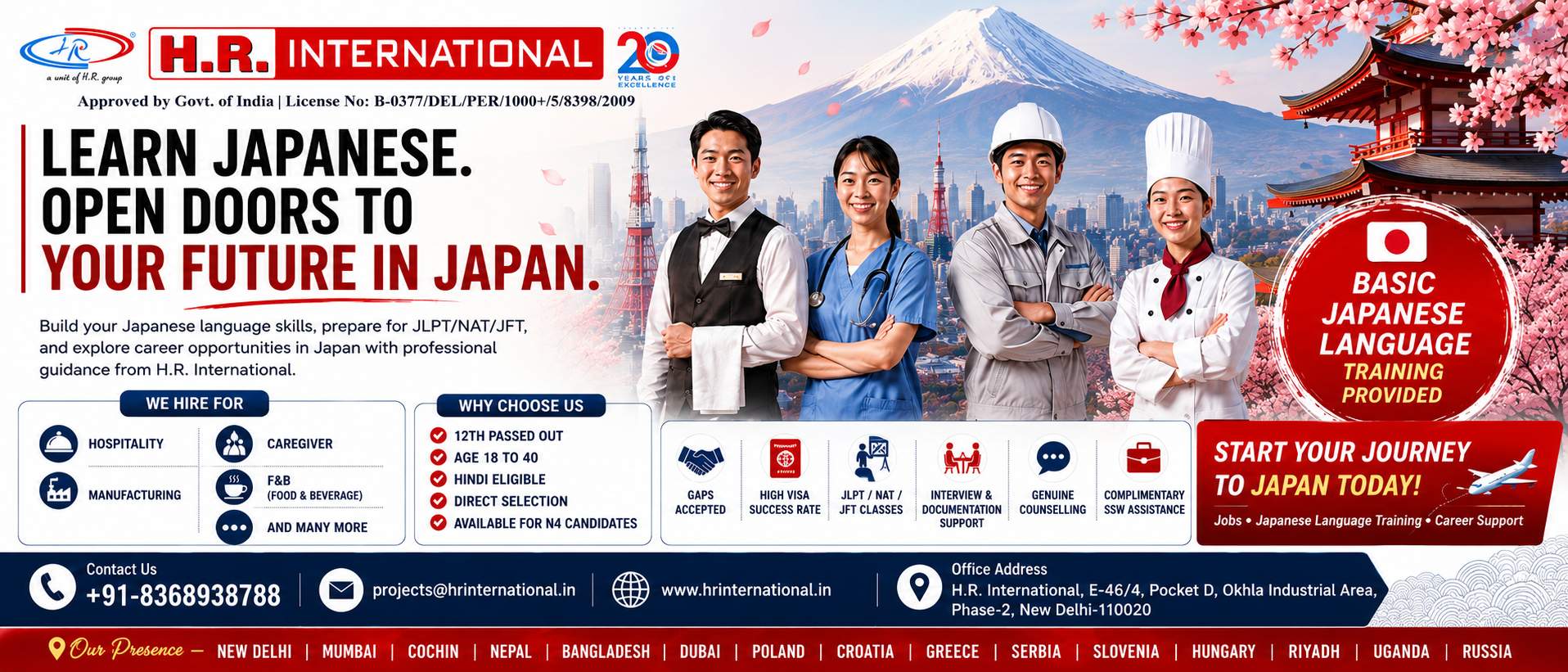
Learn Japanese Language Training and Build Your Career in Japan

Japan is one of the world’s most attractive destinations for people looking to build an international career, develop professional skills, and experience a new culture. As demand for skilled workers continues across several industries, learning the Japanese language can become an important step toward accessing Jobs in Japan and long-term Japan career opportunities.
For candidates from India, Japanese language skills can provide a valuable advantage when applying for employment opportunities in sectors such as hospitality, manufacturing, caregiving, food and beverage, and other industries. However, learning Japanese is not only about understanding words and grammar. It is also about preparing yourself to communicate confidently in the workplace, understand Japanese culture, perform well in language examinations, and meet the requirements of potential employers.
H.R. International provides professional guidance for candidates who want to learn Japanese and explore employment opportunities in Japan. From Japanese language training and examination preparation to interview and documentation support, candidates can receive guidance throughout their journey.
Whether you are starting from the basics or are already an N4 candidate, structured preparation can help you move closer to your career goals in Japan.
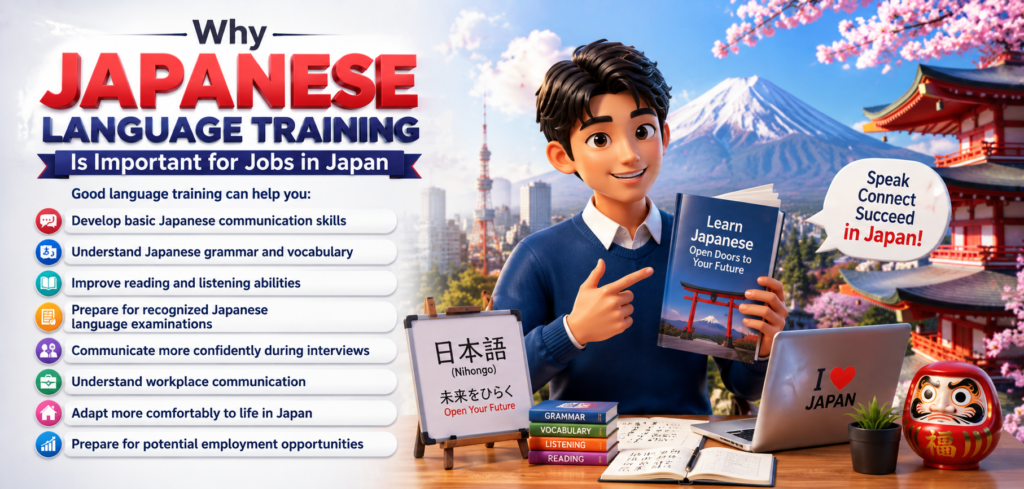
Why Japanese Language Training Is Important for Jobs in Japan
Japanese is an essential part of everyday life and workplace communication in Japan. Candidates who can communicate in Japanese may find it easier to understand instructions, interact with colleagues, communicate with customers, and adapt to professional environments.
For international candidates, language proficiency can also be an important requirement for specific employment pathways. Depending on the job category and visa route, candidates may need to demonstrate Japanese language ability through recognized examinations.
This is why Japanese language classes should be considered an important part of your preparation if your goal is to work in Japan.
Good language training can help you:
- Develop basic Japanese communication skills
- Understand Japanese grammar and vocabulary
- Improve reading and listening abilities
- Prepare for recognized Japanese language examinations
- Communicate more confidently during interviews
- Understand workplace communication
- Adapt more comfortably to life in Japan
- Prepare for potential employment opportunities
Learning Japanese before traveling can therefore make your transition into the Japanese workplace and society more comfortable and organized.
Japanese Language Classes for Beginners and Job Seekers
Starting a new language may initially seem difficult, especially when you are unfamiliar with Japanese scripts such as Hiragana, Katakana, and Kanji. With structured lessons and regular practice, however, learners can gradually develop their skills.
Professional Japanese language classes can introduce candidates to the language step by step. Beginners can start with basic greetings, vocabulary, sentence structures, numbers, introductions, and everyday conversations.
As students progress, they can work on more advanced grammar, listening, reading, and communication skills.
For candidates interested in employment, language training should ideally combine general Japanese learning with practical workplace communication. This approach can help students understand not only examination questions but also real-life situations they may encounter in Japan.
H.R. International provides basic Japanese language training and guidance designed to help eligible candidates begin their preparation for a potential career in Japan.
JLPT Preparation for Candidates Planning a Japan Career
The Japanese-Language Proficiency Test, commonly known as JLPT, is one of the most recognized Japanese language examinations. It evaluates Japanese language knowledge and communication-related abilities at different levels.
For candidates planning to work in Japan, JLPT preparation can help establish a structured learning target.
JLPT levels range from N5, which represents an elementary level, through N1, the most advanced level. Candidates interested in employment may encounter different language requirements depending on the job, employer, and visa pathway.
Effective JLPT preparation generally includes:
- Vocabulary development
- Grammar practice
- Reading comprehension
- Listening practice
- Regular mock tests
- Examination-oriented exercises
- Time-management practice
Candidates should always check the specific language requirements associated with their intended job and visa pathway before applying.
NAT Preparation for Japanese Language Learners
The NAT-TEST is another Japanese language proficiency examination used by learners who want to assess their Japanese skills. It provides candidates with an opportunity to evaluate their knowledge through structured testing.
NAT preparation can be particularly useful for students who want additional examination practice while building their Japanese communication abilities.
Preparation may involve Japanese vocabulary, grammar, reading, and listening exercises. Regular practice tests can also help candidates become familiar with examination formats and improve confidence.
At H.R. International, candidates can receive guidance regarding their Japanese language preparation and potential employment pathways.
JFT Preparation for Future Workers in Japan
The Japan Foundation Test for Basic Japanese, commonly known as JFT-Basic, is designed to assess Japanese communication ability for everyday situations. It can be relevant to candidates pursuing certain work-related pathways.
JFT preparation focuses on practical Japanese communication, including understanding conversations and situations that may occur in daily life.
Candidates preparing for JFT should develop their listening, vocabulary, grammar, and communication skills through consistent practice.
A structured preparation plan can help learners understand their current level and identify areas that need improvement.
Before applying for any specific employment or visa route, candidates should verify the current official requirements and accepted examinations for their intended pathway.
SSW Jobs in Japan and Japanese Language Skills
The Specified Skilled Worker, or SSW, pathway has created opportunities for foreign workers in several industries in Japan. Depending on the category, candidates may need to meet language and skills requirements.
SSW jobs in Japan can be available across sectors where employers require skilled and trained workers. However, eligibility depends on the specific SSW category, examination requirements, employer requirements, and applicable Japanese immigration rules.
For candidates interested in SSW opportunities, preparation may involve:
- Learning Japanese.
- Preparing for the required language examination.
- Understanding the relevant skills test.
- Preparing required documents.
- Attending interviews or selection processes.
- Completing applicable employment and immigration procedures.
H.R. International offers complimentary SSW assistance to help candidates understand the process and prepare their documentation and applications.
Candidates should remember that visa decisions are made by the relevant authorities and that no agency can guarantee a visa outcome.
Japan Career Opportunities Across Multiple Industries
Japan offers employment opportunities across different sectors. The right opportunity depends on a candidate’s education, experience, language ability, skills, age, eligibility, and employer requirements.
H.R. International works with candidates interested in exploring opportunities in several sectors.
Hospitality Jobs in Japan
The hospitality industry requires employees who can provide professional customer service and communicate effectively.
Hospitality jobs in Japan may include roles related to hotels, guest services, housekeeping, restaurants, and other tourism-related operations.
Japanese language skills can be particularly valuable in hospitality because employees may interact directly with Japanese customers and international visitors.
Candidates interested in hospitality should develop communication skills, customer-service awareness, professional etiquette, and workplace Japanese.
Manufacturing Jobs in Japan
Japan has a well-developed manufacturing sector covering numerous products and industrial activities.
Manufacturing jobs in Japan may be suitable for candidates interested in production, factory operations, assembly, inspection, packaging, and related roles, depending on available vacancies and employer requirements.
Workers entering manufacturing environments should understand workplace safety instructions and basic Japanese communication. Language training can therefore support both professional integration and daily workplace communication.
Caregiver Jobs in Japan
Japan’s aging population has contributed to demand for workers in care-related services.
Caregiver jobs in Japan can involve supporting elderly people with daily activities and assisting them in professional care environments. Candidates considering this field should understand that caregiving requires patience, responsibility, communication skills, and appropriate training.
Japanese language ability is particularly important because caregivers need to communicate with elderly people, colleagues, supervisors, and healthcare-related professionals.
Candidates should review the specific qualifications, skills tests, language requirements, and employment conditions applicable to their chosen pathway.
F&B Jobs in Japan
Food and beverage is another area where employment opportunities may be available for qualified international workers.
F&B jobs in Japan can include roles in restaurants, kitchens, food preparation, service, and related operations, depending on vacancies.
Candidates interested in F&B should develop practical workplace skills along with Japanese communication. Understanding customer-service expressions and workplace etiquette can be especially beneficial.
N4 Candidates Can Explore Direct Selection Opportunities
Candidates who have already achieved Japanese language proficiency around the N4 level may have an advantage when exploring certain opportunities, depending on the employer and job requirements.
N4 candidates may be considered for available positions where their language level meets the applicable criteria. H.R. International provides guidance for candidates who already possess relevant Japanese language qualifications.
Direct selection may be available for eligible candidates depending on current employer requirements and vacancy conditions.
Candidates should understand that selection is based on the actual requirements of each employer and position. Having N4-level Japanese does not automatically guarantee selection, employment, or a visa.
Japan Job Support from Application to Selection
Finding an international job involves more than submitting a CV. Candidates may need help understanding eligibility criteria, preparing documents, attending interviews, and following the correct recruitment process.
Professional Japan job support can make this process easier to understand.
H.R. International provides guidance that may include:
-
- Candidate counselling
- Job opportunity information
- JLPT preparation
- NAT preparation
- JFT preparation
- Interview preparation
- Documentation support
- SSW assistance
- Employer selection guidance
- Application process guidance
The objective is to help candidates understand each stage and make informed decisions about their Japan career plans.
Interview and Documentation Support
A strong interview can be an important part of the recruitment process. Candidates may be evaluated on communication, professional attitude, qualifications, experience, Japanese language skills, and suitability for the position.
Interview preparation can help candidates understand how to introduce themselves, explain their experience, answer common questions, and communicate professionally.
Documentation is equally important. Depending on the position and visa pathway, candidates may need educational certificates, identification documents, experience certificates, language certificates, medical documentation, and other relevant paperwork.
H.R. International provides interview & documentation support to help eligible candidates organize their recruitment journey.
Genuine Counselling for Candidates
Choosing an overseas career is an important decision. Candidates should receive clear information before making commitments.
Genuine counselling should explain the nature of the opportunity, eligibility requirements, recruitment process, expected documentation, language requirements, and applicable conditions.
H.R. International focuses on providing candidates with professional guidance so they can understand their options before proceeding.
Candidates should also independently verify employment contracts, salary details, working conditions, fees, visa requirements, and other important terms before making any final decision.
Who Can Apply for Japan Opportunities?
The eligibility criteria can vary depending on the vacancy and employment pathway. However, the current campaign highlights opportunities for candidates meeting the following general criteria:
- 12th passed out candidates
- Age 18 to 40 years
- Hindi eligible
- Candidates with relevant qualifications or experience
- N4 candidates may be eligible for direct selection for applicable vacancies
- Gaps accepted, subject to employer and pathway requirements
Meeting general criteria does not guarantee selection. Each job has its own requirements, and final recruitment decisions depend on the employer and applicable regulations.
Gaps Accepted: Continue Building Your Future
Many candidates worry that an educational or employment gap will prevent them from pursuing international opportunities. Depending on the vacancy, gaps may be accepted.
H.R. International can help candidates understand whether their individual profile is suitable for available opportunities.
Instead of assuming that a gap automatically prevents you from applying, candidates can discuss their educational background, work experience, language skills, and career objectives during counselling.
The important step is to provide accurate information and genuine documentation throughout the recruitment process.
High Visa Success Rate: Understand the Process Clearly
Candidates often look for agencies with a strong track record when planning an international career. H.R. International highlights a high visa success rate as part of its candidate support approach.
However, visa approval is ultimately subject to the relevant authorities, immigration regulations, documentation, employer eligibility, and individual circumstances.
A professional recruitment agency can assist with document preparation and process guidance, but candidates should be cautious of anyone promising guaranteed visa approval.
The best approach is to maintain accurate documents, meet eligibility requirements, follow the correct procedures, and respond promptly to requests during the application process.
Complimentary SSW Assistance for Eligible Candidates
Understanding the SSW process can be challenging for first-time applicants. H.R. International offers complimentary SSW assistance to help candidates understand the relevant process.
Support can include explaining the general pathway, identifying documentation requirements, discussing language preparation, and guiding candidates through relevant recruitment stages.
Because immigration policies and requirements can change, applicants should always verify current information from official Japanese authorities before proceeding.
Why Start Learning Japanese Today?
Learning a new language requires time and consistency. Starting early gives candidates more time to build vocabulary, practice grammar, improve listening skills, and develop confidence.
Japanese language learning can also provide benefits beyond employment. It can help candidates understand Japanese culture, communicate during travel, interact with local communities, and adapt more comfortably to daily life.
If Japan is part of your long-term career plan, starting Japanese language training today can be a practical first step.
Instead of waiting until a job opportunity appears, candidates can prepare their language skills in advance.
Build Your Japan Career Step by Step
A successful international career journey requires preparation. Candidates can follow a structured approach:
Step 1: Understand Your Goal
Decide which industry and type of job interests you.
Step 2: Start Japanese Language Classes
Build basic communication skills and develop a regular study routine.
Step 3: Choose the Appropriate Examination Preparation
Explore JLPT, NAT, or JFT preparation based on your intended pathway.
Step 4: Develop Job Skills
Improve your technical, hospitality, caregiving, manufacturing, or F&B skills as required.
Step 5: Prepare Your Documents
Keep educational, professional, identification, and other relevant documents organized.
Step 6: Attend Interviews
Prepare professionally and communicate honestly about your qualifications and experience.
Step 7: Understand the Employment and Visa Process
Review your employment terms and follow the applicable immigration procedures.
Step 8: Prepare for Life in Japan
Continue improving Japanese and learn about Japanese workplace culture and daily life.
Start Your Journey to Japan Today
Your dream of working in Japan can begin with one important decision: learn Japanese and prepare yourself for the opportunities ahead.
With Japanese language training, examination preparation, professional counselling, interview support, documentation assistance, and guidance for applicable SSW pathways, candidates can approach their Japan career plans with greater preparation and confidence.
Whether you are interested in hospitality jobs in Japan, manufacturing jobs in Japan, caregiver jobs in Japan, F&B jobs in Japan, or other available employment opportunities, developing Japanese language skills can be an important part of your preparation.
H.R. International supports candidates from the initial counselling stage through relevant recruitment and documentation processes.
If you are 12th passed, between 18 and 40 years of age, and interested in building a career in Japan, now is the time to start preparing.
Learn Japanese. Build your skills. Prepare for JLPT, NAT or JFT. Explore SSW opportunities. Take the next step toward your future in Japan.
Jobs in Japan, Japanese Language Training and Career Support
H.R. International provides professional support for candidates interested in Jobs in Japan, Japanese language training, and international career opportunities.
Key Services
- Japanese language classes
- JLPT preparation
- NAT preparation
- JFT preparation
- SSW jobs in Japan guidance
- Japan job support
- Interview preparation
- Documentation support
- Career counselling
- Basic Japanese language training
- Complimentary SSW assistance
- Guidance for eligible N4 candidates
Contact H.R. International
Start your journey to Japan today!
H.R. International
E-46/4, Pocket D, Okhla Industrial Area, Phase-2, New Delhi-110020
Phone: +91-8368938788
Email: projects@hrinternational.in
Website: www.hrinternational.in
Explore Your Japan Career Opportunities
Whether your goal is to improve your Japanese, prepare for a language examination, or explore employment opportunities, taking the first step today can help you prepare for tomorrow.
Learn Japanese. Prepare for your opportunity. Build your skills. Explore your future in Japan with H.R. International.
Note: Job availability, eligibility, salaries, language requirements, SSW categories, employer selection, and visa decisions may vary by vacancy and applicable regulations. Candidates should verify the current requirements and terms before making any financial or employment commitment.
Leave a Reply